



A retailer can have strong Razor sales, confirmed orders, and available handles yet still miss replenishment because one cartridge component is unavailable. A damaged mold insert, delayed blade shipment, or unavailable resin grade can interrupt several product variants at once. Buying more finished goods may provide temporary protection, but it also ties up cash and increases exposure to packaging changes. The practical challenge is deciding which stock, tooling, and approved alternatives will keep the program moving. A coordinated razor supply continuity plan connects critical components, maintenance readiness, targeted buffers, and realistic recovery times. With responsibilities agreed before disruption, the buyer and Manufacturer can jointly protect priority deliveries, preserve approved specifications, and restore normal supply through a controlled sequence of actions.
A qualified Supplier should identify critical components, maintain agreed safety stock, document tooling backups, qualify alternate materials, and demonstrate recovery readiness. For a Haward OEM or ODM Razor program, agree stock ownership, replenishment triggers, spare mold access, written change approval, and recovery targets before launch, then verify the plan through practical exercises.
Supply chain directors, retailers, distributors, and engineering wholesalers can use the following framework to see how experienced buyers connect inventory decisions with factory recovery. The examples show where shared components help, when backup tooling matters, and how approved alternatives can support replenishment without introducing uncontrolled changes to the finished Razor.
Identify the Components That Protect Your Retail Program
Map Critical Dependencies Before Increasing Inventory
Start with the bill of materials for priority SKUs. A small cartridge housing or connector can stop an entire refill program even when its purchase value is low. Rank components by commercial impact, replacement difficulty, and the time needed to restore approved supply.
- Cartridge dependency: identify which starter sets and refill packs use each approved head.
- Blade dependency: record the qualified blade source and any separate coating or finishing operation.
- Tooling dependency: connect each molded part to its mold, compatible machine, and required fixtures.
- Packaging dependency: include printed cards, protective trays, and retailer-specific cartons.
ISO 22301 provides a business continuity management framework. Apply its planning logic to the actual Razor program; the standard does not prescribe a universal buffer quantity. Where a Supplier presents an ISO 22301 certificate, verify its site and scope separately.
For each critical item, name the owner, supply location, usable stock, approved backup, and expected recovery route. This turns a general continuity promise into a practical sourcing document.
Place Buffers Where They Preserve Assortment Flexibility
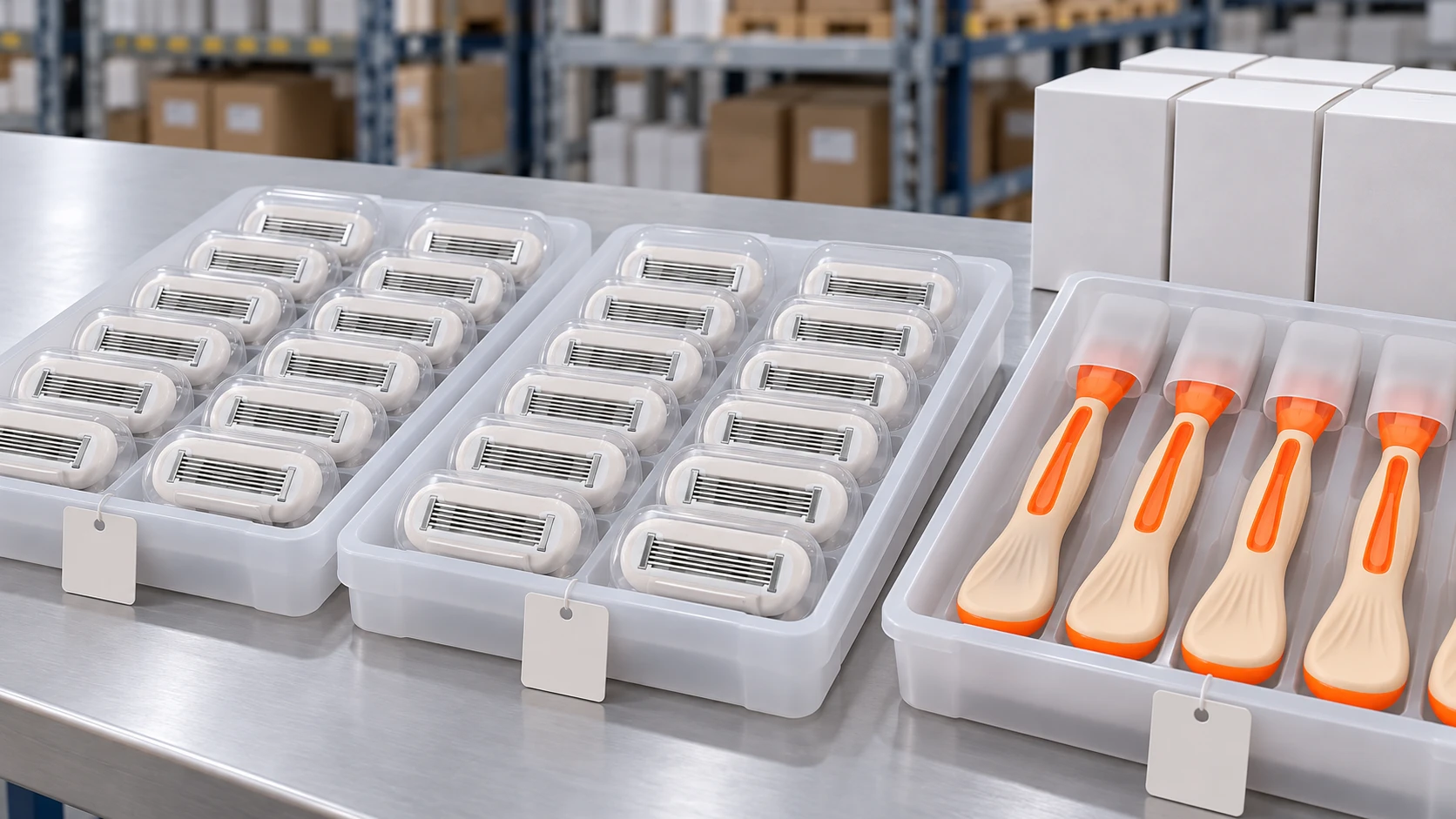
Razor safety stock can sit at several stages: qualified materials, molded components, assembled cartridges, or finished retail packs. Each position protects against different interruptions. Resin stock helps only while molding remains available; finished cartridges still require compatible handles, packaging, inspection, and dispatch capacity where applicable.
For an OEM assortment, common approved cartridges may support several handle colors or pack counts. Holding some stock before final packaging can preserve flexibility and reduce obsolete inventory. However, compatibility must be confirmed by model and revision. Similar appearance does not establish interchangeability.
- Component buffer: useful when downstream assembly and packing capacity remain accessible.
- Finished-goods buffer: useful for immediate replenishment of stable, high-volume SKUs.
- Buyer-side buffer: can cover interruptions that prevent access to factory-held stock.
- Storage controls: define protective packaging, environmental conditions, rotation, and inspection requirements.
A Customizable range usually needs different policies for core products and seasonal artwork. Match each buffer to its intended disruption, and avoid counting the same cartridge stock as independent protection for several competing orders.
Translate Safety Stock into a Replenishment Rule
Separate Normal Lead-Time Demand from the Additional Buffer
SAP’s replenishment guidance describes the reorder point as expected demand during replenishment lead time plus safety stock. This distinction makes razor safety stock easier to negotiate.
Reorder point = Expected lead-time demand + Safety stock.
The following factory component example uses buyer-selected coverage periods. Quantities are individual components, with lead time measured to their stocking point.
| Component | Weekly demand | Lead time | Safety stock | Reorder point |
|---|---|---|---|---|
| Approved cartridges | 20,000 | 4 weeks | 40,000: 2 weeks | 120,000 |
| Core handle bodies | 10,000 | 3 weeks | 10,000: 1 week | 40,000 |
| Core starter cartons | 10,000 | 2 weeks | 10,000: 1 week | 30,000 |
Trigger replenishment using inventory position: usable stock plus open replenishment orders minus backorders. Check receipt dates separately so late incoming orders do not conceal a near-term shortage.
Review demand variability, lead-time variation, promotions, service targets, and storage life before approving the buffer. Keep planned promotional builds separate from the allowance for uncertainty, and exclude quarantined or obsolete units from usable stock.
Build Tooling Recovery Around the Actual Failure Mode
Choose Between Spare Parts, Inserts, and a Complete Mold
A practical spare mold strategy starts by asking what can fail. A worn ejector pin, damaged cavity insert, and unavailable molding facility require different responses. Buying a second mold is one option, but its value depends on whether the supporting equipment and people remain available.
- Maintenance spares: hold suitable ejector pins, seals, heaters, and other identified wear parts.
- Spare inserts: prepare replacement cores or cavities for critical features where the tool design permits.
- Duplicate mold: qualify another complete tool for high-impact components where the business case supports it.
- Alternate production location: validate a separate route when the disruption could affect the whole site.
For a Customizable handle, a spare cosmetic insert may protect one feature while leaving the common mold base essential. For a cartridge housing, verify the assembly interface and downstream fixtures as well.
The Manufacturer and buyer should agree tool ownership, storage, access, maintenance responsibility, and transfer arrangements. A mold stored beside the primary tool may help with mechanical failure, but both remain exposed to the same site interruption.
Keep Backup Equipment Ready to Produce Approved Parts

A backup listed in a spreadsheet becomes useful when its condition and installation requirements are known. Connect the spare mold strategy to preventive maintenance records and a controlled restart procedure.
- Tool identification: record serial number, revision, storage location, and last inspection date.
- Machine compatibility: confirm mounting, clamping, injection requirements, cooling connections, and available capacity.
- Maintenance readiness: check preservation, wear parts, service tools, and technician availability.
- First-article checkpoint: inspect critical dimensions and functional fit before releasing recovery production.
- Restart performance: record actual setup time, good output, scrap, and remaining restrictions.
Include assembly and packing equipment in the same review. A replacement mold cannot resolve an unavailable cartridge-assembly fixture, sealing tool, sensor, or control program. Keep essential machine settings and backups accessible to authorized personnel.
For OEM and ODM programs, review readiness after tooling changes and at a buyer-agreed interval. An illustrative quarterly check can be a starting point, with actual frequency based on use, storage conditions, and failure history. Protection should follow demonstrated recovery capability.
Prepare Qualified Supply Alternatives Before They Are Needed
Protect Blade Supply as a Complete Production Route
Razor supply continuity depends on more than having stainless steel available. The approved blade also depends on material condition, edge processing, coatings where specified, cleanliness, and its connection to the cartridge assembly. A substitute described only as the same steel grade leaves important requirements unresolved.
Ask the Manufacturer to map the actual supply route and identify where additional coverage provides useful protection.
- Material reservation: identify grade, dimensions, source, delivery window, and ownership.
- Qualified blade buffer: define protection, storage conditions, lot identification, and inspection status.
- Alternate-source qualification: compare approved dimensional, cutting, retention, and corrosion requirements.
- Capacity confirmation: verify that the alternate route can supply the required quantity when activated.
For a Supplier managing several cartridge formats, record which blade references belong to each assembly. Do not pool unlike blades under a generic stock description.
Two purchasing channels may still depend on the same upstream operation. Check shared dependencies before treating them as independent backups. The agreed plan should identify both the technical approval status and the commercial availability of the alternative.
Approve Alternate Resins at the Finished-Part Level
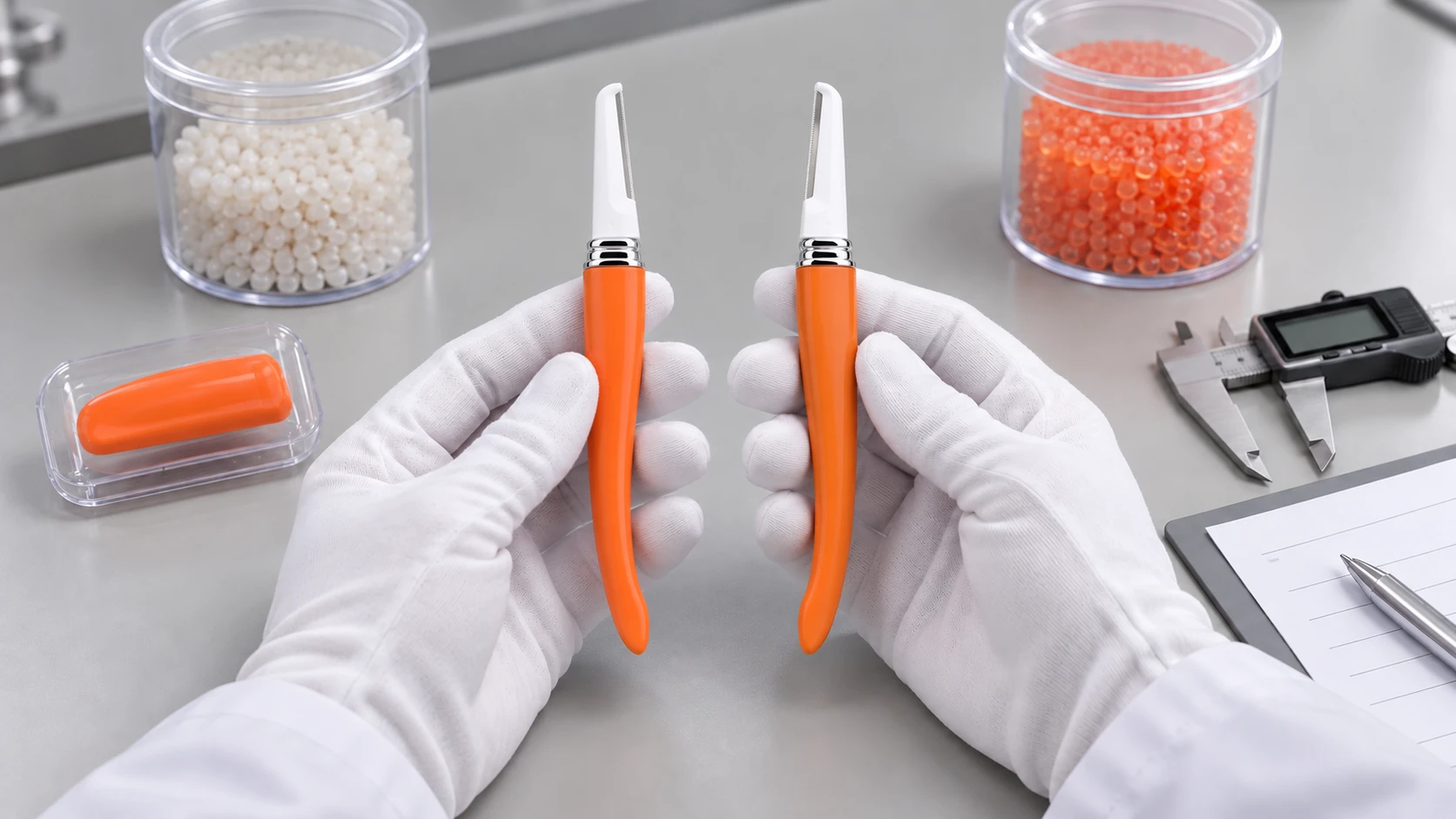
An approved alternate material must be qualified for its specific application. Changing a resin brand or grade can affect molding and the finished part. Protolabs’ material-selection guidance explains that molds reflect resin shrinkage, so a substitution can affect dimensions and tolerances.
For a Customizable Razor handle or cartridge component, the approval package should cover:
- Material identity: producer, exact grade, colorant, additives, and applicable material declarations.
- Processing trial: actual tool, molding conditions, appearance, and dimensional results.
- Functional validation: connector fit, component retention, wet-use performance, and overmold adhesion where relevant.
- Written authorization: affected SKUs, permitted sites, approved conditions, and effective revision.
Use product-specific acceptance criteria; a matching datasheet value is not a finished-product approval. Treat lubricating-strip formulations, adhesives, coatings, and packaging materials through their own applicable validation routes.
Record an approved alternate material in the controlled specification before emergency use. An untested candidate remains a development option. Haward sourcing discussions should distinguish approved OEM or ODM alternatives from materials that still require trials and buyer authorization.
Connect Factory Recovery with Customer Replenishment
Measure the Full Gap Until Usable Stock Arrives
Define the recovery time objective (RTO) as the target time to resume an agreed activity at a stated minimum capacity. For razor supply continuity, also calculate when the buyer will receive usable replenishment, including remaining production, inspection, packing, and transport.
| Recovery route | Factory recovery target | Additional time to usable DC receipt | Total replenishment gap |
|---|---|---|---|
| Qualified spare insert | 3 days | 7 days | 10 days |
| Approved resin alternative | 5 days | 7 days | 12 days |
| Qualified alternate location | 8 days | 10 days | 18 days |
Separately, suppose a retailer holds 40,000 usable units against demand of 20,000 per week. Assuming even consumption and no other receipts, that stock provides fourteen calendar days of coverage. The eighteen-day scenario leaves a four-day gap requiring additional protection or an agreed allocation plan.
Check the size of the first delivery and the subsequent supply rate. Partial recovery below demand continues to consume inventory. The plan must restore sustainable replenishment and rebuild the buffer, not merely record that a machine restarted.
Agree Ownership, Release Rules, and Recovery Costs
A workable continuity plan needs a commercial agreement alongside the technical plan. Factory-held razor safety stock should have an identified owner, funding basis, and release rule. Reserved inventory should not quietly become general stock, and the same units should not be promised to several buyers.
- Stock funding: agree purchase, deposit, consignment, or another documented arrangement.
- Rotation and replenishment: define minimum levels, review dates, and who restores a used buffer.
- Obsolescence responsibility: address artwork changes, discontinued colors, and product revisions.
- Recovery spending: approve tooling upkeep, trials, priority production, and any expedited freight.
- Activation authority: name buyer and Supplier contacts who can approve releases and recovery actions.
Keep the forecast separate from a firm material or capacity commitment. A distributor’s estimate helps planning but does not, by itself, establish funded inventory or exclusive production time.
For a seasonal retail program, review these terms before promotional demand begins. The aim is a proportionate investment that protects availability while making working-capital exposure and responsibilities visible to both parties.
Exercise the Plan and Update It After Product Changes
A continuity exercise tests whether the plan can be activated with the information and resources actually available. Choose one realistic event, such as an unavailable cartridge mold or a delayed blade delivery, and trace the response through to customer replenishment.
- Confirm affected SKUs, orders, and usable stock by location.
- Identify the approved recovery route and obtain a realistic capacity slot.
- Check access to tools, maintenance parts, material records, and required approvals.
- Estimate the first usable receipt and the following replenishment schedule.
- Record gaps, assign owners, and verify that agreed improvements are completed.
A discussion exercise can verify contacts and decisions. A controlled production trial provides stronger evidence for tooling setup, quality release, and output assumptions. Use each for the question it can answer.
Review the razor supply continuity plan after significant changes to cartridge design, material source, packaging, demand, or manufacturing location. A short shared dashboard can track buffer coverage, backup readiness, alternate-material status, and unresolved actions without turning the process into excessive administration.
Build Continuity into the Next Razor Program
Choose a Manufacturer that can connect stock, tooling, approved materials, and recovery evidence. Send Haward your priority Razor SKUs, demand forecast, delivery requirements, and continuity objectives to discuss a practical OEM or ODM plan with defined responsibilities and investment options.