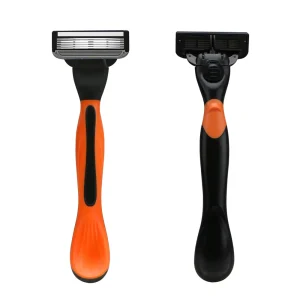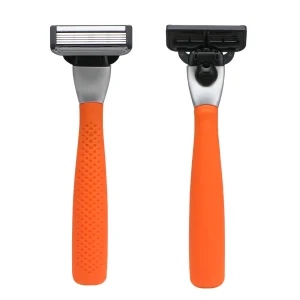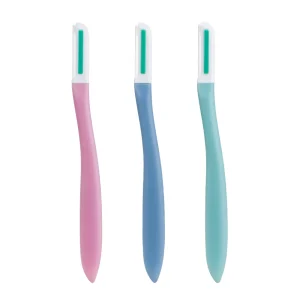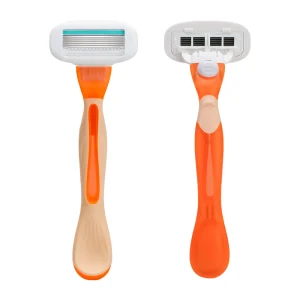


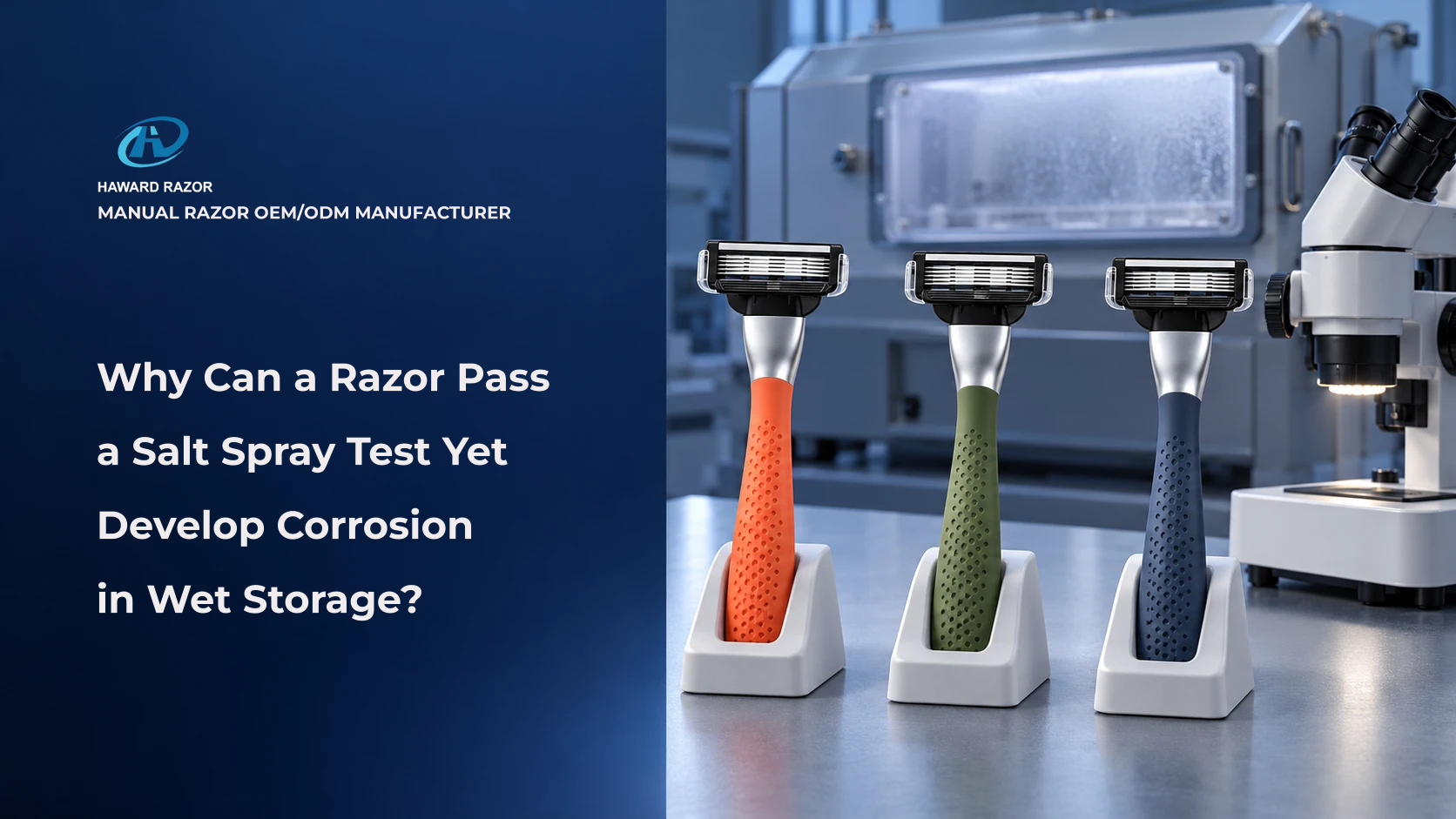
A razor may leave a corrosion chamber with an acceptable appearance yet develop staining around its blade seat after repeated wet storage. For a quality manager, the difficulty is deciding whether the issue comes from the cutting edge, a plated handle, a fastener, or retained residue. One pass result hides these differences. The consequences include unclear specifications, inconsistent inspection decisions, and avoidable product returns. A useful razor corrosion test connects controlled laboratory exposure with the assembled product’s expected use. It separates water exposure from salt conditions, identifies the surfaces that matter, and defines acceptance before testing begins. This gives the Manufacturer and buyer evidence for selecting materials, confirming finishes, and approving a repeatable production specification for the intended sales channel.
A useful razor corrosion test combines controlled salt exposure, product-specific wet storage, and separate acceptance criteria for cutting edges, handles, fasteners, and finishes. For Haward OEM and ODM projects, agree on water chemistry, exposure duration, sample preparation, inspection methods, and functional limits before testing; salt-spray hours alone cannot establish service life.
The sections below help quality managers, importers, and product engineers build a practical validation brief. We explain what the standards establish, how to reproduce wet storage, which measurements matter after exposure, and how to turn the results into clear approval requirements for a Customizable razor program with your chosen Supplier.
Separate the Test Environment from the Product Requirement
Use ISO 9227 and ASTM B117 Within Their Scope
ISO 9227 describes neutral, acetic-acid, and copper-accelerated acetic-acid salt spray methods. ASTM B117 specifies how to operate a controlled salt-fog environment. Neither establishes a universal exposure duration or pass limit for razors.
For a salt spray razor test, identify the selected method and revision in the purchase specification. Avoid accepting a report that says only “salt tested.” Neutral salt spray and acidified methods use different environments, so results need their full test conditions attached.
- Test definition: standard, method, revision, duration, and specimen condition.
- Product definition: model, material, finish, assembly state, and production lot.
- Acceptance definition: assessed zones, inspection method, and functional requirements.
ISO 9227 cautions against using these tests to rank different materials for long-term corrosion resistance. ASTM B117 also identifies limitations in predicting natural exposure from salt-fog results alone. For an OEM comparison, keep the product configuration and evaluation method consistent. The Manufacturer should use the result as evidence for the specified condition and combine it with relevant use-exposure evidence.
Choose Water and Salt Exposures That Answer Different Questions
Build a Small, Clearly Defined Test Matrix
A practical plan separates routine rinsing, retained moisture, and controlled salt exposure. The water conditions below are illustrative development settings, requiring buyer approval. They are not standardized razor performance requirements.
| Exposure | Parameters | Duration | Main question |
|---|---|---|---|
| Rinse and open drying | 30 ± 2°C water; 60-second rinse; room at 23 ± 2°C | 14 daily cycles | Does the assembly drain and recover between exposures? |
| Rinse and damp storage | Same rinse; 2-minute drain before placing in the specified cap or case | 14 daily cycles | Where does retained moisture affect the product? |
| Neutral salt spray | Nominal 5% NaCl; 35°C; collected solution pH 6.5–7.2 | As specified for the product | Does the selected metal or coating meet the agreed salt-exposure requirement? |
For water testing, fix water chemistry, flow, orientation, and the interval between cycles. Record room humidity and case closure. Q-Lab’s ISO 9227 overview summarizes nominal salt-test conditions; the laboratory must follow the complete selected standard, including operating tolerances and chamber verification. This matrix establishes separate comparisons without treating salt fog as a simulated bathroom.
Make Wet Storage Validation Repeatable

Control Water, Residue, and the Storage Arrangement
Wet storage validation should reproduce a defined scenario: a cartridge left draining on a stand, a capped disposable razor, or a reusable handle stored in a travel case. Test the configuration that the buyer intends to sell. A cap fitted immediately after rinsing creates a different exposure from an uncovered cartridge allowed to dry.
- Record water pH, chloride concentration in mg/L, and hardness.
- Keep water source and refresh frequency consistent across samples.
- Define whether the blade cartridge remains attached during storage.
- For residue testing, name the shaving product, dilution, dose, and rinse procedure.
- Use a water-only group to help interpret any additional residue effect.
A dry, unexposed reference helps distinguish pre-existing discoloration from exposure-related changes. Continuous immersion can be a separate screening condition when relevant, but it does not reproduce alternating rinsing and drying. The Supplier should also distinguish intended storage from a deliberate stress scenario. For an ODM travel razor, for example, a closed-case condition may be informative even when care instructions recommend drying before storage.
Prepare Representative Samples and Non-Interfering Fixtures

Preserve the Product Condition Being Evaluated
A razor corrosion test should start with traceable production-representative samples. Record blade batch, handle finish, fastener specification, assembly date, and any protective treatment. Photograph the cutting region, joints, and cosmetic surfaces before exposure. Cleaning must follow the selected method and agreed specimen condition; undocumented solvent cleaning can change the surface being assessed.
For development, an illustrative allocation could use five assemblies from each of three lots per condition, plus unexposed controls. This is a screening example, not a statistical release plan. The final sample size depends on variability, product risk, and the confidence required.
- Use suitable nonmetallic supports and keep specimens electrically isolated.
- Prevent contact and runoff between samples.
- Document orientation, drainage, and fixture contact locations.
- Keep assembled-product exposure separate from component-level investigation.
For a Customizable metal handle, test the actual finish variant. A report for one coating cannot automatically approve every decorative alternative. The Manufacturer should retain the sample map and fixture photographs so the next OEM production review can reproduce the setup.
Inspect Before Cleaning and Confirm What the Deposit Represents
Distinguish Surface Residue from Metal Damage
Post-test examination begins with documented removal, conditioning, and cleaning steps appropriate to the selected method. Photograph deposits before any cleaning that could remove evidence. Then perform the agreed rinse and drying sequence, recording the interval before inspection. Uncontrolled polishing or abrasive wiping can obscure the original condition.
A colored mark alone does not identify its source. Record location, affected area, and whether it remains after the permitted cleaning. Investigate suspected pitting, coating separation, and corrosion products using suitable microscopy. ASTM G46 provides guidance for examining and evaluating pitted metals; its procedures must be selected for the investigation.
- Use consistent lighting and image scale for all photographs.
- Map defects to the blade edge, body, joint, or decorative surface.
- Retain both before-cleaning and after-cleaning records.
- Escalate ambiguous findings to higher-resolution examination or deposit analysis.
For razor rust resistance, describe confirmed findings precisely. The Supplier should report “deposit requiring identification” when the evidence is incomplete, rather than assigning every stain to blade corrosion or dismissing it as harmless residue.
Apply Separate Acceptance Criteria to Each Product Zone
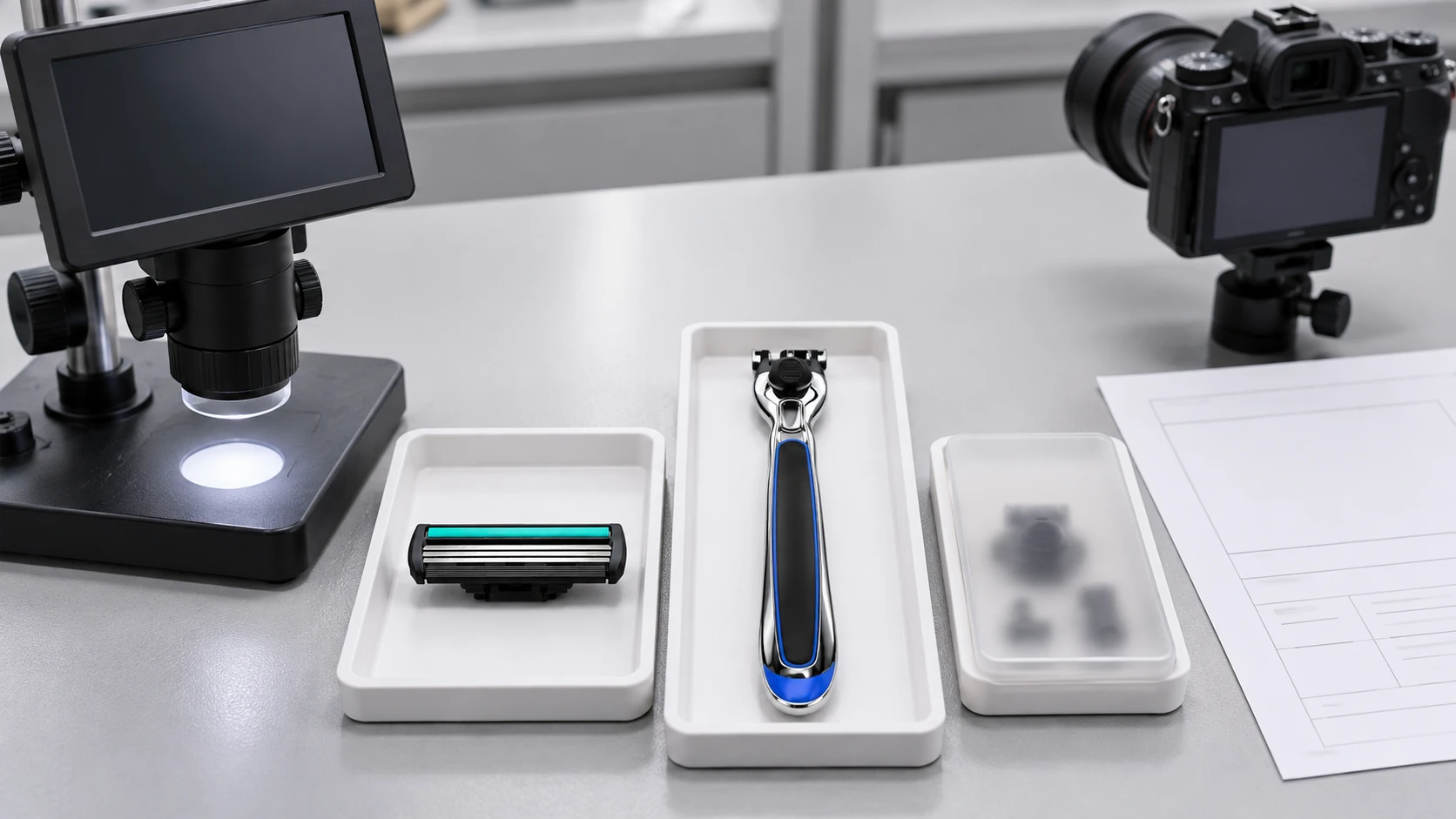
Protect Cutting Performance and Cosmetic Quality
A whole-product appearance score can overlook a small defect at a critical cutting edge. Agree on zone-specific acceptance before exposure. The following matrix identifies measurements to specify; it does not establish universal Haward pass values.
| Product zone | Measurement | Required acceptance definition |
|---|---|---|
| Cutting edges | Pit location and size in µm; cutting force in N | Defined edge region, detection capability, permitted damage, and functional limit |
| Metal handles | Affected area in %; blistering or coating loss | Cosmetic zones, permitted defect extent, and reference photographs |
| Fasteners and joints | Retention force in N or operating torque in N·mm | Post-exposure limits for retention, movement, and assembly security |
| Cosmetic finishes | Staining, gloss, and color difference where applicable | Viewing conditions, finish-specific measurement method, and approved limits |
For applicable metallic and inorganic coatings, ISO 10289 provides a corrosion-test rating framework. It does not replace a separate cutting-edge assessment. A “no visible corrosion” requirement must define lighting, magnification, and inspected area. Where color is measured, specify the color-difference equation and measurement geometry. The Manufacturer and buyer should agree how cosmetic observations and functional results combine into the final disposition.
Check Function After Exposure, Including the Cutting Edge
Compare Exposed Samples with Matched Controls
Visual inspection and functional testing answer different questions. A cartridge may look acceptable while its pivot becomes resistant, or a handle may show cosmetic staining while retaining mechanical function. An OEM validation report should preserve both findings.
For cutting performance, compare exposed blades with matched unexposed controls using a defined test medium, fixture, speed, and blade-conditioning method. Report force distributions and individual failures. Repeatedly cutting with the same specimen before and after exposure can introduce wear; use separate matched specimens unless the protocol specifically evaluates combined wear and corrosion.
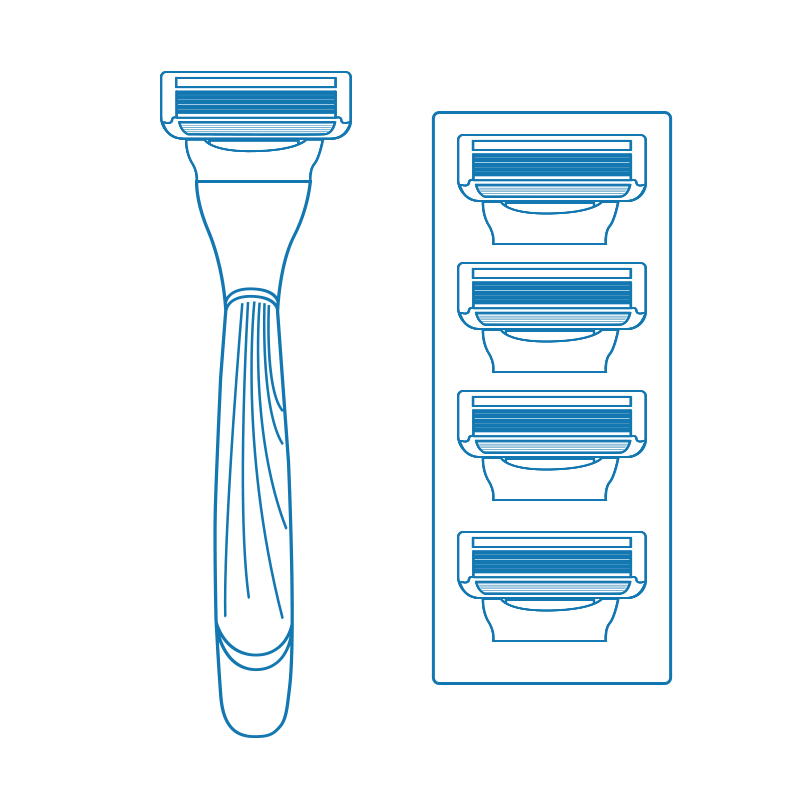
- Cartridge razors: check retention, release, and pivot return.
- Safety razors: check thread operation, head alignment, and blade clamping.
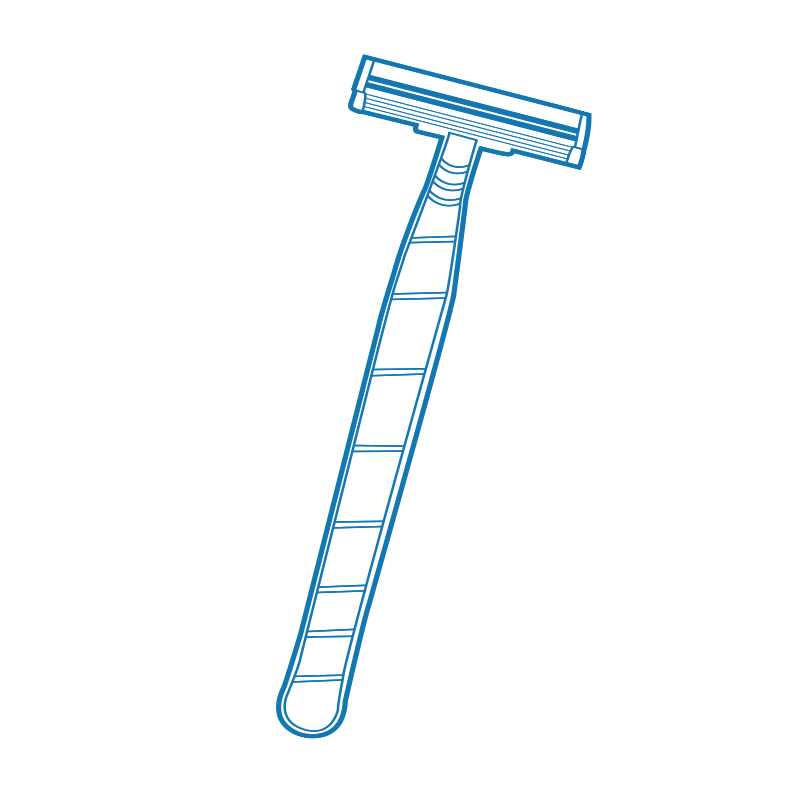
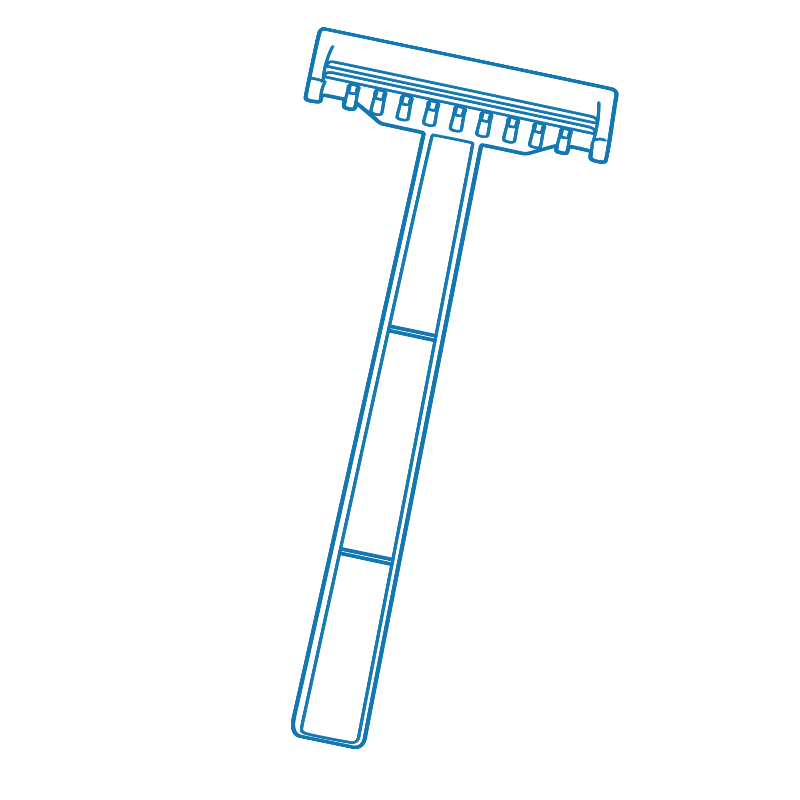
- Disposable razors: check fixed-head security and accessible metal joints.
Any proposed percentage limit for cutting-force increase requires product-specific justification. Salt-exposed samples should remain laboratory specimens and should not be used for shaving trials. For a Customizable program, connect each functional check to the chosen product architecture so the resulting specification evaluates what the buyer actually receives.
Turn the Test Report into a Repeatable Production Requirement
Keep Exposure Evidence Connected to Product Changes
The final razor corrosion test report should allow another laboratory to understand the configuration and decision. A statement such as “passed 48 hours” provides little information without the exposure method, examined surfaces, and acceptance rules.
- Identify the model, drawing revision, materials, finish, and sampled lots.
- Record the standard revision or project-defined wet storage validation procedure.
- Include chamber or water records, interruptions, and specimen orientation.
- Attach photographs, defect locations, and measured functional results.
- State the decision against each approved criterion and document exceptions.
When a Supplier changes blade processing, a coating source, handle metal, fastener, or protective cap, review whether the previous exposure remains representative. Revalidation should follow the affected component and failure mechanism. This gives the Manufacturer a practical basis for improving consistency across OEM and ODM orders.
For Haward projects, retain the approved brief alongside the sample specification. It makes razor rust resistance a defined engineering requirement and helps technical buyers compare evidence without assuming that every salt-spray report describes the same product performance.
Define the Corrosion Requirement Before Approving Production
Send Haward your razor model, target market, storage scenario, preferred test method, and acceptance requirements. We can discuss a Customizable OEM or ODM validation brief that connects water exposure, controlled salt testing, and component-specific inspection to your purchasing specification.