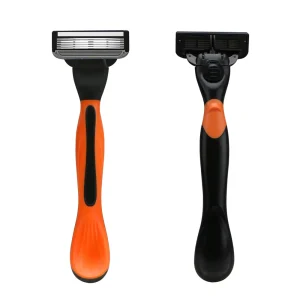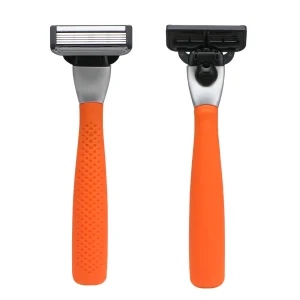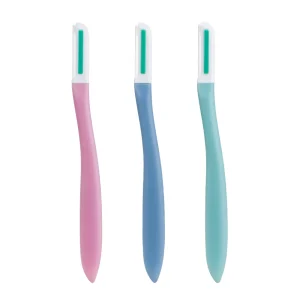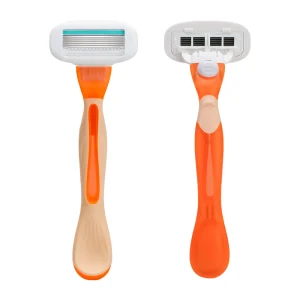

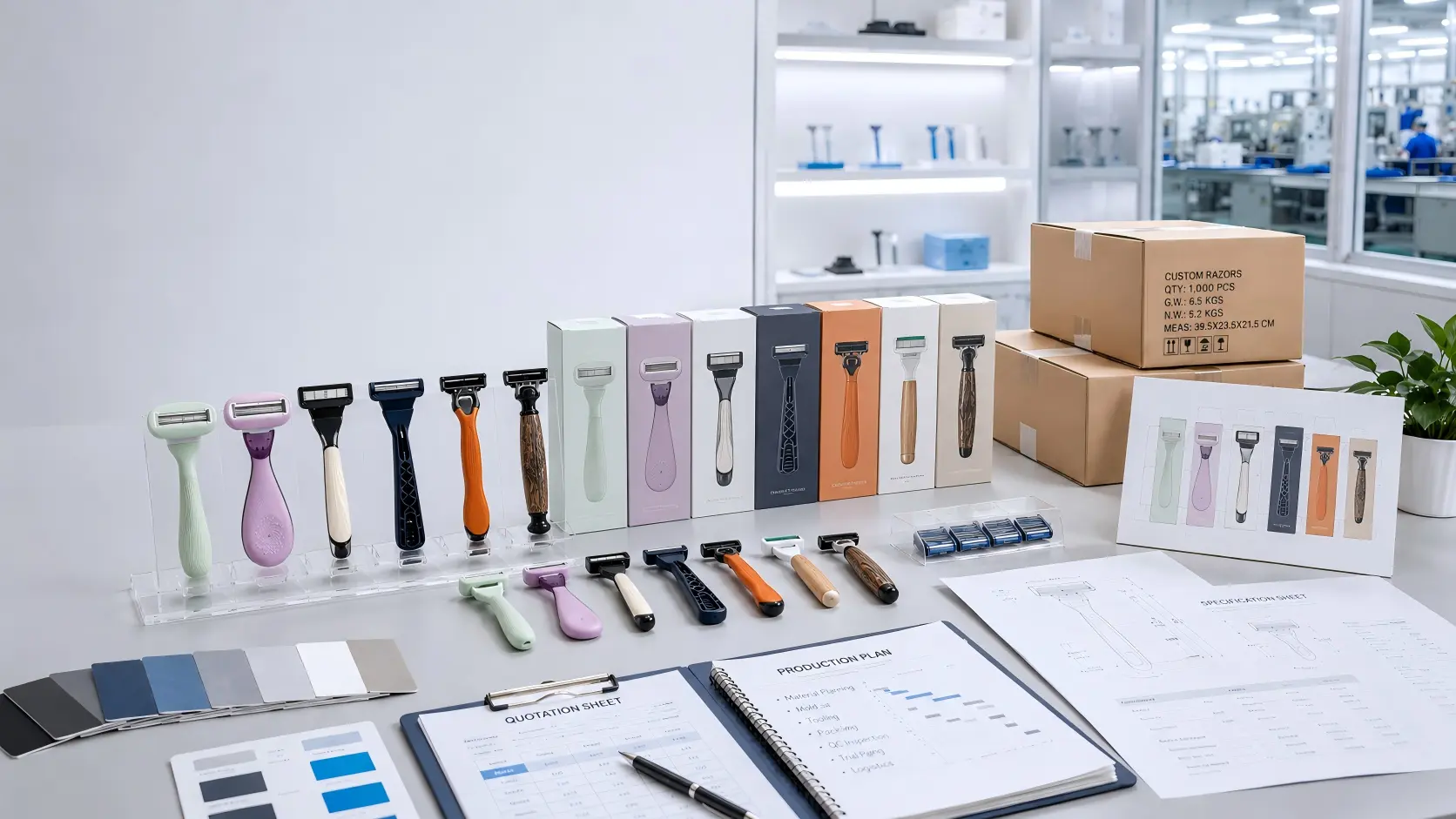
Many private label buyers ask for a Customizable Razor with unique colors, packaging, logo printing, and retail-ready presentation, but they underestimate how MOQ affects the entire project. A low first order may not meet material, packaging, or production requirements. A high first order may create inventory risk, cash flow pressure, and slow market testing. The problem becomes worse when a Supplier gives a simple MOQ number without explaining the real cost drivers behind OEM and ODM customization. If the Manufacturer cannot clarify tooling, packaging, component sourcing, and lead time, MOQ becomes more than a quantity issue. It becomes a supply chain risk and a commercial risk.
A qualified custom Razor Manufacturer should explain MOQ by component, packaging, color, tooling, and production process. Haward Razor helps private label buyers balance Customizable OEM and ODM requirements with realistic MOQ, quality control, packaging, and export supply chain planning.
For importers, private label brands, and engineering wholesalers, MOQ is not just a number on a quotation. Below, we will break down the industry logic behind custom Razor MOQ and show what experienced buyers usually confirm before approving an OEM or ODM order.
Why MOQ Exists in Custom Razor Manufacturing
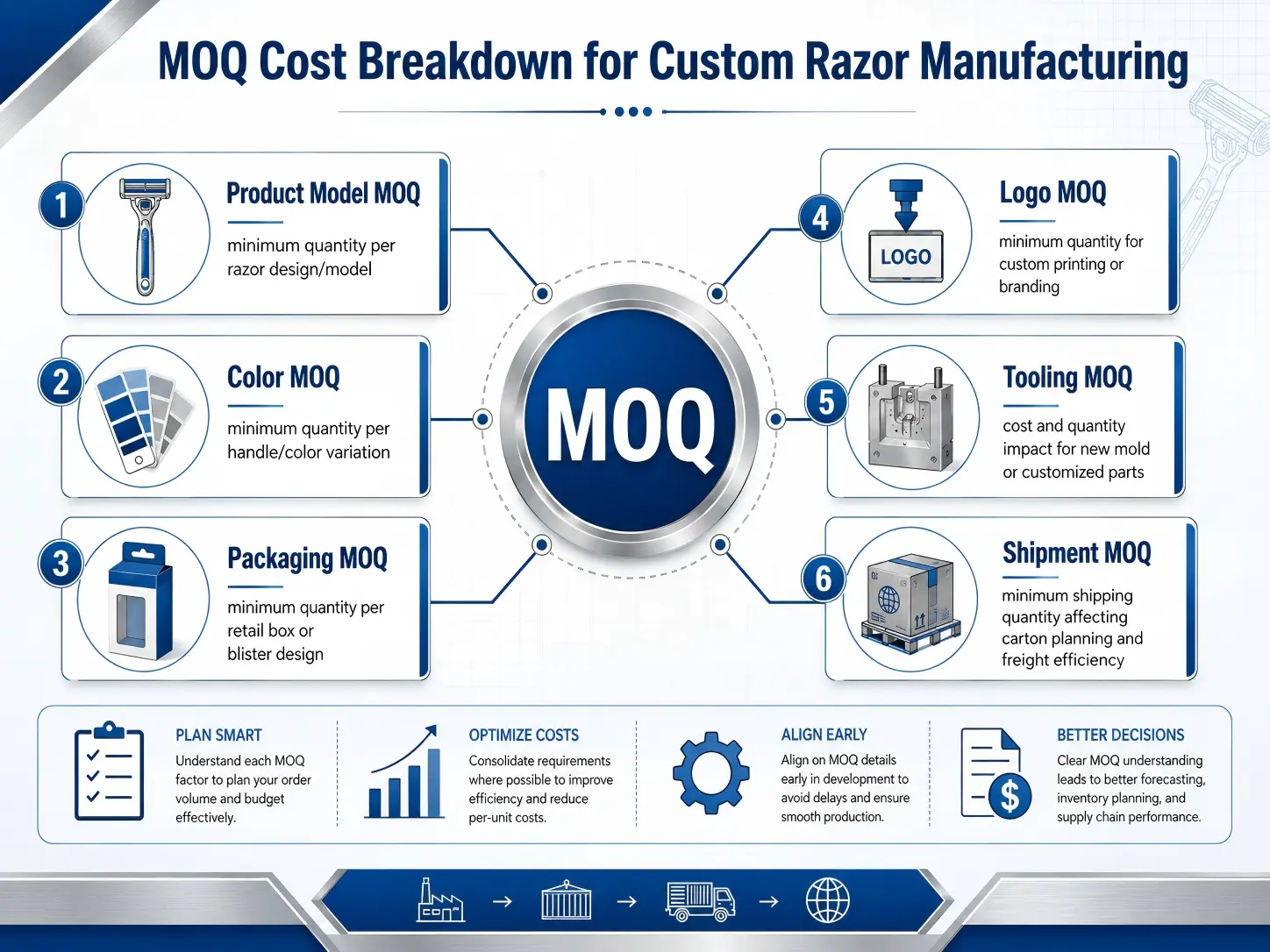
MOQ exists because every Razor order requires production preparation before mass manufacturing can begin. A Manufacturer must arrange raw materials, blade components, plastic injection parts, rubber grip materials, packaging paper, printing plates, labor scheduling, inspection resources, and export cartons. Even when a buyer only wants a small quantity, the Supplier still needs to open a production plan and allocate factory capacity.
For standard Razor models, MOQ may be more flexible because the Manufacturer may already have common components, existing molds, and regular material stock. For Customizable OEM or ODM projects, MOQ usually increases because the order may require special handle colors, logo printing, unique packaging, custom blade cartridge combinations, or private label artwork.
Common MOQ Drivers
- Raw material MOQ from plastic resin, rubber, steel, or packaging suppliers.
- Color MOQ when the buyer requests specific handle colors or cartridge colors.
- Packaging MOQ for printed cards, boxes, blister trays, display cartons, or instruction sheets.
- Production line setup cost for changing models, colors, or packaging formats.
- Inspection cost for checking blade quality, handle assembly, packaging, and carton accuracy.
A professional Supplier should explain the MOQ structure clearly instead of giving one fixed number without context. This transparency helps the buyer control hidden cost risk.
MOQ Is Different for OEM and ODM Razor Projects

One of the most important questions is whether the project is OEM or ODM. In an OEM Razor project, the buyer usually selects an existing model from the Manufacturer and customizes logo, color, packaging, or retail presentation. Because the factory already has tooling and production experience, OEM MOQ is usually easier to manage.
In an ODM Razor project, the buyer may request a new handle shape, new cartridge structure, new packaging design, special function, or exclusive product concept. This requires more engineering, sampling, mold evaluation, component testing, and production validation. As a result, ODM MOQ is often higher than OEM MOQ because the Supplier must recover development cost and reduce production uncertainty risk.
How Buyers Should Decide
- Use OEM when speed, cost control, and market testing are the main priorities.
- Use ODM when product differentiation and long-term brand identity are more important.
- Ask the Manufacturer which parts are already available and which parts require new tooling.
- Confirm whether Customizable colors and packaging can be done without changing core tooling.
For many first-time private label buyers, starting with OEM is a practical way to reduce MOQ pressure while still building a branded Razor line.
Typical MOQ Factors for Custom Razor Buyers
| MOQ Factor | What It Means | Buyer Risk If Ignored |
|---|---|---|
| Product Model MOQ | Minimum quantity required for a specific Razor model | SKU fragmentation risk |
| Color MOQ | Minimum quantity for each handle, rubber, or cartridge color | Overstock risk |
| Packaging MOQ | Minimum quantity for printed cards, paper boxes, blister packs, or display boxes | Packaging waste risk |
| Logo MOQ | Minimum quantity for pad printing, hot stamping, labels, or molded logo | Brand inconsistency risk |
| Tooling MOQ | Quantity needed to justify new mold or special component development | Mold cost recovery risk |
| Shipment MOQ | Quantity needed to make freight, carton loading, and export cost reasonable | Landed cost risk |
Why Packaging MOQ Is Often Higher Than Product MOQ
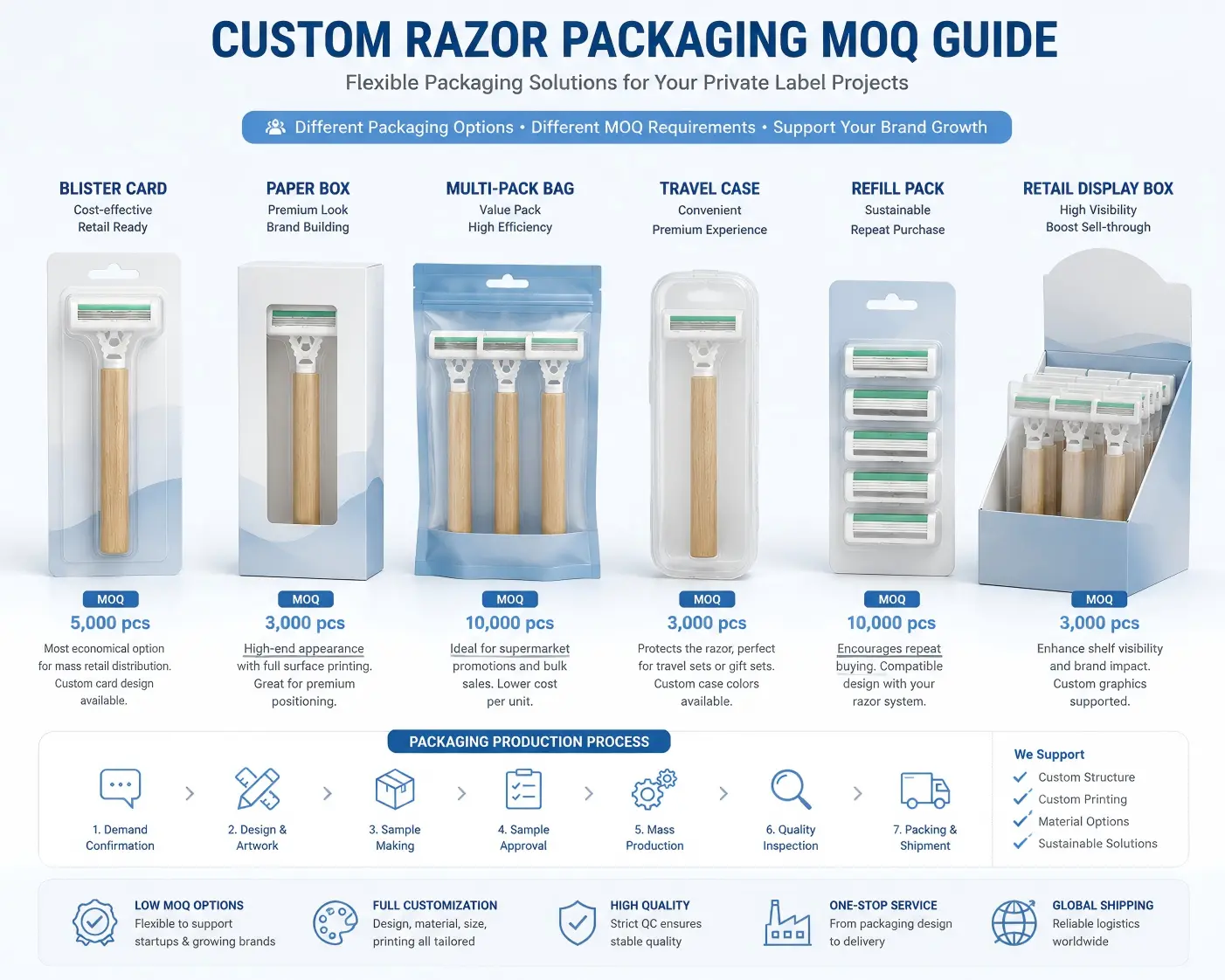
Many buyers focus on Razor quantity but forget that packaging can have its own MOQ. For private label products, packaging suppliers often require minimum quantities for printed paper cards, boxes, blister trays, color labels, instruction sheets, and retail display cartons. This means a Manufacturer may be able to produce the Razor itself at a lower quantity, but the Customizable packaging may require a higher production run.
This is especially important for retail and e-commerce brands. Retail packaging must include barcode position, hanging hole design, clear product display, warning text, and shelf impact. E-commerce packaging must consider shipping protection, product photography, customer opening experience, and parcel size. Each packaging decision can affect carton size, freight cost, warehouse handling, and delivery schedule.
Packaging Questions to Ask
- Is the MOQ based on product quantity or printed packaging quantity?
- Can the Supplier use neutral packaging for trial orders?
- Can the Manufacturer support sticker labels before full custom printing?
- Does each SKU require separate artwork, barcode, and carton mark?
- Will packaging changes affect lead time or pre-shipment inspection?
A smart MOQ strategy often begins with packaging simplification, not product simplification.
How Color Customization Affects MOQ

Color customization is one of the most common requests in custom Razor sourcing. Buyers often want their brand color on the handle, cartridge, rubber grip, protective cap, or packaging. This is reasonable, but each color can create a separate MOQ requirement because the Manufacturer needs to prepare color masterbatch, injection molding setup, color matching approval, and production cleaning between colors.
If a buyer requests too many colors in the first order, the Supplier may need to split production into several small batches. This increases production setup cost, quality control workload, and color consistency risk. For a small private label launch, too many colors can also create slow-moving inventory.
Practical Color Strategy
- Start with one or two core colors for the first OEM order.
- Use packaging design to create variety instead of changing every Razor component.
- Ask the Manufacturer which standard colors are already available.
- Reserve special Customizable colors for repeat orders or larger campaigns.
- Keep approved color samples for future production control.
Color is important for brand identity, but uncontrolled color variation can create MOQ pressure and inventory complexity.
MOQ and Tooling: When New Mold Development Makes Sense
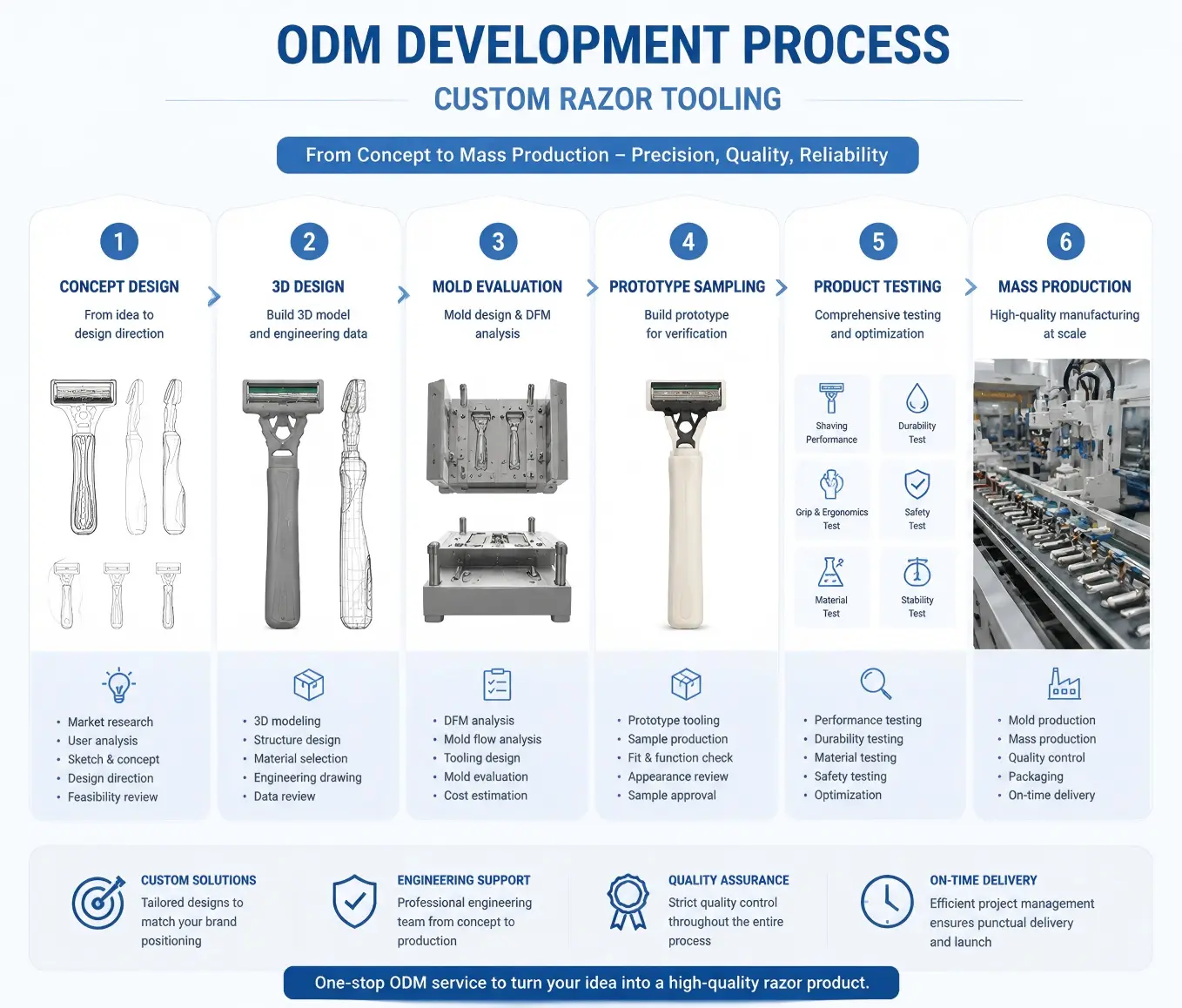
For ODM Razor projects, tooling is one of the biggest MOQ drivers. A new handle shape, new grip texture, new cartridge structure, new cap, or new travel case may require mold development. The Manufacturer must evaluate mold cost, engineering time, testing, trial production, and long-term order potential before accepting a low MOQ.
Private label buyers should treat tooling as an investment, not a one-time expense. If the brand only wants to test the market, using an existing OEM model is usually safer. If the brand has strong distribution, clear sales forecast, and long-term category planning, ODM tooling may be worthwhile because it creates stronger product differentiation.
Tooling Decision Checklist
- Is the new design necessary for market differentiation?
- Can an existing Razor model be modified instead of creating a new mold?
- What is the mold cost, and who owns the tooling?
- How many units are needed to recover the development cost?
- Will the new component affect quality testing, lead time, or replacement compatibility?
A responsible Supplier should explain tooling implications early. This prevents development delay risk and budget overrun risk.
MOQ Should Be Connected to Market Testing and Cash Flow
MOQ is not only a factory issue. It is also a business planning issue. A buyer may want a lower MOQ to reduce cash flow pressure, but a quantity that is too low can increase unit cost, packaging cost, and freight cost. A buyer may accept a higher MOQ to get a better price, but excessive inventory can create cash flow risk and slow-moving stock risk.
The right MOQ depends on the sales channel. Retail buyers may need enough stock for shelf launch, promotion, and distributor allocation. E-commerce brands may prefer smaller first orders with faster replenishment. Wholesalers may need mixed models to serve different customers, but too many SKUs can reduce purchasing efficiency.
Recommended First-Order Planning
- Define the target channel before negotiating MOQ.
- Calculate expected monthly sales, not only total order budget.
- Separate test-market quantity from long-term replenishment quantity.
- Ask the Manufacturer for repeat order lead time before confirming the first order.
- Build a reorder plan before inventory reaches a critical level.
A good MOQ decision protects both the buyer’s brand launch and the Supplier’s production efficiency.
How MOQ Changes by Razor Category
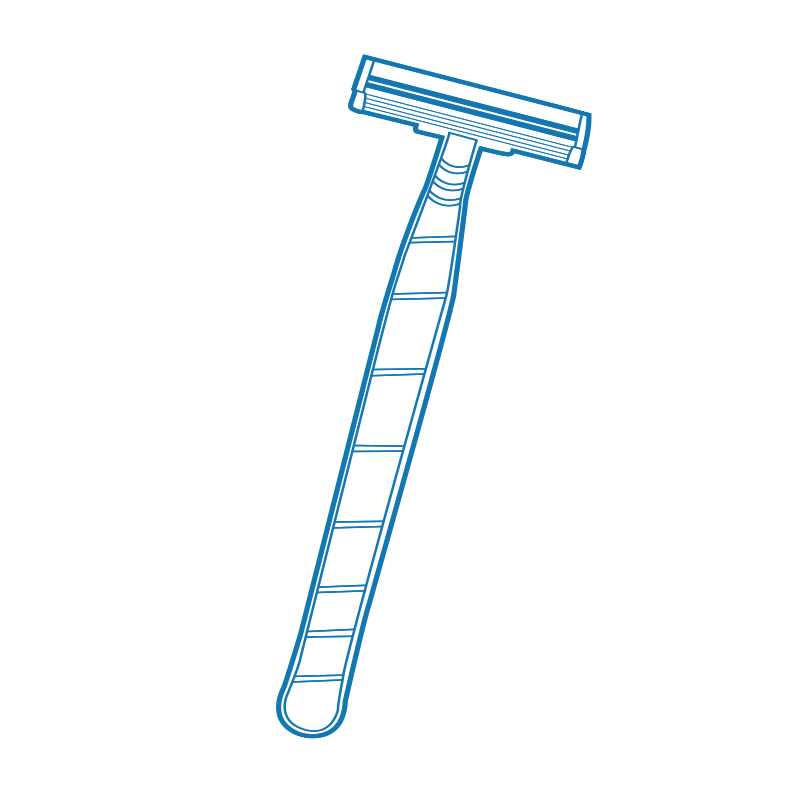
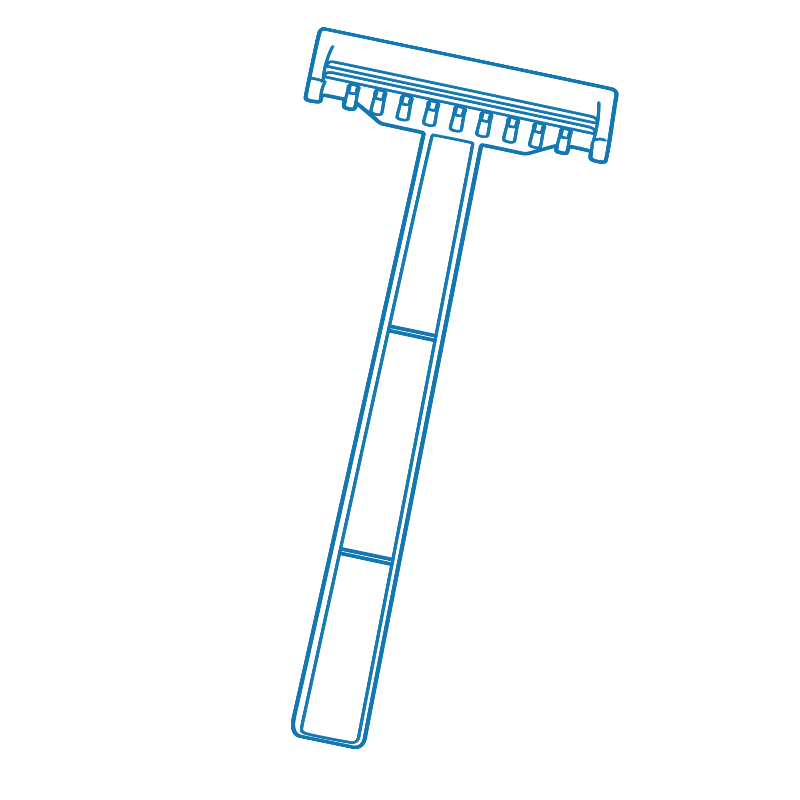
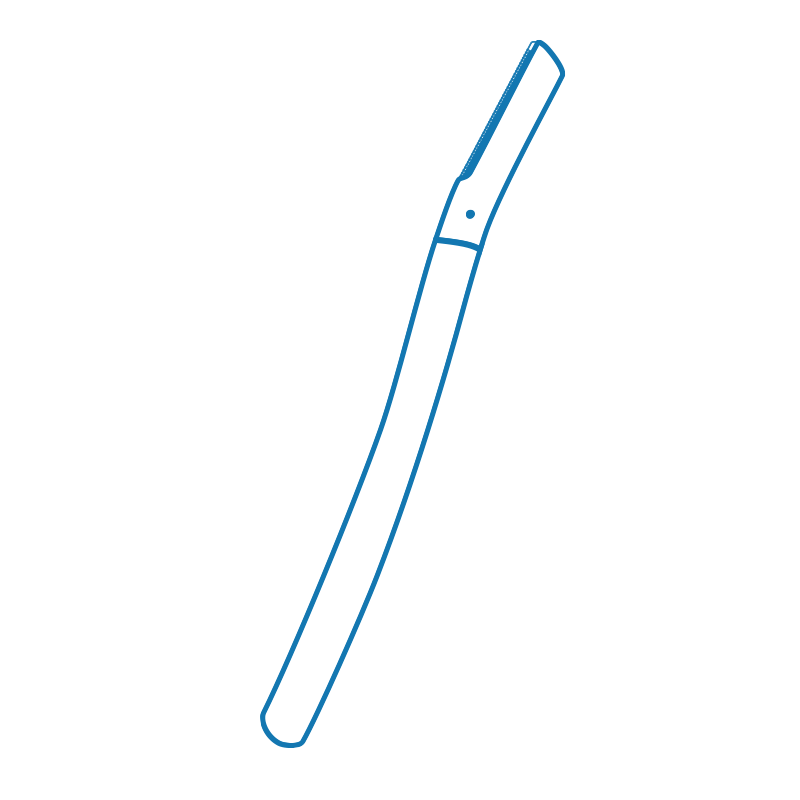
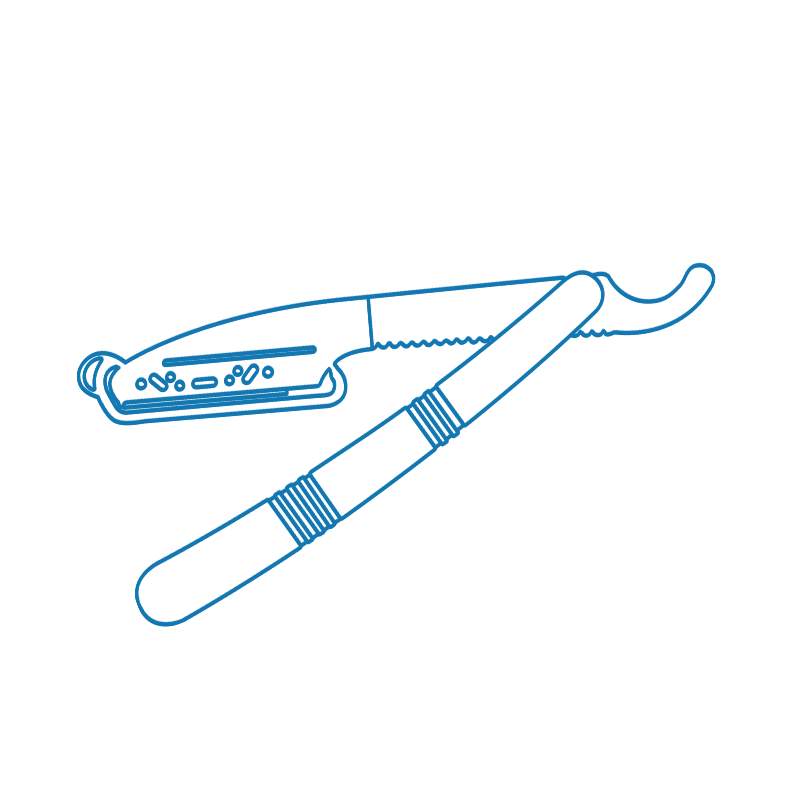
Different Razor categories have different MOQ logic. A disposable Razor, women’s system Razor, eyebrow Razor, safety Razor, and mini travel Razor do not use the same production process, packaging structure, or customization method. Buyers should avoid assuming that one MOQ applies to all product types.
For example, a disposable Razor may have lower product complexity but higher packaging volume. A system Razor may require more precise cartridge and handle matching. An eyebrow Razor may have simpler structure but higher sensitivity to blade safety and cap protection. A safety Razor may involve metal components, finishing, and packaging that affect MOQ differently.
| Razor Category | Common MOQ Pressure Point | Private Label Buyer Focus |
|---|---|---|
| Women’s System Razor | Handle color, cartridge compatibility, retail packaging | Comfort, premium positioning, refill strategy |
| Disposable Razor | Large volume production and packaging efficiency | Unit cost, bundle quantity, freight cost |
| Eyebrow Razor | Blade safety, protective cap, small retail packs | Beauty channel, precision trimming, packaging appeal |
| Safety Razor | Metal material, surface finishing, gift box packaging | Premium image, durability, compliance documentation |
| Mini Travel Razor | Compact packaging, color variety, travel case | E-commerce bundles, convenience, portability |
A professional Manufacturer should help buyers compare Razor categories by both commercial potential and MOQ feasibility.
Quality Control Must Not Be Reduced to Meet a Lower MOQ

Some buyers push for a very low MOQ and very low price at the same time. This can create pressure on production, materials, packaging, and inspection. A serious Manufacturer should never reduce essential quality control simply to accept a smaller order. For blade products, quality stability is critical because the Razor touches skin directly.
MOQ negotiation should not compromise Incoming Quality Control, In-Process Quality Control, Final Random Inspection, AQL inspection, blade alignment checks, handle strength checks, cap fitting checks, packaging checks, or carton verification. If the Supplier skips inspection to save cost, the buyer may face customer complaint risk, product return risk, and brand reputation risk.
Minimum Quality Controls to Confirm
- Incoming material inspection for blade steel, plastic resin, rubber, and packaging material.
- Blade assembly inspection for blade position, cartridge stability, and shaving safety.
- Packaging inspection for artwork, barcode, sealing, and quantity.
- Pre-shipment inspection for final appearance, function, carton marks, and export readiness.
A lower MOQ is useful only when product quality remains stable.
Compliance and Documentation Costs Should Be Discussed Early
Private label buyers often ask about MOQ first and compliance later. This sequence can create problems. If the target retailer or market requires specific documents, the Supplier must know early because testing, certification, material confirmation, and labeling requirements may affect cost and lead time.
Common documents may include ISO 9001, BSCI, SEDEX, GRS, BRC, REACH, RoHS, MSDS, product specification sheet, inspection report, commercial invoice, and packing list. Not every Razor order needs every document, but a qualified Manufacturer should understand how to support export buyers and retailer requirements.
Compliance Planning Steps
- Confirm the target country and sales channel.
- List required compliance documents before quotation finalization.
- Ask the Manufacturer which reports are available and which tests need arrangement.
- Confirm whether compliance cost is included in the quotation.
- Keep final documents linked to the approved product specification.
Compliance planning reduces customs delay risk, retailer rejection risk, and listing suspension risk.
How to Negotiate MOQ Without Damaging Supplier Cooperation
MOQ negotiation should be based on logic, not pressure. A buyer who only asks for “lower MOQ and lower price” may not get the best support from the Manufacturer. A better approach is to explain the launch plan, target market, expected reorder schedule, packaging direction, and future volume potential. This helps the Supplier understand whether a smaller first order can lead to larger cooperation.
A professional Supplier may offer solutions such as using existing Razor models, limiting color options, choosing standard packaging, combining multiple SKUs under one packaging format, or using sticker labels before full printed packaging. These methods can reduce MOQ pressure without damaging production efficiency.
Practical MOQ Negotiation Methods
- Ask for standard model recommendations before requesting full customization.
- Reduce the number of colors in the first order.
- Use shared packaging structure with different labels.
- Accept a higher unit price for a smaller trial order when necessary.
- Provide a realistic reorder forecast to support future pricing improvement.
The best MOQ negotiation creates a workable balance between buyer testing needs and Manufacturer production reality.
Build a Scalable Custom Razor Program
MOQ becomes easier to manage when buyers think in product programs instead of single orders. A private label Razor program may start with one main OEM model, one packaging style, and one core color. After sales data improves, the buyer can expand into additional colors, refill packs, travel sets, eyebrow Razor extensions, safety Razor gift sets, or deeper ODM development.
This staged approach reduces launch risk and helps the Supplier plan production more efficiently. Haward Razor supports private label buyers with Customizable OEM and ODM Razor options, packaging coordination, quality control, export documentation, and long-term supply chain planning. The goal is not only to meet MOQ, but to build a repeatable product line that can grow across retail, e-commerce, wholesale, and promotional channels.
Recommended Growth Path
- Start with a proven OEM Razor model.
- Customize color, logo, and simple packaging first.
- Collect market feedback and reorder data.
- Upgrade packaging or add product bundles.
- Move into ODM development when demand becomes stable.
Conclusion

MOQ should protect your cash flow, brand launch, and supply chain. Choose a Razor Manufacturer that explains OEM, ODM, Customizable packaging, quality control, and compliance clearly. Contact Haward Razor to plan a realistic custom Razor MOQ strategy for your private label market.