



A shaving brand may update its sourcing arrangements while thousands of customers still use its Razor handles. The next purchase order can move, but the cartridge connection, approved materials, and refill demand do not disappear. If drawings are incomplete or production tooling becomes unavailable before replacement supply is approved, the transition can interrupt retail replenishment and create requalification costs. A practical razor supplier exit plan keeps those dependencies visible before any change is needed. It defines which records may be shared, how tooling and inventory will be handled, and who supplies compatible refills during the handover. Agreed early, these provisions give both the brand and Manufacturer a clear way to manage contract expiry, platform retirement, or a planned production transfer.
A qualified Supplier should offer documented specifications, clear tooling rights, authorized data access, and agreed transition support. For Haward Customizable OEM and ODM projects, a razor supplier exit plan should protect approved products, respect intellectual-property rights, and maintain replacement cartridge continuity through defined responsibilities, supply periods, and approval gates.
Brand owners, procurement teams, importers, and engineering wholesalers can use the following sections to examine the details that determine whether a handover works in practice. We will connect document rights, mold readiness, refill coverage, and approval gates so each commercial promise has a clear operational deliverable and clearly accountable owner.
Agree When the Transition Plan Becomes Active
Keep Contract Planning Separate from a Decision to Switch
A razor supplier exit plan is useful even when both parties expect a long relationship. It provides an agreed response to contract expiry, a discontinued cartridge platform, a planned site transfer, or another defined event. Routine price discussions should not automatically trigger a handover.
The UK government’s Sourcing Playbook recommends early transition planning with defined activities, responsibilities, dependencies, and asset records. Although written for public-service procurement, that planning approach can be adapted to a Razor program.
- Activation: identify who gives notice and which contractual conditions apply.
- Scope: list the affected SKUs, territories, and manufacturing activities.
- Continuing orders: define treatment of accepted orders and scheduled releases.
- Accountability: nominate commercial and technical contacts on both sides.
Review the plan when the product range or production arrangement changes. For an ODM platform, continued cartridge purchases from the existing Supplier may remain the most practical solution even if handle decoration or retail packing moves elsewhere.
Separate Tooling Ownership from Permission to Use Technical Data
Define the Rights Attached to Each Deliverable
Paying for a mold should not be treated as evidence of unrestricted rights to every drawing, cartridge mechanism, or manufacturing process. The agreement needs to address physical tooling ownership, design ownership, and permitted use separately.
WIPO’s guidance on collaborative innovation distinguishes pre-existing intellectual property from information developed during a project. That distinction matters when a Customizable handle uses a Manufacturer’s established cartridge connection.
- Identify buyer-supplied designs and agreed project deliverables.
- Identify Supplier-owned platform designs and confidential know-how.
- Specify whether files may be shared with an approved receiving Manufacturer.
- State whether manufacturing, modification, or sublicensing is permitted.
- Define which rights continue after the supply agreement ends.
An OEM label does not settle those questions, and an ODM purchase does not automatically include transferable design rights. Where the required permission is unavailable, the commercial options may include ongoing component supply, a negotiated license, or development of a separately qualified design. Have counsel align the agreed rights with the contract and applicable law.
Build a Technical Handover Register by SKU and Revision
Transfer Usable Records, Not an Unsorted Folder
An effective OEM transition plan identifies the records needed to reproduce the approved Razor and confirms which records may be transferred. Assign each deliverable an owner, revision, format, due date, and acceptance status.
| Record Group | Required Detail | Acceptance Check |
|---|---|---|
| Product drawings | Dimensions, tolerances, interface revision | Files open and match the approved SKU |
| Approved materials | Grade, source, finish, permitted alternatives | Each item maps to the current bill of materials |
| Tooling records | Tool ID, cavities, repairs, spare inserts | Records match the physical asset |
| Quality references | Signed samples, test methods, acceptance limits | Method and sample revisions agree |
| Packaging files | Dielines, artwork, barcode and pack-count revisions | Files match the destination-market version |
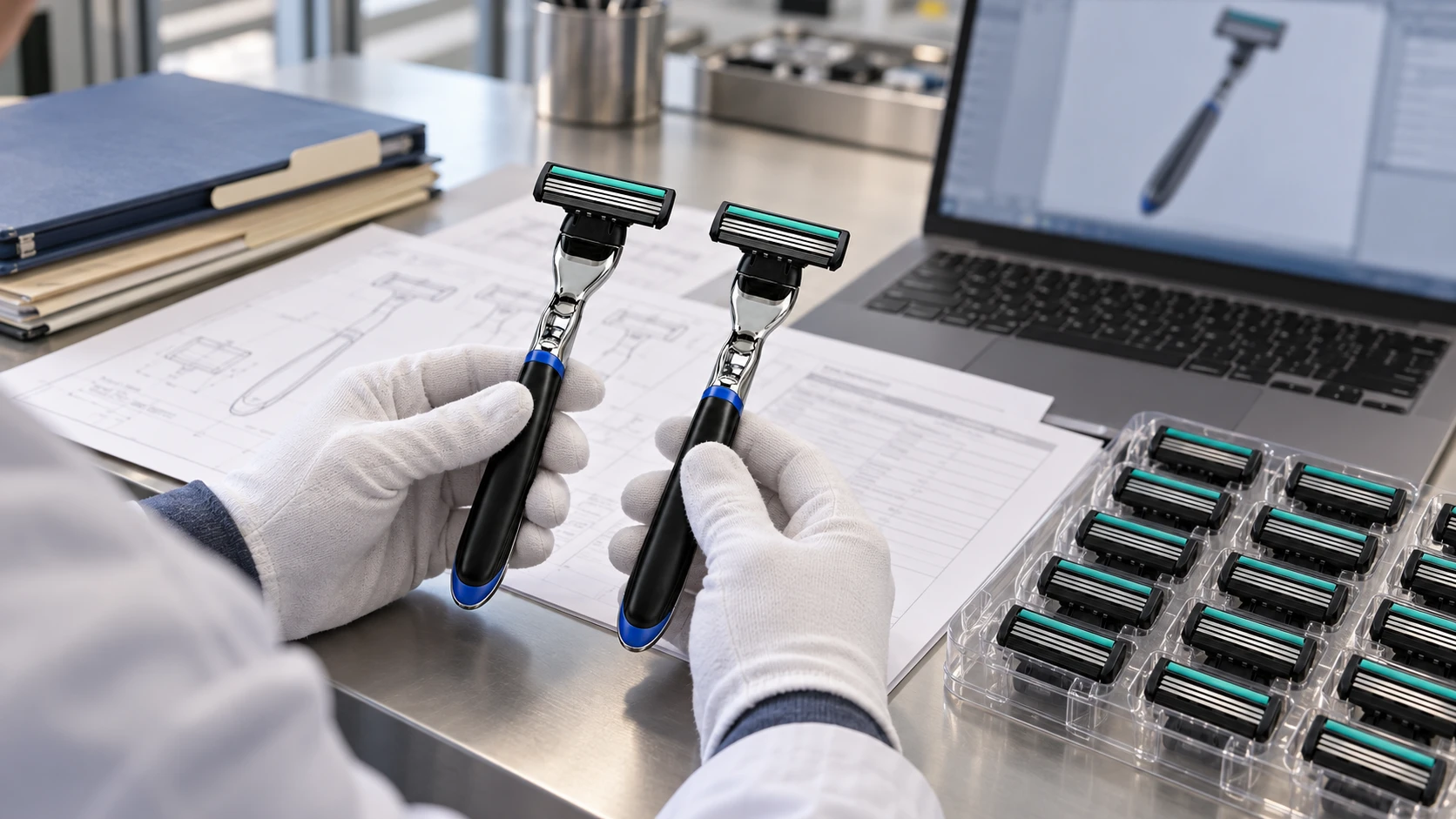
Specify editable formats where authorized, plus readable reference copies. A rendered image cannot replace dimensional information needed to manufacture a part. Conversely, receiving a CAD file does not establish permission to manufacture it.
Keep a signed handover acceptance record showing missing items and their resolution dates. Effective razor tooling data transfer means the receiving team can identify, open, and interpret the agreed information without relying on informal messages.
Check Mold Readiness Before Scheduling a Physical Transfer
Match the Tool to the Receiving Production Equipment
A mold that runs well at one factory may need adaptation at another. Machine interfaces, cooling connections, controls, handling equipment, and available process knowledge all affect the restart. Plan the move around verified readiness rather than the transport date alone.
The tooling condition review should cover:
- Tool identification, photographs, ownership record, and storage location.
- Operating cavities, blocked cavities, shot count where recorded, and wear history.
- Recent maintenance, repairs, spare inserts, and replacement-part drawings.
- Compatible press requirements, connections, and auxiliary equipment.
- Agreed packing, transport, insurance, and receiving-inspection responsibilities.
For an overmolded Razor handle, identify both molding stages and their dependent fixtures. For cartridge components, include the assembly nests and inspection gauges that the transfer actually requires and permits.
Schedule a witnessed trial where appropriate. Existing process settings are starting references, not automatic approval on different equipment. The Supplier and receiving Manufacturer should agree how adaptation costs, repairs, and unsuccessful trials are handled before the mold leaves its current site.
Preserve Approved Materials Through the Handover
Control Substitutions and Requalification Together
A cartridge can look unchanged while its blade coating, resin, lubricating strip, or assembly process has changed. The approved bill of materials should therefore identify the material and component references that determine the agreed product performance.
- Blades: approved specification, coating reference, and qualification evidence.
- Resins: exact grade, color system, and relevant processing requirements.
- Lubricating strips: approved component code and performance requirements.
- Packaging: protective features, print revision, and transport configuration.
If an upstream formulation is confidential, agree what specification and test evidence can lawfully be supplied. Do not assume that the current Manufacturer can disclose another company’s proprietary recipe.
Any proposed alternative should follow written change approval and product-specific revalidation. An ISO 9001 certificate, where required by the buyer, supports review of the quality management system; it does not establish interchangeability of two cartridge materials. In Customizable OEM and ODM programs, link each approved alternative to its test report and effective production lot.
Give Replacement Cartridges Their Own Supply Commitment
Support the Handles Already in the Market
Replacement cartridge continuity deserves a separate schedule because refill demand can continue after starter-kit orders stop. The agreement should identify supported handle generations and cartridge versions, rather than promising generic compatibility.
Negotiate the practical terms of continued supply:
- Support period: a defined start, end, and review mechanism.
- Forecast and orders: planning information versus binding purchase commitments.
- Commercial terms: batch quantities, prices, payment, and delivery arrangements.
- Capacity and materials: responsibility for maintaining the required resources.
- Discontinuation: notice, final-order deadline, and final-delivery schedule.
These terms must be agreed; they are not universal Supplier obligations. A useful arrangement may keep cartridge production with the existing Manufacturer while another partner handles packaging or distribution.
If refill supply moves, validate attachment, retention, release, pivot behavior, and relevant shaving-performance requirements against the existing handle range. Appearance and blade count alone do not establish compatibility. A clear cartridge-version map helps the brand maintain accurate packaging claims and replenishment orders throughout the transition.
Size Bridge Inventory Against the Actual Supply Gap
Use a Dated Plan and One Consistent Unit of Measure
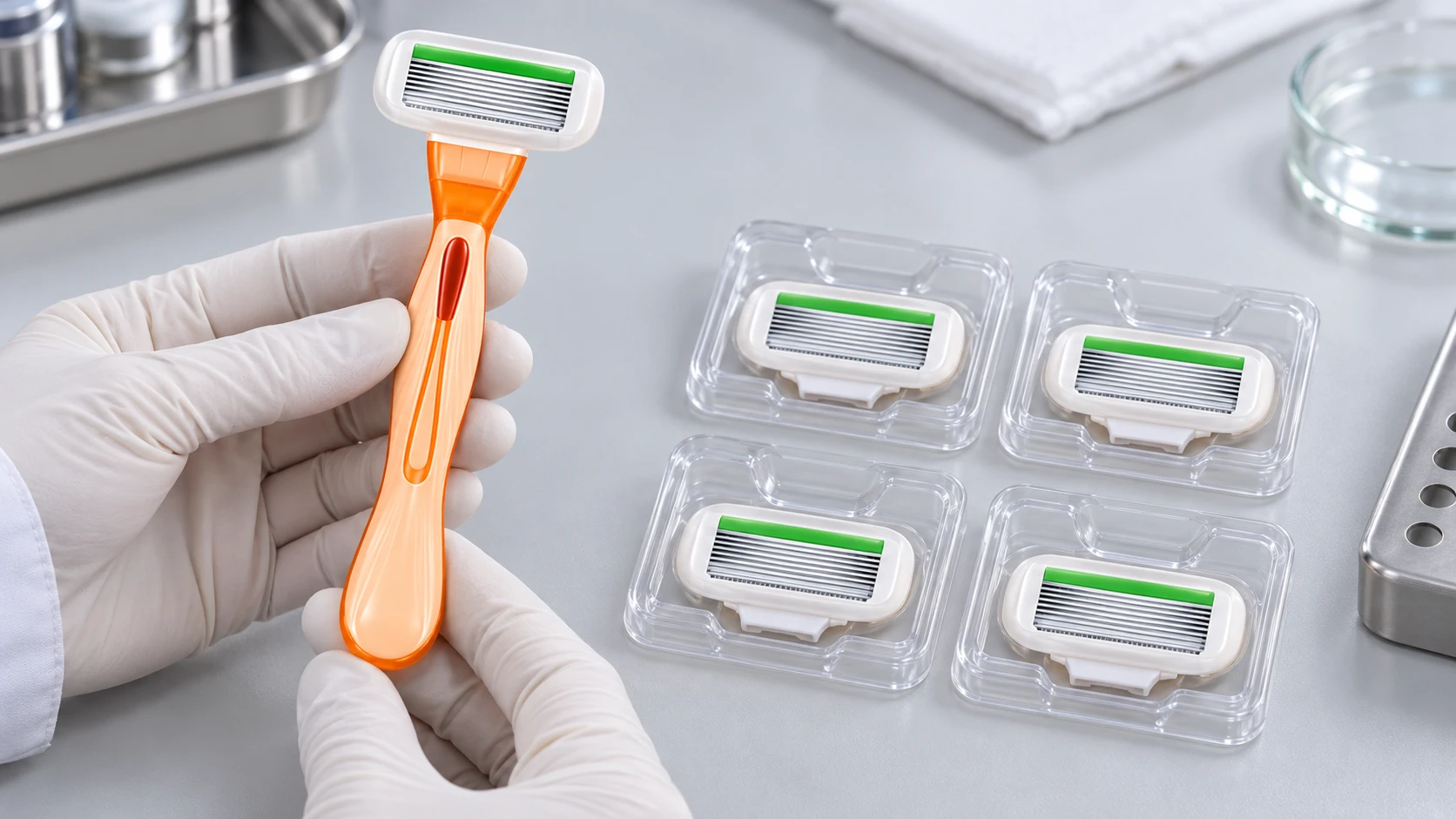
A razor supplier exit plan should calculate bridge stock from the time until approved replacement supply becomes available for sale. Include qualification, production, delivery, and receiving activities, allowing for any overlap rather than adding every duration mechanically.
The following is an illustrative planning example, not a Haward lead-time commitment. All quantities are four-cartridge retail refill packs.
| Planning Input | Example | Calculation Role |
|---|---|---|
| Expected demand | 10,000 packs per week | Demand rate |
| Gap until qualified supply is available | 12 weeks | 120,000 packs |
| Agreed contingency buffer | 4 weeks | 40,000 packs |
| Usable opening inventory | 70,000 packs | Deduct from requirement |
| Confirmed, timely inbound supply | 30,000 packs | Deduct once |
| Additional bridge requirement | 60,000 packs | 160,000 − 70,000 − 30,000 |
The additional requirement represents 240,000 cartridges. Keep pack and cartridge quantities separate when placing orders.
Check the balance week by week: a late inbound shipment cannot prevent an earlier stockout. Exclude quarantined or obsolete inventory. Agree storage conditions, usable life, and financial responsibility so the buffer supports continuity without creating unnecessary excess-stock exposure.

Agree the Disposition of Finished Goods and Committed Materials
Close Inventory by Status and Authorization
At the transition cutoff, the Supplier may hold completed razors, assembled cartridges, molded handles, printed packaging, and materials purchased against approved forecasts. A joint inventory reconciliation makes those commitments visible and gives both parties a basis for settlement.
- Accepted finished goods: confirm quantities, condition, delivery, and payment.
- Work in progress: decide whether to complete, transfer, or stop production.
- Dedicated packaging: identify usable artwork and obsolete revisions.
- Committed materials: establish purchase authorization and reuse options.
- Nonconforming stock: segregate it and agree rework or disposal.
Assign each line a quantity, valuation basis, owner, action, and completion date. Do not count unfinished cartridges as immediately available refill stock.
For a Customizable Razor range, branded handles and printed cartons need controlled handling. Agree permitted reuse, return, recycling, or documented destruction, including who pays. This prevents double purchasing and reduces avoidable write-offs while keeping unauthorized branded goods out of circulation. Any disputed amount should follow the agreed resolution process rather than an informal assumption about who owns the stock.
Make Transition Assistance a Defined Commercial Service
Specify Deliverables, People, Fees, and Boundaries
Technical cooperation requires time from engineers, planners, quality staff, and sometimes specialist subcontractors. A workable OEM transition plan should state what assistance is included in the existing agreement and what requires a separate quotation.
Define the support package in practical terms:
- A named project lead and agreed technical contacts.
- Document explanations, sample preparation, and authorized training.
- Tool inspection, packing support, and agreed production trials.
- Response times, meeting frequency, and escalation contacts.
- Fees, approved expenses, payment milestones, and completion evidence.
For example, the parties might agree weekly progress reviews and a fixed number of engineering sessions, then quote additional work separately. Such arrangements are project-specific examples, not standard Haward commitments.
Protect the ongoing production schedule by reserving support resources in advance. A Manufacturer cannot reliably maintain daily shipments and provide unlimited transition work without planning. Fairly priced assistance gives both sides a clear scope and helps avoid schedule slippage caused by unresolved responsibilities. Keep final purchase orders, trial costs, and data-transfer deliverables visible in the same project schedule.
Complete the Handover Through Evidence-Based Approval Gates
Confirm Readiness Before Ending Transitional Supply
A folder delivery or mold shipment is only one milestone. Close the transition through documented approval gates that confirm the receiving operation can supply the approved Razor consistently.
- Rights and records gate: confirm authorized recipients and accepted document revisions.
- Tooling gate: complete receiving inspection and resolve adaptation issues.
- Pilot gate: approve samples, compatibility results, and corrective-action closure.
- Supply gate: confirm usable stock, delivery timing, and repeat-production readiness.
- Closeout gate: reconcile inventory, settle agreed obligations, and archive approvals.
Handle razor tooling data transfer through controlled access and an agreed file register. WIPO’s trade-secret management guidance provides a useful reference for protecting confidential information shared with external parties.
At closeout, remove access no longer needed and follow the agreed return, deletion, and retention rules. Preserve records needed for traceability, warranty handling, and applicable requirements. Buyer and Supplier should record unresolved items explicitly. Completion means the agreed deliverables and supply conditions are satisfied, not simply that the calendar has reached the termination date.
Plan Continuity as Part of a Strong Manufacturing Partnership
Choose a Manufacturer that can discuss product records, commercial responsibilities, and refill support clearly. Share your handle platform, cartridge forecast, and OEM or ODM requirements with Haward to discuss a project-specific razor supplier exit plan that supports dependable supply throughout the product lifecycle.