


A retailer increases its promotion forecast, the brand team sends new packaging artwork, and procurement asks the factory to ship earlier. Each request may be reasonable. Together, they can leave the Supplier working from three different instructions. Printed cartons may no longer match the ordered quantity, while the booking still reflects an earlier delivery plan. The resulting questions consume the time both teams need for production. Razor purchase order change control provides a practical way forward. Keep one agreed order baseline, review the effect of each request, and release a confirmed revision. This lets buyers adjust a Razor program while giving the Manufacturer clear authority to plan materials, production, inspection, and shipment against the same set of agreed commercial requirements.
A qualified Supplier needs named approval authority, change cutoffs, documented cost and schedule review, acknowledgment deadlines, and one active order revision. For Haward OEM and ODM projects, agree these controls before production release. Effective razor purchase order change control separates receiving a request from accepting its commercial and operational consequences.
Procurement teams, importers, and engineering wholesalers will find the operational details experienced order planners check before agreeing a change. The sections below explain how quantity, delivery, and artwork requests move through review, using practical Razor examples that connect buyer flexibility with a workable factory schedule and clear responsibilities for execution.
Start with a Complete Order Baseline and Named Approvers
Separate Requesting, Reviewing, and Authorizing
An OEM order amendment needs a clear starting point. The accepted purchase order should identify the SKU, quantity and unit, price, packaging configuration, drawing or artwork revision, shipment milestone, and delivery location. A request to “add 2,000” is incomplete until everyone knows whether that means individual razors, refill cartridges, or retail packs.
Assign responsibilities on both sides:
- Buyer coordinator: gathers the request and identifies affected PO lines.
- Buyer commercial approver: authorizes quantity, value, and payment changes.
- Brand or quality approver: clears revised product or packaging requirements.
- Supplier planner: checks materials, capacity, and execution dates.
- Supplier commercial approver: confirms the revised commitment.
A designer’s artwork approval should not automatically authorize an extra production charge. Likewise, a planner’s capacity estimate is not a final delivery commitment. Define spending limits, substitutes for absent approvers, and the communication channel. These simple assignments let a Manufacturer respond quickly without guessing who can make the decision.
Set Change Cutoffs around Actual Factory Commitments
A useful cutoff corresponds to work becoming committed. It is more informative than a general statement that changes close a certain number of days before shipment. Different parts of a Customizable Razor order reach that point at different times.
- Material commitment: custom resin, colored grips, or dedicated components have been ordered.
- Production release: molding and assembly batches have been scheduled or started.
- Print release: approved artwork has been released to the packaging printer.
- Packing release: pack ratios, labels, and work instructions are active.
- Shipment cutoff: booking, documentation, and warehouse arrangements require confirmation.
Record the actual dates and time zone in the project schedule. Before a cutoff, review availability and remaining preparation time. After it, review committed stock, additional work, and recovery options. A cutoff should trigger an impact review rather than an unexplained automatic charge.
For practical razor purchase order change control, identify who updates these milestones when the production plan moves. A date copied from an older schedule cannot reliably guide a new request.
Review Quantity Changes by SKU and Committed Material
Make Incremental Costs Visible
A quantity increase may require another molding batch or more refill cartridges. A reduction may leave dedicated packaging. Even an unchanged total can require review if the handle-color mix changes. Evaluate the affected SKU and components, not only the order total.
Consider a hypothetical reduction from 10,000 to 8,000 retail packs. Assume 2,000 printed cartons become unusable for the revised program. The following amounts are a negotiation example, not Haward rates or standard charges.
| Impact Item | Illustrative Calculation | Amount |
|---|---|---|
| Unusable printed cartons | 2,000 × USD 0.08 | USD 160 |
| Agreed handling and replanning | Documented fixed amount | USD 60 |
| Verified scrap recovery credit | Deduct recovered value | −USD 20 |
| Net agreed change cost | 160 + 60 − 20 | USD 200 |
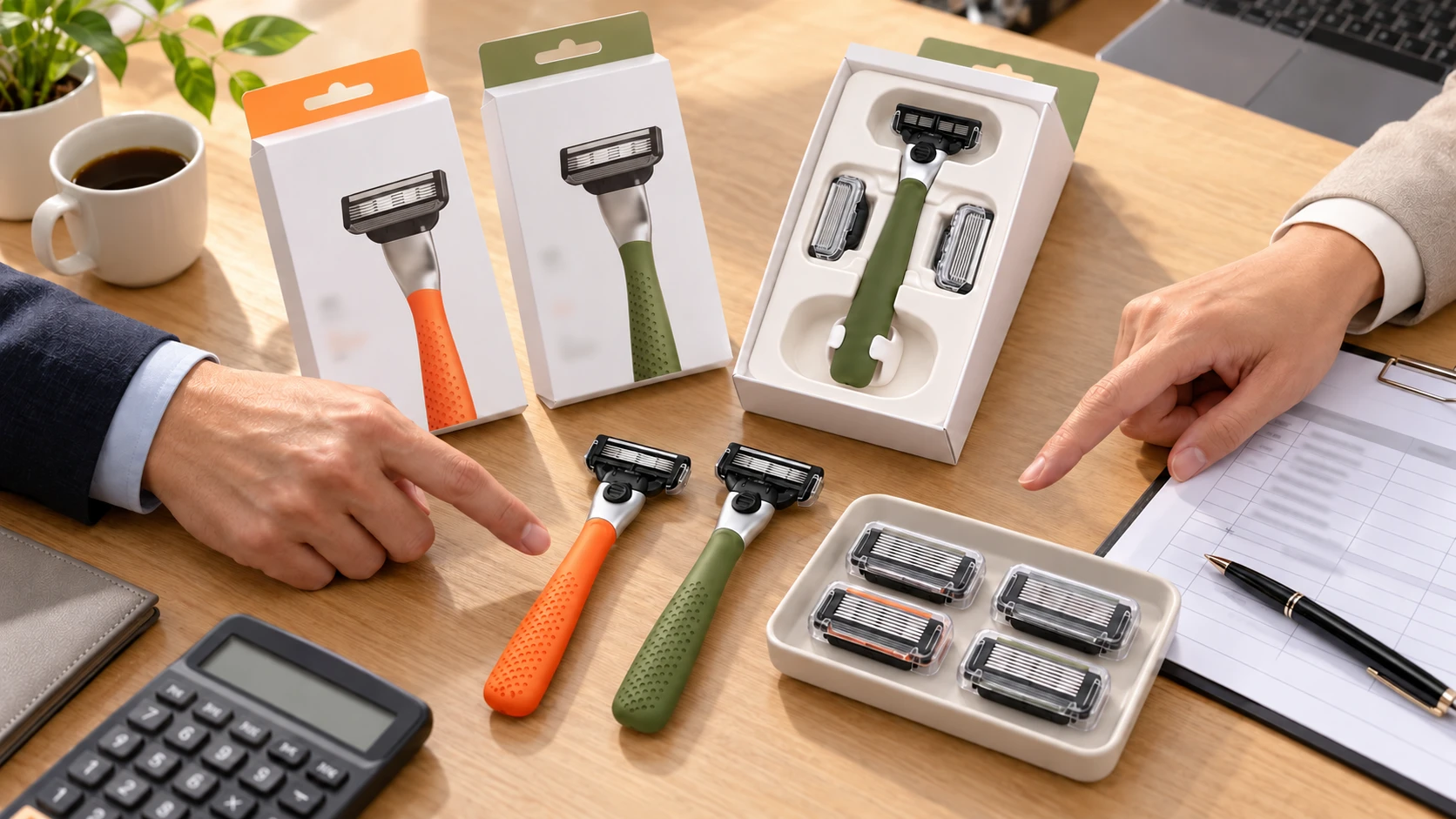
Check whether the cartons can instead serve an approved future release. Remove reusable or avoidable costs from the claim. The revised goods value and this incremental charge must be recorded separately, preventing double recovery while recognizing genuine commitments under the agreed terms.
Define Which Delivery Milestone Is Being Changed
A razor delivery date change should name the event and location. “Ready next Friday” might mean production complete, ready for inspection, handed to a forwarder, or departing on a vessel. Those are different milestones with different dependencies.
Review the schedule in sequence:
- Confirm material availability and remaining molding or assembly work.
- Confirm packaging arrival and packing capacity.
- Preserve the agreed inspection and release activities.
- Check the forwarder’s booking and documentation cutoffs.
- Update the expected receiving date using the proposed transport plan.
Moving factory completion seven days earlier does not guarantee arrival seven days earlier. An earlier vessel or receiving appointment may be unavailable. The Manufacturer and logistics team should distinguish a feasible production date from an unconfirmed transport assumption.
If the full quantity cannot move together, evaluate a documented split shipment. Identify quantities, dates, additional freight, and who approves the cost. A Supplier counterproposal can preserve the launch quantity while keeping the balance on a realistic schedule. Confirm it through the same amendment process as a buyer request.
Link Packaging Changes to the Released Order Revision
Use a Packaging Revision Freeze with a Defined Exception Route
A packaging revision freeze establishes which artwork and packing instructions the factory may use. For a Razor program, this can include the blister card, refill sleeve, gift box, barcode label, inner box, and export carton marks.
A late change should identify:
- The exact file and revision being replaced;
- Affected SKUs, languages, and destination markets;
- Printed stock, packed goods, and remaining production quantities;
- Required proof, barcode, or compliance rechecks; and
- The approved first lot using the revised packaging.
For example, adding “four refills” to a sleeve also requires confirmation that its contents match the claim. An artwork approval alone does not update the packing instruction. Reference the product-specific workflow in Haward’s packaging artwork approval guide.
Where a correction affects mandatory information, the responsible compliance reviewer should determine whether affected work or shipment needs a hold. For other revisions, consider a clearly approved transition lot. The OEM order amendment must record the outcome so obsolete artwork cannot remain active beside the new file.

Agree Response Deadlines without Confusing Receipt and Acceptance
An acknowledgment should state what has happened. OpenPeppol’s advanced-ordering guidance distinguishes receipt without processing from acceptance, rejection, and acceptance with changes. The same distinction helps email-based Razor orders.
The following is a buyer-defined example, not an industry rule or Haward service commitment.
| Response Stage | Example Target | Required Output |
|---|---|---|
| Receipt acknowledgment | 1 working day after receipt | Request ID, owner, missing information |
| Supplier impact review | 2 working days after complete input | Feasibility, costs, dates, alternatives |
| Buyer decision | 2 working days after impact proposal | Approval, rejection, or revised request |
| Revised-order confirmation | 1 working day after revised PO | Acceptance of the identified revision |
Define the working calendar, time zone, and escalation contact. State in the agreed procedure that silence does not authorize implementation. For effective razor purchase order change control, specify whether affected work continues or enters a scoped production hold during review. Keep unaffected lines moving under their released instructions.
Release One Controlled Order Revision across Both Businesses
Once the proposal is approved, issue a consolidated revision. Keep the original PO number and add the agreed revision identifier, unless the parties’ systems require another controlled method. Do not send a second independent order for the same goods without a clear reference and disposition of the first.
SAP’s purchase-order guidance illustrates a workflow in which a changed order passes through approval and Supplier acceptance. OpenPeppol also uses an order-change sequence number. These are useful reference models; using either platform is not necessary.
- List the old and new values for every affected line.
- Attach the approved cost, schedule, and specification changes.
- Obtain the required buyer approval and Supplier confirmation.
- Activate the revision in purchasing and factory planning records.
- Archive superseded instructions and notify affected teams.
Keep a proposed revision marked as pending until the required confirmations are complete. Razor purchase order change control should leave one active execution baseline, while retaining the history needed to explain how it changed.
Close the Change at Production and Shipment Review
An approved PDF does not complete implementation. Close the request after checking that the changed information reached the people executing the order. For a Customizable OEM or ODM Razor program, this includes component purchasing, molding, assembly, packing, quality, and export documentation.
- Production restart check: the work order identifies the active PO and product revisions.
- Packing-line clearance: superseded artwork and labels are removed from affected work.
- Pre-shipment review: quantity, pack configuration, marks, and shipment split match approval.
- Commercial reconciliation: revised goods value, credits, deposits, and extra charges agree.
If an ISO 9001 certificate is part of your sourcing requirements, check its scope and validity. Certification concerns the quality management system; it does not itself approve an order amendment or a new delivery commitment.
Haward’s OEM and ODM customization services provide a starting point for discussing the product and packaging scope. Agree the project-specific change workflow alongside that scope, giving both businesses a practical route from request to verified execution.

Make Order Flexibility Work for Both Teams
Choose a Manufacturer that reviews changes with you and confirms the resulting commitment. Send Haward your Razor SKUs, packaging revisions, quantities, and delivery milestones to discuss a Customizable OEM or ODM program with clear razor purchase order change control responsibilities.