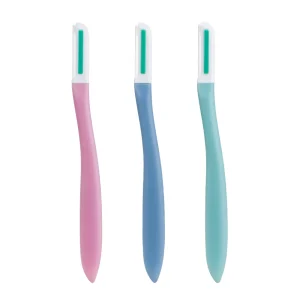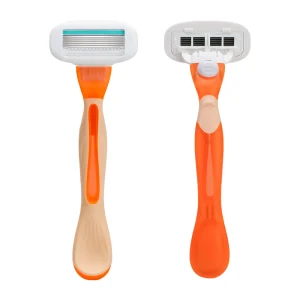





An importer requests 10,000 razors and receives three quotations. One covers complete disposable units, another includes reusable handles with cartridges, and the third prices replacement heads without handles. The descriptions sound similar, but the deliveries would serve different orders. Comparing their unit prices creates a false saving, while clarification can delay artwork, purchasing, and shipment planning. This is a communication problem that buyers and manufacturers can solve together. Consistent razor product terminology connects the product name to its construction, replacement method, supplied contents, and pricing unit. Agreeing those fields before quotation helps procurement compare equivalent offers, gives catalog teams reliable descriptions, and lets the Supplier prepare the intended OEM or ODM configuration with clear instructions for production and packing.
A qualified Supplier standardizes razor product terminology by identifying construction, replaceable parts, included components, pack counts, and quotation units. Haward supports OEM and ODM descriptions linked to model references and agreed specifications. For a Customizable Razor program, approve the supplied contents alongside the product name before comparing prices.
Importers, purchasing managers, and engineering wholesalers will find the important distinctions below. These are the details often lost between a catalog heading and a purchase order. The examples show how to turn familiar shaving terms into clear commercial descriptions, comparable quotations, and consistent instructions for packaging and receiving teams alike.
Build Product Classification around the Physical Construction
A practical OEM razor product classification begins with what the customer keeps and what the customer replaces. Catalog language varies, so the working definitions below should be confirmed in the project specification.
| Commercial Term | Physical Arrangement | What the Order Must Clarify |
|---|---|---|
| Complete disposable razor | Handle and head supplied together; head not intended for user replacement | Complete units per pack |
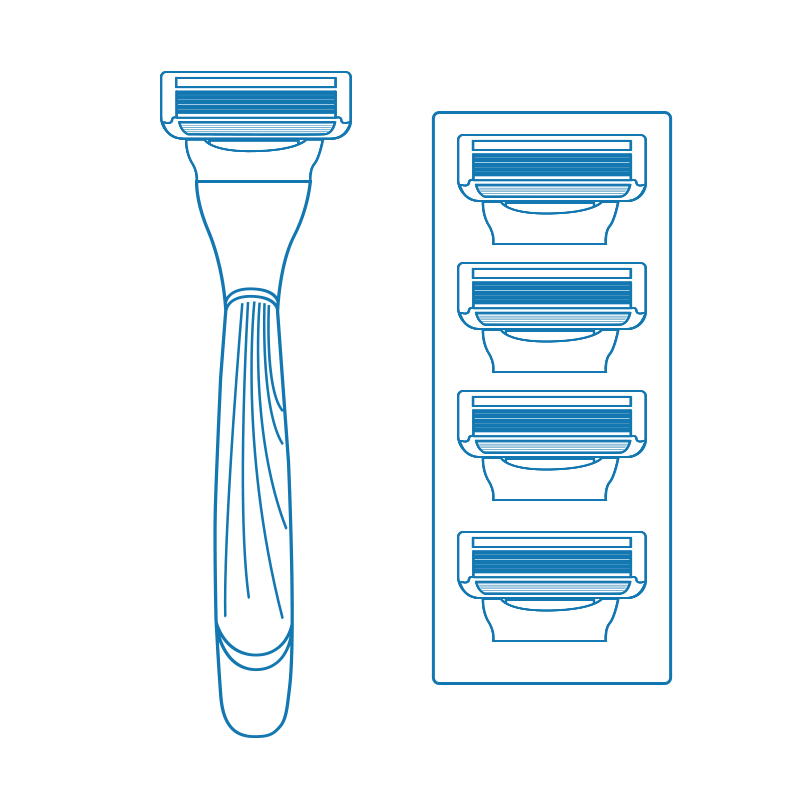
| Cartridge or system razor | Reusable handle with a replaceable shaving cartridge | Whether a handle is included; total cartridge count |
| Handle only | Handle supplied without a shaving cartridge | Handle model and approved cartridge family |
| Cartridge refill | Replacement shaving head without a handle | Cartridge model and heads per pack |
| DE safety razor | Reusable holder accepting a replaceable double-edge blade | Holder configuration and whether blades are supplied |
Keep the product type separate from optional contents. A stand, travel case, or extra cartridge changes the supplied configuration but does not automatically change the underlying mechanism. This structure gives the Manufacturer and buyer a common starting point without relying on a category name alone.

Separate Head Movement from Head Replacement
Fixed, Pivoting, Disposable, and Refillable Describe Different Features
A fixed head describes movement relative to the handle. A pivoting head describes an articulation feature. Neither term, by itself, tells the buyer whether the head is replaceable. A disposable platform can have a pivoting head while remaining a complete unit that is replaced as a whole.
Haward lists the D223L as a twin-blade disposable Razor with a rubber handle and fixed head. The D552L is listed as a five-blade cartridge Razor. These are useful model references, but the purchase description still needs the exact supplied contents.
- Replacement mode: complete unit, cartridge, or bare blade.
- Head movement: fixed or pivoting, as specified for the model.
- Blade configuration: cutting blades per head, stated separately.
- Supply format: assembled Razor, separate handle, or replacement parts.
Using separate fields makes razor product terminology more precise. It also helps a Customizable OEM buyer change a handle color or pack format without accidentally changing the product category.
Define What Refillable Means for Each Product Family
Refillable razor terminology should identify the replacement item. For a system Razor, that item is generally a cartridge. For a DE safety razor, it is a bare double-edge blade. A reusable facial-razor handle may accept a different guarded replacement head. These parts should not all be described simply as “refills” in a mixed-product quotation.
Use a specific noun after the replacement description:
- Replacement cartridge: the specified shaving-head assembly.
- Replacement blade: the cutting component accepted by the identified holder.
- Guarded replacement head: the approved facial-razor component.
- Replacement handle: a handle supplied separately from its cutting unit.
Likewise, “disposable” should not automatically become “single-use” in translation. Intended use follows the product instructions and approved program requirements; a product category does not establish a fixed number of shaves.
For an ODM project, confirm the intended replacement part before naming the range. The same discipline helps a Supplier distinguish a reusable product description from separate recycling or environmental claims, which require their own support.
Resolve Ambiguous Search Terms before Issuing the RFQ
Disposable cartridge razors is a useful example of wording that needs clarification. A buyer may mean a complete disposable Razor with an integrated shaving head. Another may mean a reusable handle whose worn cartridge is discarded. The phrase alone is not a sufficiently precise order description.
When this wording appears in an inquiry, ask the buyer to confirm:
- Physical item: complete Razor, handle only, or cartridge only?
- Replacement arrangement: is the user intended to retain the handle?
- Blade count: how many cutting blades are in each head?
- Included quantity: how many handles and cartridges are supplied?
- Commercial unit: is pricing per complete unit, cartridge, or retail pack?
A photograph and model reference can resolve the discussion quickly, provided they show the actual offered product. Record the answer in the quotation rather than leaving it in a separate message.
The Manufacturer can retain familiar search wording in supporting catalog text while using a precise technical description for the order. This keeps razor product terminology understandable without allowing an ambiguous phrase to define the delivery.
Make Pack-Count Arithmetic Visible before Comparing Prices
A request for “10,000 units” needs a defined unit of measure. The following examples show why the number alone cannot support a comparable quotation. Configurations are illustrative and do not represent standard Haward pack offerings.
| Pack Description | Contents per Retail Pack | Ordered Retail Packs | Total Physical Contents |
|---|---|---|---|
| Disposable multipack | 3 complete disposable razors | 10,000 | 30,000 complete disposable razors |
| System starter pack | 1 handle + 2 cartridges total | 10,000 | 10,000 handles + 20,000 cartridges |
| Cartridge refill pack | 4 cartridges; no handle | 10,000 | 40,000 cartridges |
| Handle-only pack | 1 handle; no cartridge | 10,000 | 10,000 handles |
Also distinguish blades per cartridge from cartridges per pack. Four five-blade cartridges are four replacement heads, not twenty refills.
The Supplier should quote against the same defined unit used in the quantity column. Confirm inner-pack and master-carton conversions separately. This prevents quantity discrepancies and allows procurement to compare product prices without confusing them with different packaging contents.

Write a Complete Commercial Description for Each SKU
State Total Cartridges, Including the Fitted Head
A short product title can remain readable while a structured description carries the detail. For a Customizable Razor program, an illustrative naming sequence is:
Product type; blades per head; model or platform reference; supplied contents; retail-pack quantity; quotation unit.
For example: “System Razor starter pack; five blades per cartridge; approved platform reference; one handle and two cartridges total; one cartridge fitted and one spare; quoted per retail pack.” This is more precise than “five-blade Razor with two refills.”
- One fitted plus one spare: two cartridges total.
- One fitted plus two spares: three cartridges total.
- Handle only: no cartridge supplied.
- Four-cartridge refill pack: no handle supplied unless expressly stated.
Confirm protective caps, trays, cases, and stands as additional contents. Avoid relying on a lifestyle image to establish what is included.
This form of OEM razor product classification gives the Manufacturer a clear assembly and packing brief. For ODM development, it also separates the existing platform from newly requested components or presentation features.
Connect Names with SKU Codes and Packaging Levels
A display name is not a complete product identifier. Keep the approved description linked to the buyer’s SKU, the Manufacturer’s model reference, the agreed component revision, and the packaging specification. A shared handle family does not establish that every cartridge is compatible.
Use refillable razor terminology alongside an explicit approved family reference. This article concerns identifying that family in commercial records; mechanical compatibility still requires its own product verification.
- Product reference: identifies the offered platform or component.
- Commercial SKU: identifies the agreed saleable configuration.
- Pack hierarchy: distinguishes retail pack, inner pack, and shipping case.
- GTIN: identifies the relevant trade item where GS1 identifiers are used.
The GS1 pack/case quantity rule calls for new GTINs at the affected packaging levels when case quantities change. Changes to declared retail content need review under the corresponding GS1 rules.
Ask the responsible brand or data owner to confirm the identifier treatment. A similar product name is not a reason to reuse an identifier across different pack configurations.
Keep Translations and Catalog Aliases under Control
International catalogs often use several names for the same product. “System razor,” “cartridge razor,” and “refillable razor” may overlap in commercial usage, but that does not make every translation interchangeable. Agree one preferred English description and record approved alternatives beside it.
A practical naming glossary should distinguish:
- Blade: the individual cutting element, where that is the intended meaning.
- Cartridge: the replacement shaving-head assembly.
- Head: a broader term that needs its replacement status clarified.
- Manual: describes the operating method, not whether the head is replaceable.
- Women’s or men’s: describes positioning, not the supplied component count.
If a customer searches for disposable cartridge razors, the catalog may acknowledge that wording and direct the customer to the correct product family. The quotation should still use the approved description.
Do not copy a translated heading directly into every order document without checking its meaning. For OEM and ODM teams, a controlled glossary supports consistent product descriptions while allowing natural wording for different markets.
Approve the Naming Record before Artwork and Order Release

Finish the terminology discussion with a small, controlled product identity record. It should connect the product photograph, preferred description, model, supplied contents, quotation unit, and approved packaging reference. Keep responsibility clear between the buyer and Supplier.
- Technical confirmation: verify construction and the intended replacement item.
- Commercial confirmation: approve quantities, total contents, and pricing units.
- Catalog approval: align the preferred title and accepted aliases.
- Artwork checkpoint: check that wording and images match the supplied pack.
- Order acknowledgment: carry the same description into the accepted purchase order.
- Receiving check: verify the delivered model and contents against that record.
When a configuration changes, update the controlled record and review affected documents before release. A switch from two total cartridges to two spare cartridges is a real content change, even if the front title looks similar.
For a Customizable Haward project, this approach turns razor product terminology into a practical communication tool. It helps both parties prepare the intended product and keeps clarification work concentrated before production.
Start the Next Inquiry with a Defined Product and Supply Unit
Choose a Supplier that can connect familiar names with exact product contents. Send Haward your reference image, intended replacement format, handle and cartridge quantities, and packaging brief to define a clear OEM or ODM Razor description before requesting a comparable quotation.