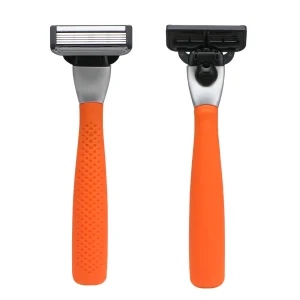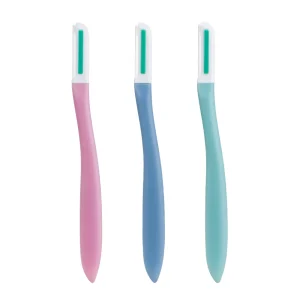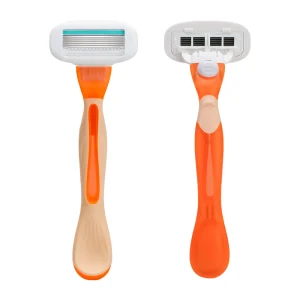

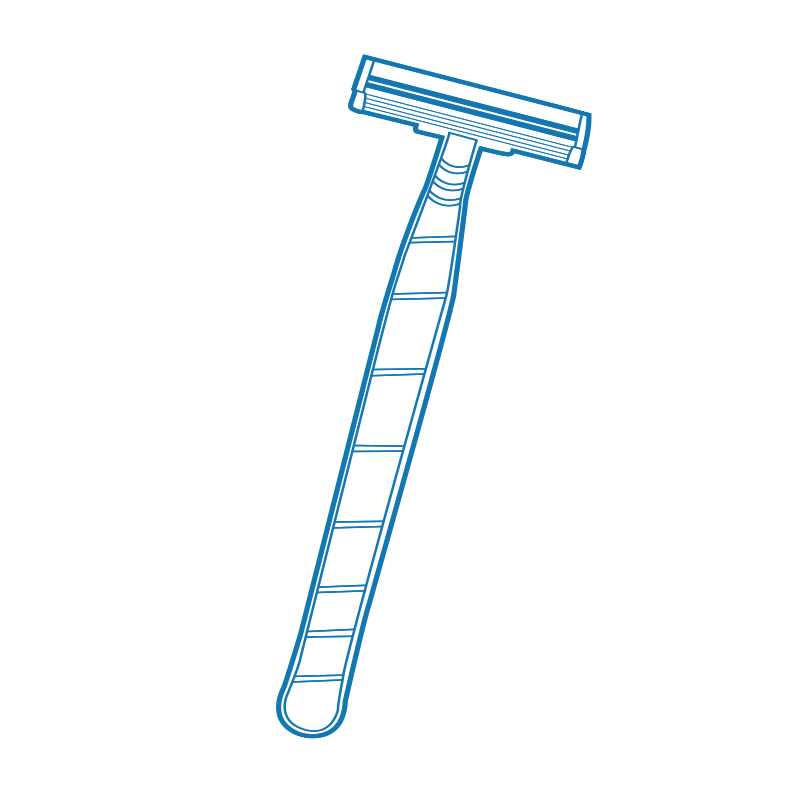
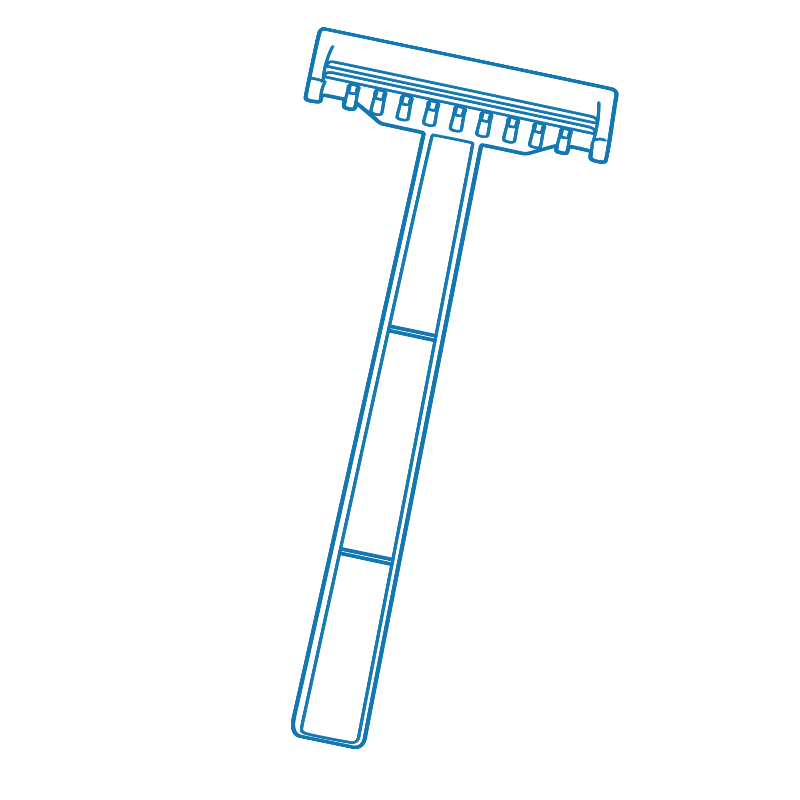
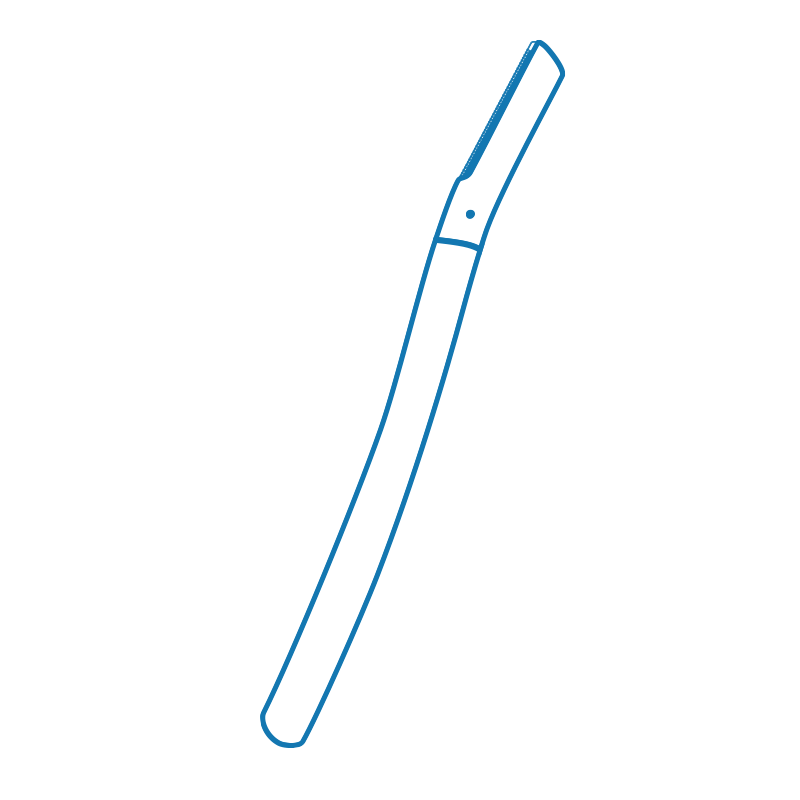
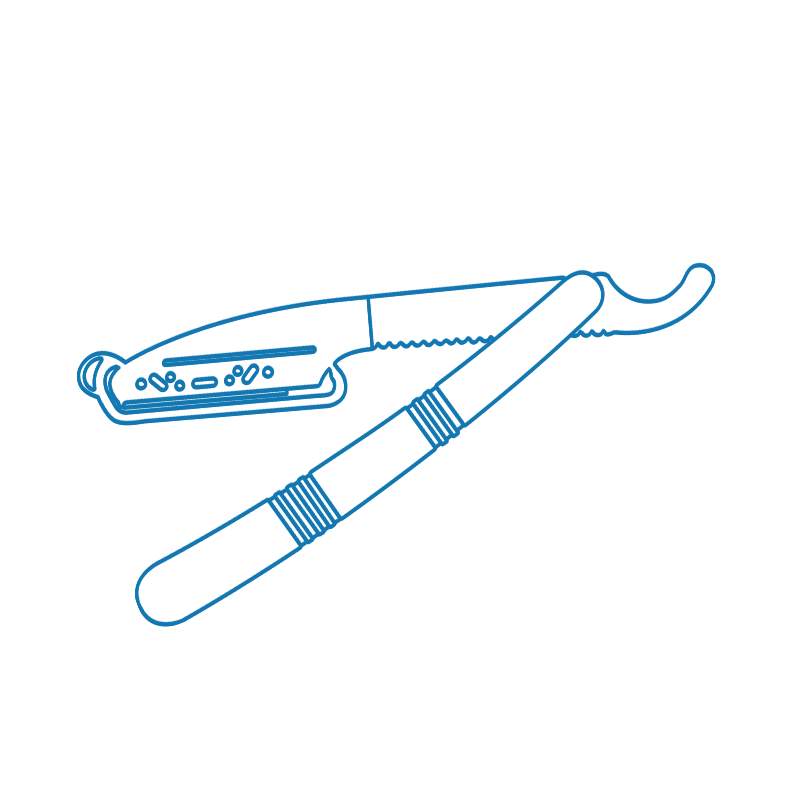



A distributor wants three handle colors, two starter offers, and a refill range that encourages repeat sales. Each addition makes commercial sense. Yet when every retail SKU becomes a separate factory order, small batches compete for the same molding, assembly, and packing resources. Repeated setups can extend lead times, while uneven component quantities leave handles waiting for cartridges. The buyer then faces partial shipments, extra handling, or inventory that does not match the launch plan. A razor order mix connects market variety with shared production requirements. By agreeing on compatible platforms, component totals, color batches, and packing sequences, the buyer and Manufacturer can preserve assortment choice while giving production a workable schedule and each sales channel a clear allocation.
A qualified Supplier should provide a compatibility matrix, component demand calculation, color batch plan, itemized changeover assumptions, and confirmed packing allocations. For a Haward OEM or ODM program, these controls turn a Customizable Razor assortment into a coordinated order with clear specifications, quantities, and release dates.
Merchandisers, distributors, private label buyers, and engineering wholesalers can use the following examples to see what a unit quotation rarely reveals: which variants share production work, where each change adds time, and how starter kits and refills can support the same manufacturing plan while meeting different commercial needs and schedules.
Start with a Shared Cartridge Specification
Confirm What Can Actually Run Together
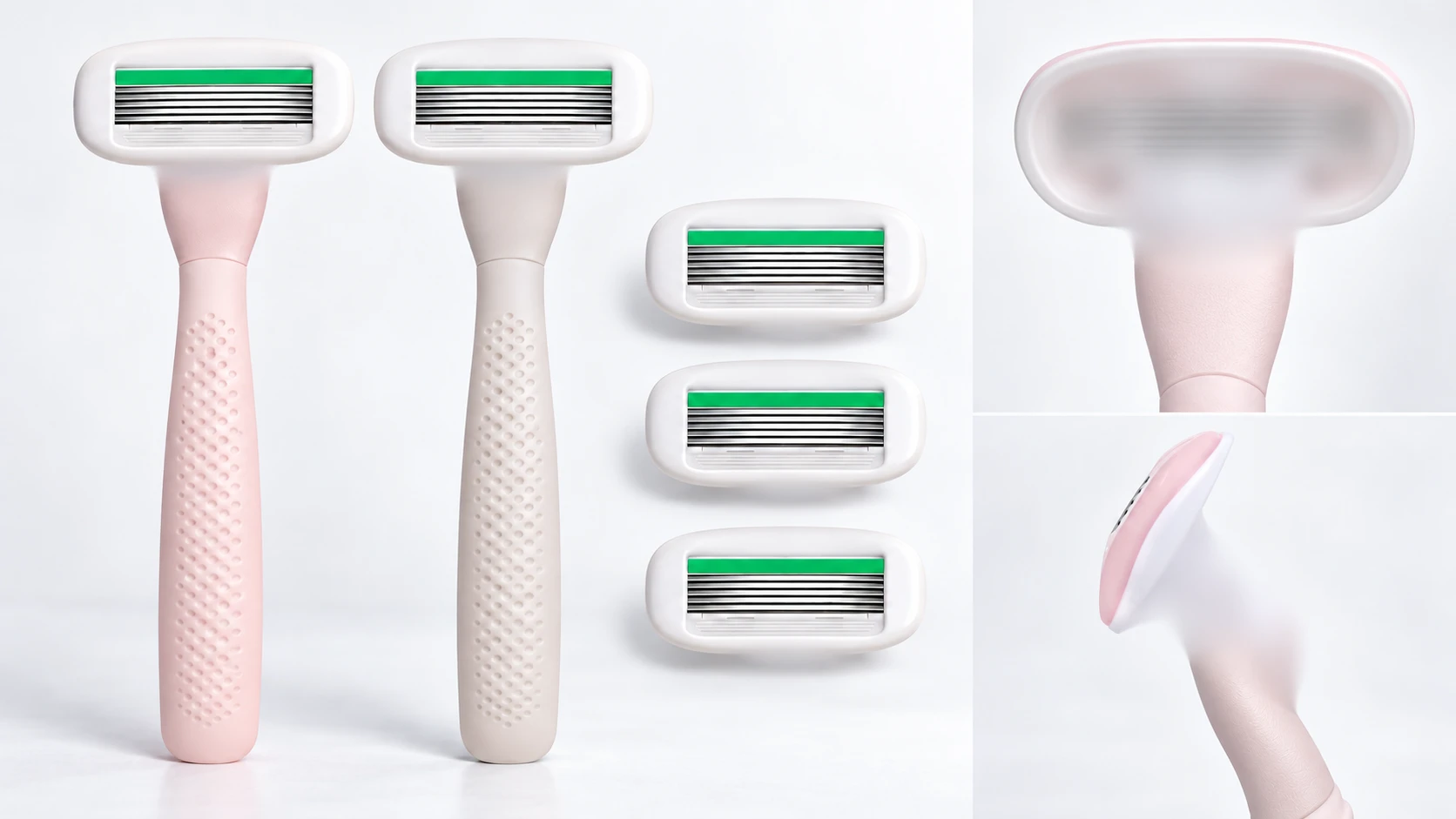
A shared connection gives buyers useful merchandising options. Haward’s 2026 catalog identifies selected handles, including D331L, D335L, and D336L, alongside compatible three-, five-, and six-blade cartridge options. This provides a starting point for a shared-platform assortment, subject to confirmation of the exact handle and cartridge combination.
However, compatibility and production commonality answer different questions. A three-blade cartridge and a six-blade cartridge may fit the same approved handle, but they remain different manufactured items. Even two five-blade heads may differ in housing color, lubricating strip, coating, or revision.
- Identify the cartridge part number and approved drawing revision.
- Confirm the bill of materials, including blade, housing, and strip specifications.
- List approved handle connections and release mechanisms.
- Separate genuinely identical cartridges from compatible alternatives.
For an OEM or ODM assortment, the Manufacturer can then group identical cartridge requirements across starter kits and refill packs. This makes the razor order mix easier to schedule while preserving clear product distinctions. Keep the compatibility matrix attached to the quotation so purchasing, engineering, and sales work from the same approved combinations.
Translate Retail Quantities into Component Demand
Count Handles, Heads, and Packs Separately
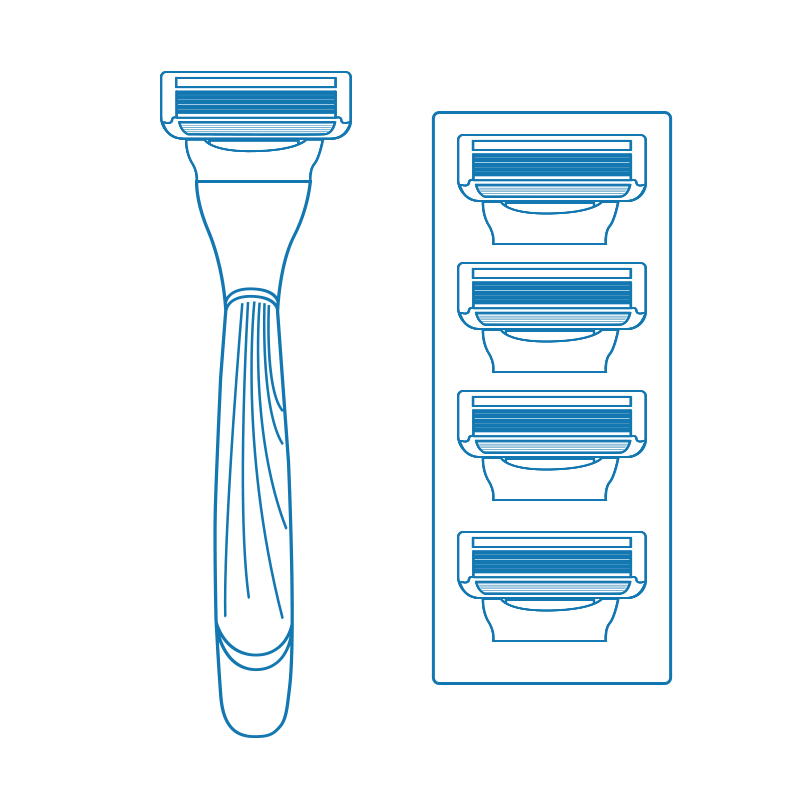
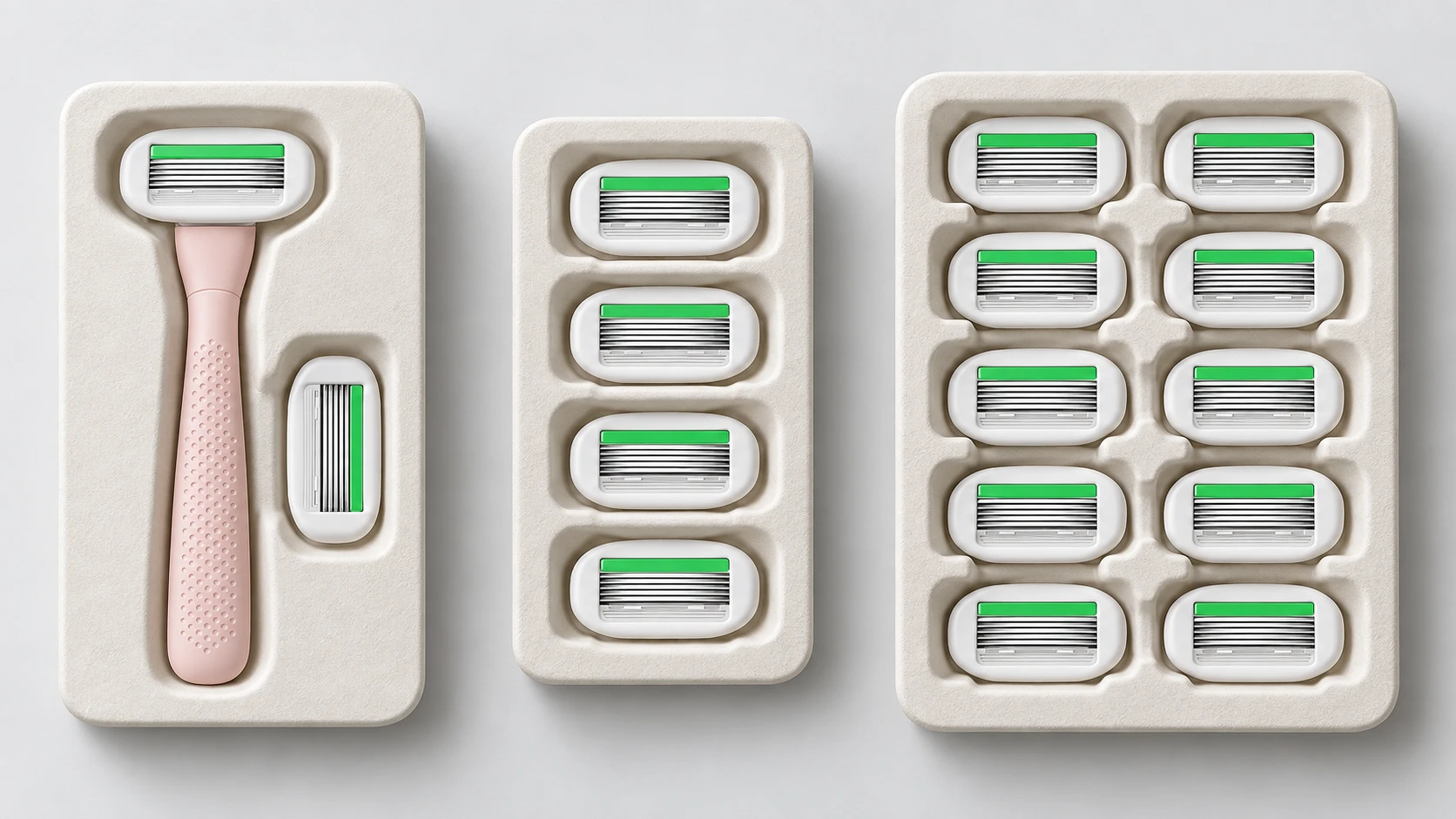
A mixed razor SKU order needs more than a total labeled “pieces.” One starter kit, one loose cartridge, and one four-head refill pack represent different production requirements. Use a component demand calculation before discussing batch consolidation.
The illustrative order below uses one handle geometry in three colors and one identical approved cartridge specification. Each starter contains one handle and one cartridge.
| Retail SKU | Retail packs | Handles required | Cartridges required |
|---|---|---|---|
| Navy starter | 12,000 | 12,000 navy | 12,000 |
| Teal starter | 8,000 | 8,000 teal | 8,000 |
| Blush starter | 4,000 | 4,000 blush | 4,000 |
| Four-head refill | 9,000 | 0 | 36,000 |
| Total | 33,000 | 24,000 | 60,000 |
The Supplier therefore plans 60,000 good cartridges, three handle color quantities, and four packing allocations. Agreed process allowances belong in the factory production plan; they should not silently increase the buyer’s invoiced quantity. This distinction makes refill cartridge order planning practical and prevents pack counts from being confused with individual heads.
Build the Handle Color Assortment Around Demand
Give Each Color a Commercial Role
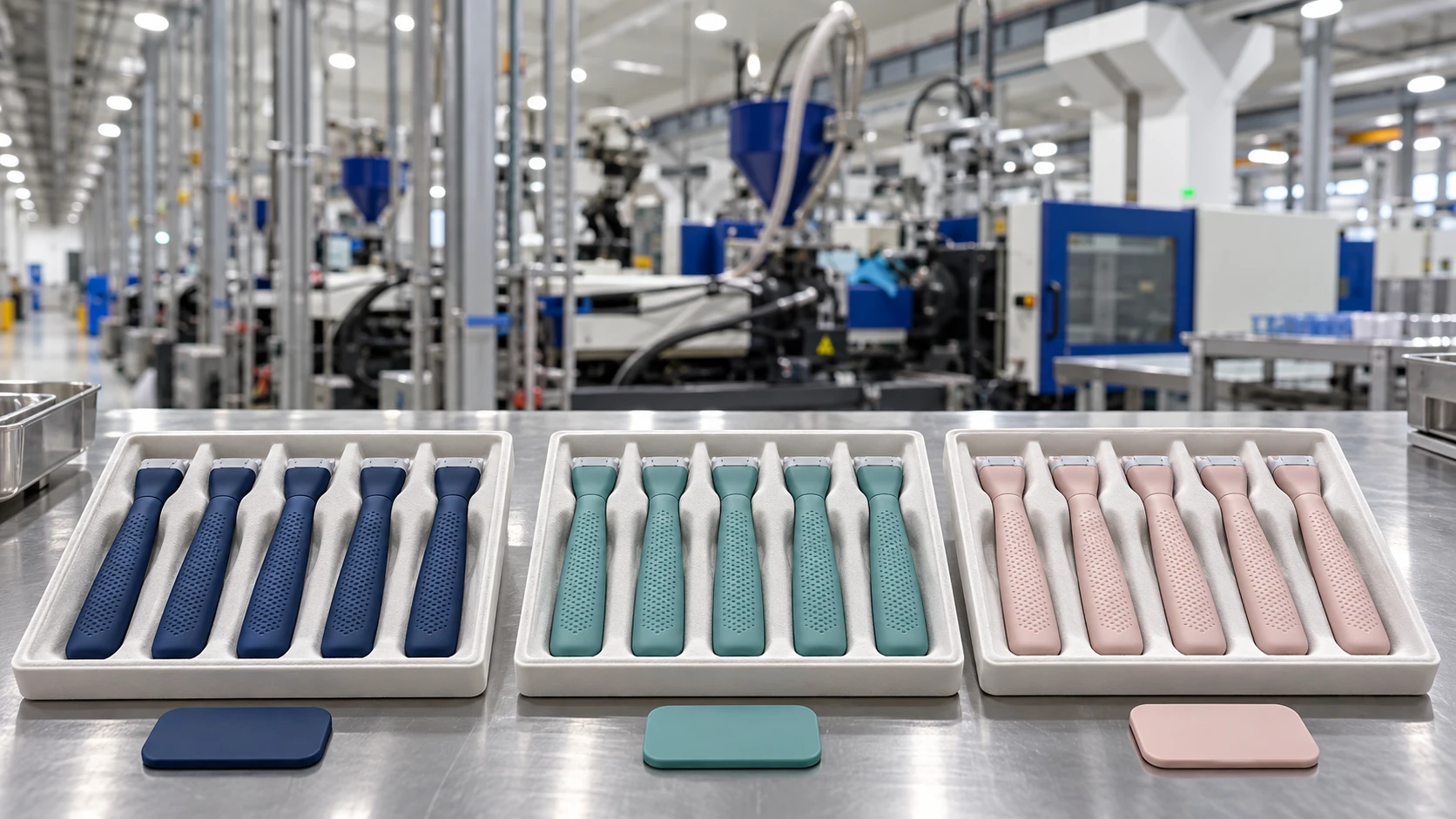
A useful handle color assortment follows the buyer’s channel forecast. In the example, navy represents 50% of handle demand, teal approximately 33.3%, and blush approximately 16.7%. These ratios are simply the chosen order mix; they are not recommended market shares. The Supplier can use them to plan color batches while the buyer preserves a distinct offer for each channel.
For Customizable handles, specify exactly which part changes color. A new rigid-body color, a new soft-grip color, and a two-color combination create different molding requirements.
- Approve a physical color master for each material and surface finish.
- Identify whether the change affects the rigid body, grip, or both.
- Agree on a production sequence using validated cleaning and purging procedures.
- Include a first-off color approval after each relevant change.
Asaclean’s molding guidance explains equipment cleaning and removal of remaining material during transitions. For a Razor program, the commercial implication is straightforward: allow for preparation, purge material, and approval time when evaluating an additional color. The Manufacturer should base these allowances on the actual resin and equipment.
Differentiate Handles Where Customers Notice the Difference
Evaluate Color, Shape, and Material as Separate Choices
Handle variety can support entry, premium, and gifting offers without requiring a new cartridge specification for every retail SKU. However, a second handle shape usually introduces additional tooling, fixtures, or molding work even when the cartridge connection is shared. A metal handle and an overmolded plastic handle also have different production routes.
Ask the Manufacturer to compare three levels of customization:
- Color variation: an approved geometry with different body or grip colors.
- Handle variation: another approved shape using the same confirmed cartridge.
- Platform variation: a different connection or cartridge construction requiring separate planning.
For a private label launch, a Customizable OEM handle may provide sufficient differentiation through color, decoration, and packaging. An ODM project may justify a new shape when grip, positioning, or brand identity requires it.
The purpose of razor order mix negotiation is to connect each additional manufacturing step with a commercial reason. Request separate setup and tooling assumptions for each option. This allows the buyer to preserve meaningful choice and allocate development spending to features the target customer values.
Compare Production Runs Before Negotiating the Price
Calculate the Setup Work Behind Each Proposal
Ask the Supplier to compare schedules for identical approved cartridges. The example below assumes the same 60,000 good heads, unchanged processing conditions, and a hypothetical 75-minute setup allowance per run. It includes the initial setup in both options and assumes each run needs that allowance.
| Planning measure | Separate allocations | Grouped production |
|---|---|---|
| Good cartridges required | 60,000 | 60,000 |
| Production runs | 6 | 2 |
| Good cartridges per run | 10,000 | 30,000 |
| Setup allowance per run | 75 minutes | 75 minutes |
| Total setup allowance | 450 minutes | 150 minutes |
| Time released | Baseline | 300 minutes / 5 hours |
This releases five hours of modeled setup time; it does not establish a percentage reduction in the finished Razor price. Handle color changes and packing setups remain separate. Also check whether producing 30,000 heads earlier creates unnecessary work-in-progress inventory. Group runs only within confirmed demand, approved storage conditions, and agreed release dates. A smaller buffer may be worth an additional setup when demand is uncertain.
Reduce Changeover Work While Keeping Useful Variety
Prepare the Next Run Before Equipment Stops
Batch consolidation is one way to improve the schedule. Another is to shorten each changeover. The Lean Enterprise Institute’s SMED guidance distinguishes tasks requiring stopped equipment from preparation that can happen while equipment is running. Applied to Razor production, this gives the buyer and Manufacturer a useful discussion beyond simply increasing batch size.
- Prepare approved material, color references, and job instructions before the change.
- Stage the next fixtures and tools without disrupting the current run.
- Arrange QA availability for the first-off inspection.
- Measure time from the last acceptable item to stable approved output.
- Record cleaning, adjustment, waiting, and approval time separately.
For an OEM or ODM program, these records help explain whether a proposed extra color adds machine work, approval waiting, or both. They also support a fairer quotation. Improvement targets should come from observed production conditions; a published changeover method is not a guarantee of a particular cycle time. This approach can retain a commercially useful assortment while improving its production economics.
Separate Shared Production from Final Packing Allocations
Keep Retail Identity Clear at the Packing Stage
A mixed razor SKU order can share upstream components while retaining separate finished-product identities. Identical cartridges may be allocated to starter kits or refill packs at an approved packing stage. This is a practical form of postponement: keeping the final sales configuration open until an agreed point.
It requires controlled handling rather than loose, unidentified stock. Define:
- Protective trays, storage conditions, and maximum holding periods.
- Lot traceability from cartridge production to each finished SKU.
- Approved artwork revisions and pack-count instructions.
- Line clearance when changing labels or sales configurations.
Also distinguish multiple SKUs on one purchase order from a fixed mixed retail bundle. Under GS1’s predefined-assortment rules, changing the included trade items requires a new GTIN for the assortment. Simply consolidating factory production does not make different retail items interchangeable.
The Supplier should confirm any extra picking, checking, and carton preparation required for mixed cases. A common cartridge batch can simplify assembly while the final assortment still needs careful packing and separate records.
Coordinate Refill Demand and Commercial Terms
Agree on What Can Change Before Each Release
Refill cartridge order planning should connect initial starter-kit demand with subsequent replenishment. A launch may require many handles, while repeat orders contain mainly cartridges. Combining these requirements is useful when they share the same specification and production window; it does not justify producing speculative refills simply to enlarge a batch.
For a workable razor order mix, agree on:
- Firm component quantities: the approved heads and handles authorized for production.
- Mix-freeze dates: deadlines for handle colors, pack counts, and artwork.
- Release allocations: starter and refill quantities assigned to each shipment.
- Change authorization: how remaining stock, timing, and charges are reviewed.
Request a quotation that separates common cartridge cost, handle variants, setup allowances, and packing work. A Customizable offer should make the effect of each choice understandable. If two four-head refill packs become one eight-head pack, cartridge demand may stay unchanged while packaging, barcode, and retail requirements change. Review those consequences before confirming the amendment. This keeps excess inventory exposure and agreed costs visible to both parties.
Send a Mix Sheet That Production Can Execute
Close the Order with Samples and Allocation Checks
A useful inquiry to Haward should describe the assortment and its shared components together. Send handle model references, selected cartridge specifications, color targets, starter configurations, refill counts, and requested shipment dates. Explain whether the project uses an existing OEM platform or requires ODM development.
- Approve the compatibility matrix and component revisions.
- Confirm the handle color assortment against physical samples.
- Reconcile every retail SKU with total handle and cartridge demand.
- Review the grouped production schedule and separate packing allocations.
- Complete a pre-production review and retain approved samples.
- At pre-shipment inspection, check quantities, pack contents, labels, and agreed functional criteria.
The Manufacturer and buyer should also identify who can approve a mix adjustment and which document revision controls the order. That turns an assortment conversation into usable production instructions. For subsequent orders, compare actual setup time, allocation changes, and sales by variant. These records help refine the next razor order mix through evidence, giving the brand room to develop its range while keeping manufacturing work coordinated.
Build an Assortment Around Shared Production Strengths
Choose a Supplier that connects product variety with clear component and production planning. Send Haward your handle choices, cartridge specifications, color quantities, and refill configurations to discuss a Customizable OEM or ODM Razor order mix aligned with your launch and replenishment needs.