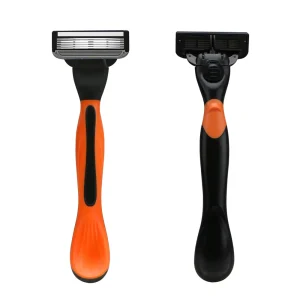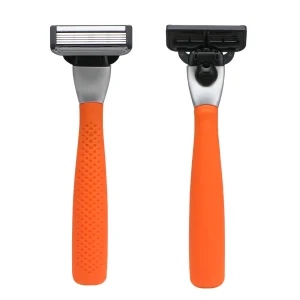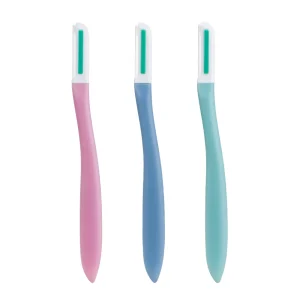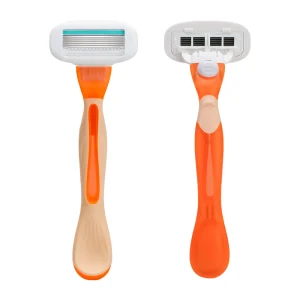

A fitness club can stock a shaving kit and still disappoint members during the morning rush. Damp hands struggle with smooth handles, loose products collect around basins, and an empty dispenser sends members back to reception. For a fitness chain, these small interruptions multiply across locations and increase staff handling time. Buying only by blade count or unit price leaves the operating conditions unresolved. A suitable program connects the disposable razor, protective cap, individual packaging, dispensing location, and replenishment routine. Working with a gym amenity razor supplier on these details helps buyers build a consistent service. The starting point is a clear specification for wet-hand control and protected distribution, followed by a measured club trial before rollout across the network.
Specify two or three blades, a textured or rubber grip, one retained protective cap, and one individually sealed pack per razor. Haward is a specialist razor Manufacturer offering Customizable OEM and ODM options. Select the final fitness club configuration through dry, water-wet, and soap-contaminated handling checks, packaging evaluation, and a site pilot.
Retailers, importers, wholesalers, and club amenity distributors can use the following guide to connect product selection with daily operations. A published fitness-club example establishes the setting; clearly labeled planning scenarios then show how grip evaluation, protective packaging, dispensing, and replenishment can support a locker room shaving kit program at scale.
Match the Shaving Kit to the Club’s Service Model
In its published Buckhead club profile, Life Time lists razors among complimentary locker-room amenities. This is a documented application setting, not a Haward customer reference. For buyers, it shows why a fitness club razor belongs in the wider amenity plan alongside towels, toiletries, and staff service.
Define where members receive the kit and who maintains that location. Reception distribution provides staff control. A protected vanity dispenser supports self-service but needs checks during busy periods. A hospitality wholesaler may need one product specification with different outer packaging for several club formats.
| Club Setting | Candidate Configuration | Example Daily Demand | Example Service Checks |
|---|---|---|---|
| Commuter fitness club | Two-blade disposable; reception issue | 20 kits | 2 per day |
| Full-service fitness club | Two- or three-blade disposable; protected dispenser | 60 kits | 3 per day |
| Hotel-linked fitness facility | Two- or three-blade disposable; issue on request | 10 kits | 2 per day |
Use this comparison to brief the Supplier. Blade count is a product option; the service model determines packaging, dispenser capacity, and the staff routine.
Compare Two- and Three-Blade Platforms with the Actual Handle
Start with Verified Product Features
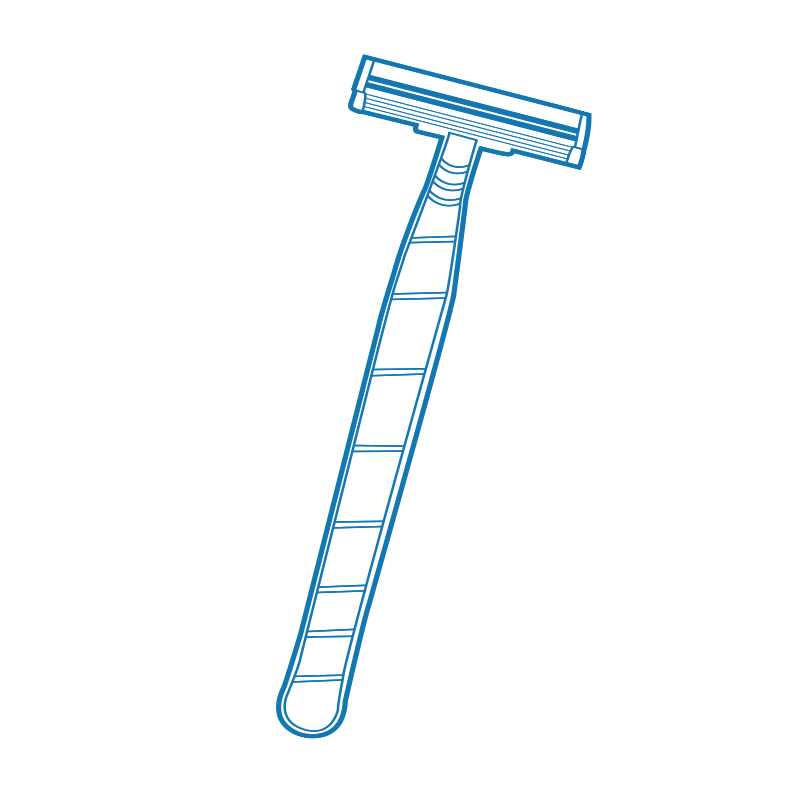
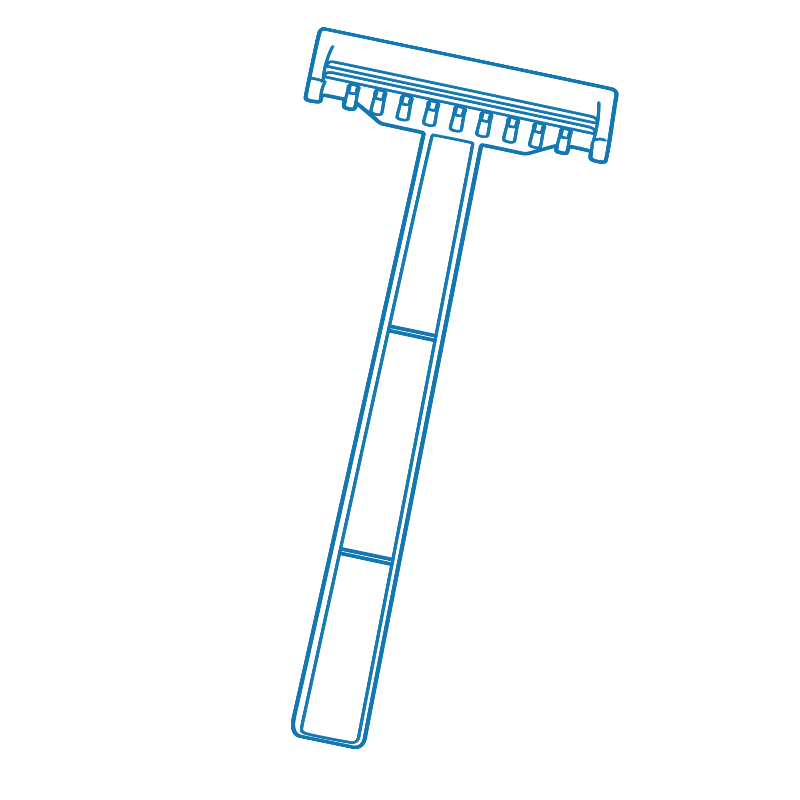
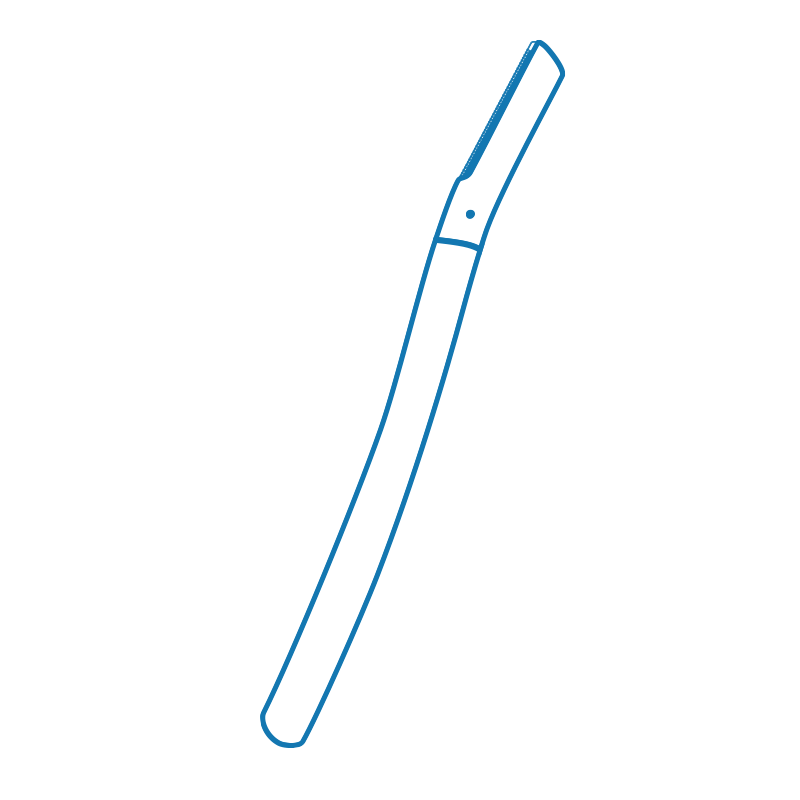
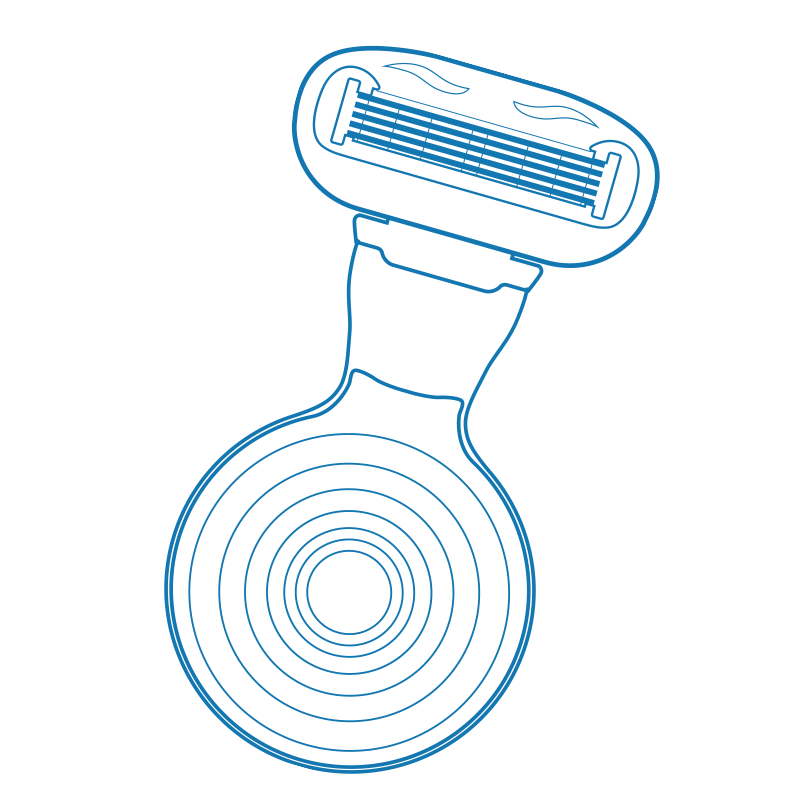
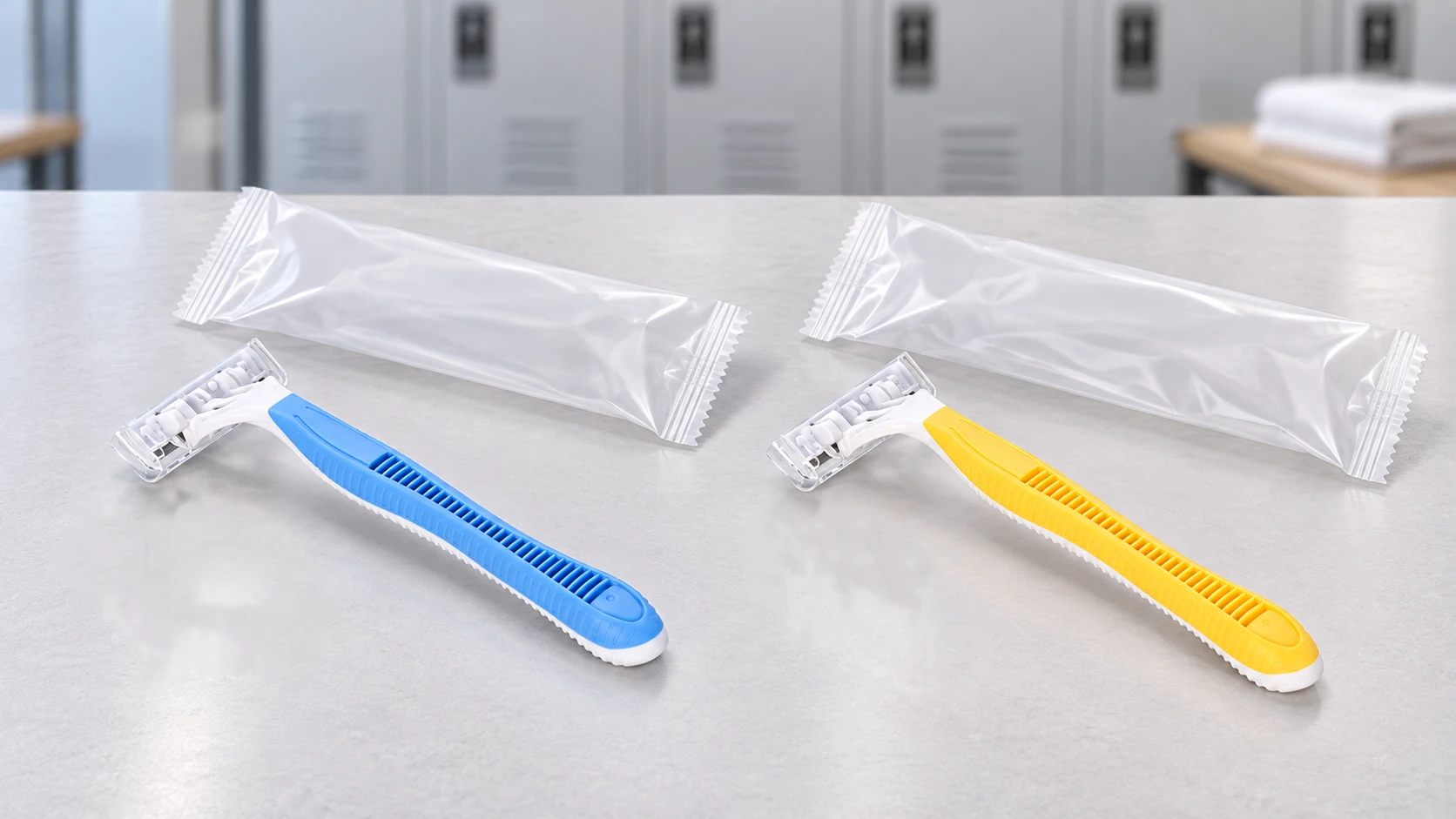
Haward’s D223L is a two-blade disposable razor with a rubber handle and fixed head. Its published length is 120 mm. The D328L is a three-blade disposable razor with a rubber handle, fixed head, and lubricating strip. These provide concrete candidates for a club evaluation.
A textured plastic option can also enter the shortlist when its geometry suits the brief. Compare complete handles because grip depends on shape, contact area, texture, material, and contamination. A rubber description alone does not establish wet performance.
- Finger support: check the thumb area and resistance to rotation during repositioning.
- Handle access: confirm that the member can grasp the handle without touching the head.
- Cap operation: assess opening direction and the force needed to remove it.
- Pack fit: measure the capped sample before designing the individual wrapper.
A gym amenity razor supplier should present samples for comparison. Final selection should reflect the club’s intended use, budget, and trial feedback. Confirm any Customizable colors or individual packaging with the Manufacturer before ordering.
Evaluate Wet-Hand Control under Three Defined Conditions
Include Soap in the Development Screen
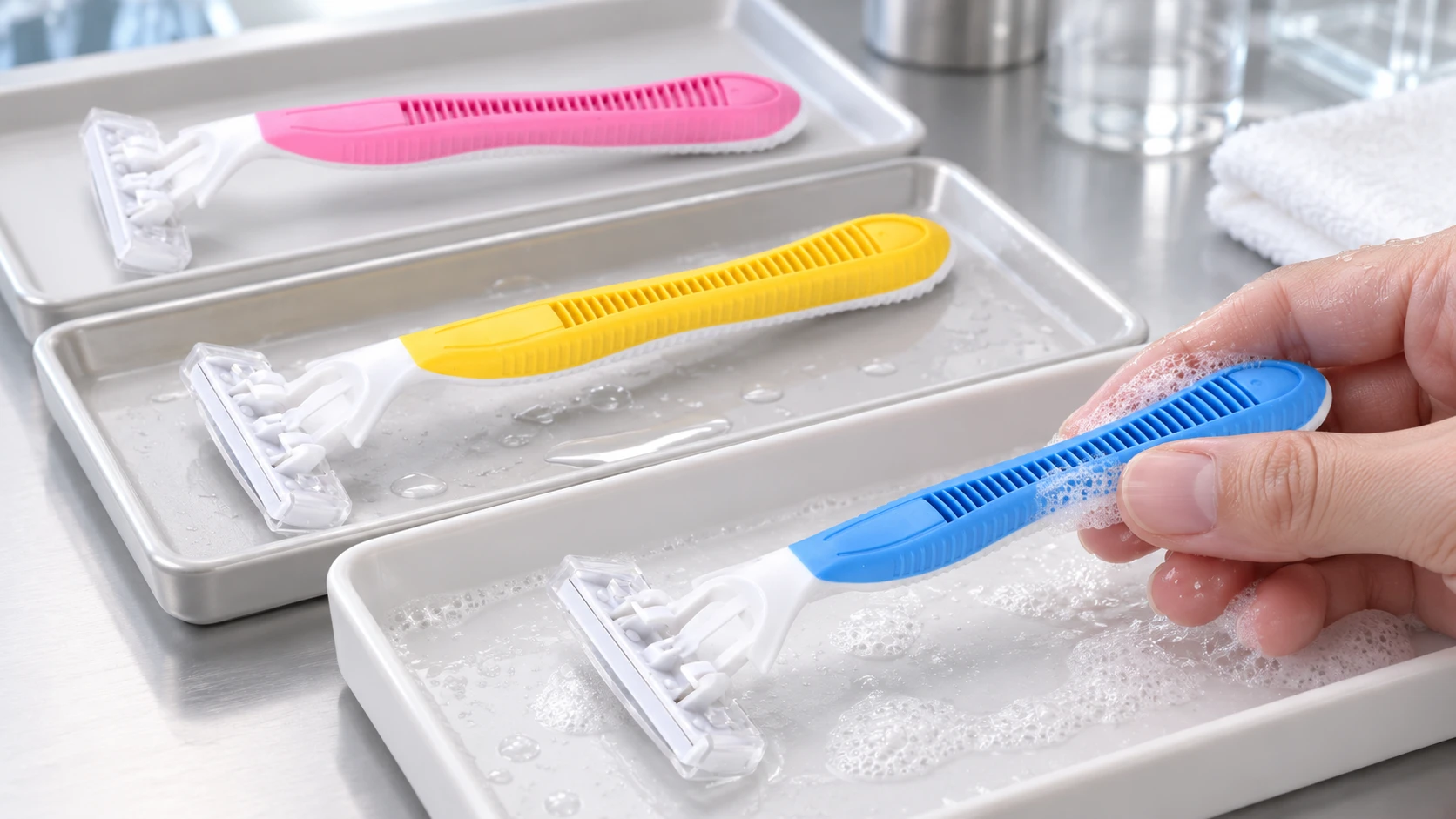
The practical question for bulk wet grip razors is whether members can hold and reposition the handle predictably. Dry inspection answers only part of that question. Compare dry, water-wet, and soap-contaminated samples using the same handling tasks and recording method.
The following is an illustrative development screen, not an industry standard or a Haward test result:
- Sample quantity: begin with 10 handles per candidate, then expand qualification according to project risk.
- Water condition: use water at 35 ± 2°C and a defined 30-second wetting period.
- Soap condition: use 1% by mass of a named liquid-soap product, prepared as 1 g product plus 99 g water.
- Handling task: assess pickup and repositioning with securely shielded blades; record slips and grip adjustments.
- Comparison controls: keep exposure, drainage time, task sequence, and recording consistent.
Because soap formulations differ, the concentration describes the chosen product, not its active surfactant content. Agree acceptance criteria against approved reference samples. An OEM or ODM buyer should retain the observations alongside the selected handle specification.
Specify the Protective Cap and Individual Pack Together
A single-use manual razor program needs a clear handover: one protected product reaches one member. The protective cap shields the head, while the wrapper separates the unused product from routine handling. Individual packaging does not establish sterility, and a protective cap does not make a damaged wrapper acceptable.
For the proposed locker room shaving kit, define:
- Unit content: one razor, one correctly fitted cap, and one sealed individual pack.
- Opening access: a tear feature that allows removal by the handle.
- Cap retention: a project-specific acceptance check after packing and transport evaluation.
- Traceability: a readable product or lot reference on the agreed packaging level.
- Reject conditions: open seals, visible damage, displaced caps, or moisture inside the pack.
If the kit includes shaving cream, keep the sealed sachet separate from the razor head and evaluate leakage within the assembled pack. The Supplier should quote individual wrapping and kit assembly explicitly. A standard retail multipack should not be assumed to meet the same distribution brief.
Place Dispensers Where Products Stay Protected
The CDC’s guidance for athletes advises against sharing personal items such as razors. Translate that principle into a club process: issue a new product to each member, prohibit sharing, and keep used products outside the replenishment stream.
For a single-use amenity service, document one member and one grooming occasion as the operating policy, aligned with the selected product’s instructions. Staff should never collect used disposable razors for reissue.
- Position the dispenser on a dry surface away from basin splash and shower spray.
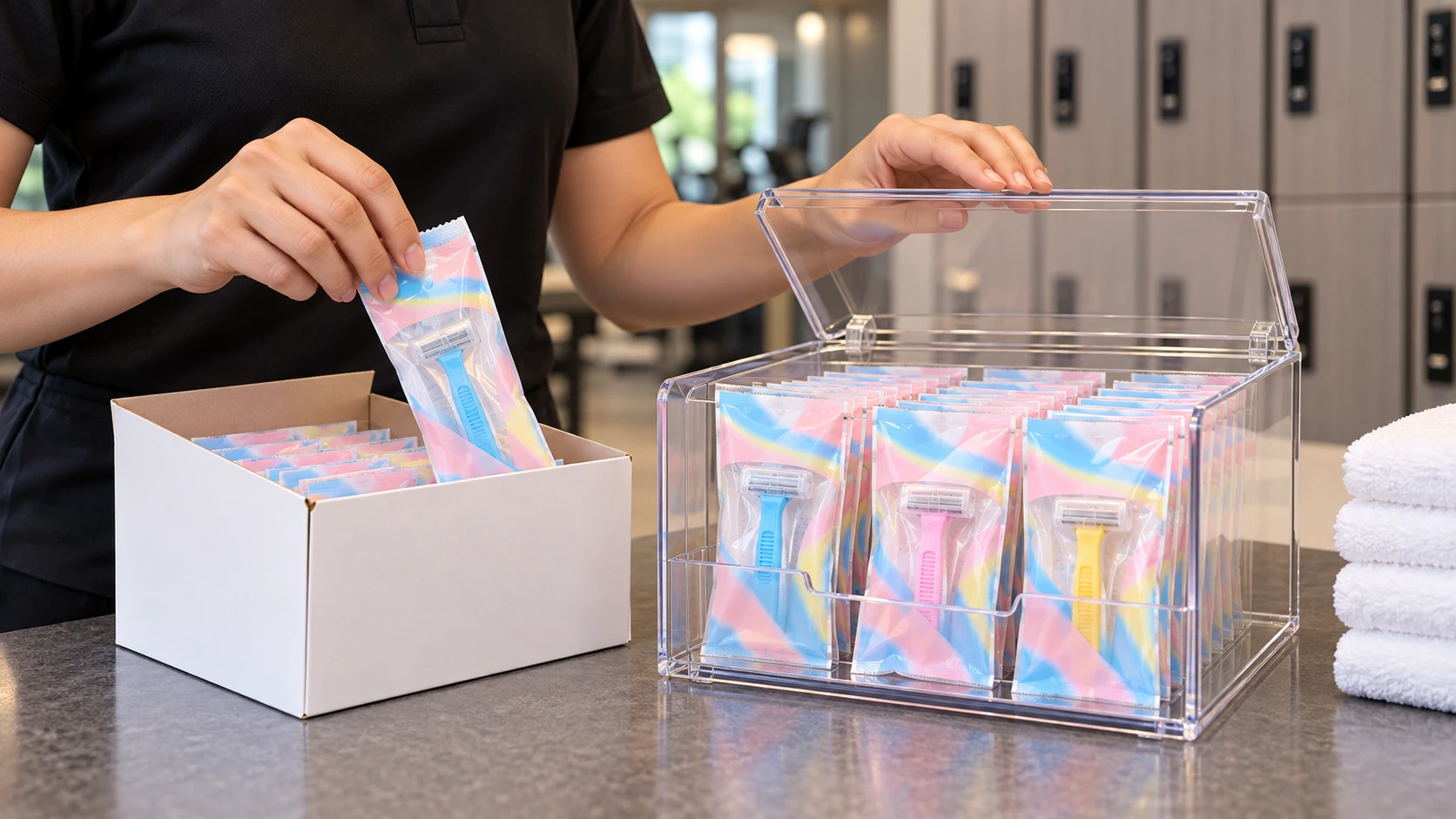
- Present sealed units so a member can remove one without disturbing neighboring packs.
- Provide visible instructions for pack opening, personal use, and disposal.
- Remove compromised packs during each service check.
- Include dispenser cleaning in the operator’s routine, protecting stock from cleaning chemicals.
Agree used-razor collection with the facility’s waste contractor and applicable local requirements. For a fitness chain, this dispensing specification should travel with the product specification. A good gym amenity razor supplier needs to understand both before proposing an outer carton or refill presentation.
Protect Backstock from the Wet Environment
Separate Daily Presentation from Reserve Inventory
A locker room can be humid even when the dispenser appears dry. Store reserve cartons in a suitable dry area under the Manufacturer’s stated storage conditions. Keep only the working quantity at the amenity point. This makes inspection easier and limits the stock exposed to daily splash, handling, and cleaning activity.
Before rollout, evaluate the actual packaging in the intended location:
- Record temperature and humidity over representative opening, peak-use, and cleaning periods.
- Check seals, printed instructions, cap position, and visible blade condition after exposure.
- Compare unopened stored units with retained controls.
- Keep cartons clear of wet floors, plumbing leaks, and chemical storage.
- Rotate stock by lot and any applicable expiry or recommended storage period.
Neither stainless steel nor a plastic wrapper proves unlimited resistance to wet storage. Ask the Supplier to evaluate concerns using the actual pack construction and proposed exposure. For a Customizable OEM kit, changing wrapper material or adding a cream sachet should trigger a review of the completed pack before release.
Calculate Replenishment from Kit Use and Delivery Time
Membership totals alone are a weak basis for ordering bulk wet grip razors. Record units issued, damaged packs, empty-dispenser events, and demand by day. Separate the stock needed at the amenity point from the club’s reserve and the distributor’s inventory.
Consider an illustrative club using 60 kits per day, with a confirmed distributor-to-club replenishment lead time of 7 days and a buyer-selected buffer of 3 days:
- Lead-time demand: 60 × 7 = 420 kits.
- Buffer stock: 60 × 3 = 180 kits.
- Reorder point: 420 + 180 = 600 kits.
- Inventory position: usable stock plus confirmed incoming stock, less outstanding allocations.
The 600-kit trigger is not automatically the order quantity. Set purchase quantities using delivery frequency, storage space, case counts, and demand variability. Imported OEM production requires its own upstream lead-time calculation; seven days here is a local distribution example.
Review consumption after membership campaigns, events, and seasonal peaks. Sharing this information with the Manufacturer supports more useful forecasts than repeatedly ordering only when shelves are empty.
Run a Club Pilot before Approving Chain-Wide Supply
A fitness club razor pilot connects product handling with service economics. An illustrative starting plan is two clubs over 14 operating days, selected to represent different demand patterns. The buyer should decide whether a longer trial is needed before broader deployment.
- Approve samples: freeze the razor, cap, individual wrapper, instructions, and outer packaging.
- Train staff: explain replenishment, rejected-pack handling, and issue records.
- Track operation: record daily kit use, handling complaints, damaged packs, and stockouts.
- Review causes: distinguish product concerns from dispenser placement or missed restocking.
- Release the program: approve corrections and retain the final specification.
Compare cost per usable kit issued, including landed product cost, packaging losses, and restocking labor measured on a consistent basis. A low purchase price can lose its advantage if packs are difficult to dispense or staff repeatedly replace damaged units.
Use the pilot findings to set reorder quantities, refine staff instructions, and confirm the selected pack. Keep unresolved product concerns open until corrective samples have been reviewed.
Give the Manufacturer a Complete OEM or ODM Brief
A useful inquiry lets a gym amenity razor supplier connect the product, packaging, and distribution plan. Request quotations for the complete approved configuration so competing options can be compared on the same basis.
- Application: club type, number of locations, intended use, and dispensing method.
- Product: two or three blades, selected handle, head configuration, and cap.
- Customization: requested colors, logo location, artwork, and language requirements.
- Packaging: individual protection, optional cream sachet, inner-pack count, and master-carton limits.
- Demand: estimated kits per location, replenishment frequency, and launch schedule.
- Approval: reference samples, handling checks, packaging evaluation, and change-control responsibility.
For OEM purchasing, identify which existing platform and branding requirements are fixed. For ODM development, explain which handle or packaging features require development. Haward’s Customizable options can then be discussed against a specific brief.
Keep the final bill of materials, sample revision, and packaging artwork linked to the purchase order. Any change affecting grip, cap fit, or the individual seal should receive buyer review before implementation.
Build a Consistent Grooming Amenity across Every Club
Choose a Supplier that can match the razor, protection, and replenishment plan to your facilities. Send Haward your club count, daily demand, target market, and packaging brief to compare two- and three-blade disposable razors for a Customizable OEM or ODM amenity program.