

Airline amenity teams need shaving kits that fit tight storage spaces, support a quick refresh, and meet the operator’s security requirements. Yet a small change in razor design or packaging can interrupt an otherwise straightforward launch. A loose cap exposes the shaving head, a squeezed cream sachet contaminates the pouch, and an oversized pack reduces the number of kits carried in a service drawer. These problems create extra handling for crews and lounge staff while weakening the passenger experience. The solution starts with an approved razor structure, then connects grip design, cap retention, liquid separation, and pack dimensions. A capable airline shaving kit supplier helps turn those requirements into a practical, repeatable procurement specification before the first production run begins.
Haward is a specialist Razor Manufacturer and airline shaving kit supplier for Customizable OEM and ODM projects. For airline amenity development, start with one protected disposable razor, an optional 3–5 mL non-aerosol cream sachet in a separate compartment, and measured pack dimensions. Confirm cap retention, wet handling, and operator approval before freezing the specification.
Retailers, importers, wholesalers, and distributors can use the following framework to match each kit to its service setting. Public airline and lounge examples show where shaving amenities are used; the development scenarios explain how an OEM program can translate those needs into product selection, packaging, validation, and reliable replenishment decisions.
Match the Razor Structure to the Approval Route
Separate Passenger Security Rules from Operator Acceptance
A suitable airport amenity razor begins with a documented blade configuration. The UK government’s personal-items guidance permits fixed-cartridge disposable razors in hand luggage. That permission concerns a particular product category; it does not establish approval for every shaving implement or airline procurement program.
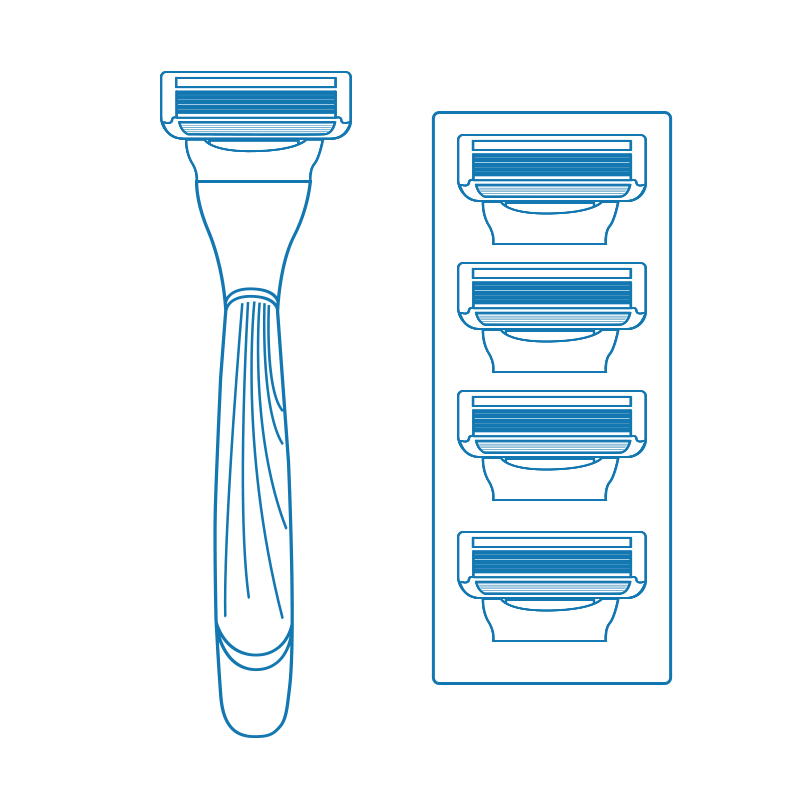
The Supplier should provide photographs, construction details, and a finished sample for the operator’s review. Assess disposable razors, cartridge system razors, and protected mini razors according to their actual construction. A protective cap alone does not establish whether a blade type is permitted.
- Identify whether blades stay enclosed in a cartridge or are supplied as loose blades.
- Confirm departure, transfer, and destination requirements with the responsible parties.
- Obtain operator acceptance for the complete kit, including cosmetics and packaging.
- Confirm the applicable airside supply and catering delivery procedures.
A travel shaving kit OEM specification should name the approving party and approved product revision. Avoid blanket claims such as “approved for every airline.” Keep the decision traceable to the exact kit and intended distribution route.
Select a Compact Platform Without Sacrificing Wet Handling
Compare the Complete Capped Razor, Not Just Handle Length
A short handle can reduce pack length, but the user’s fingers still need a stable gripping area. Evaluate an adult’s ability to locate the grip, remove the cap, and control the manual razor with wet hands. A wide mini cartridge or bulky protective case can occupy more space than a slender conventional design.
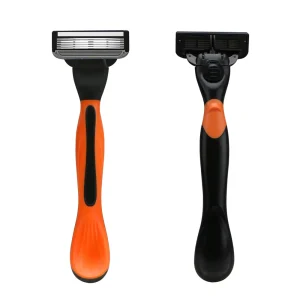
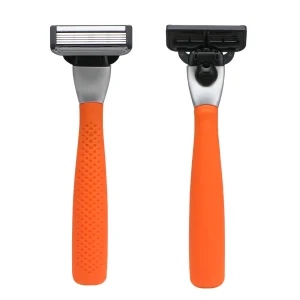
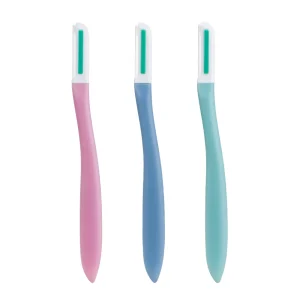
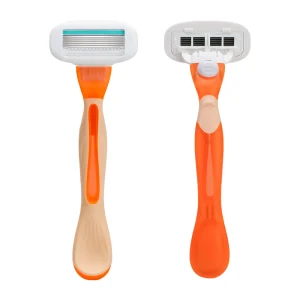
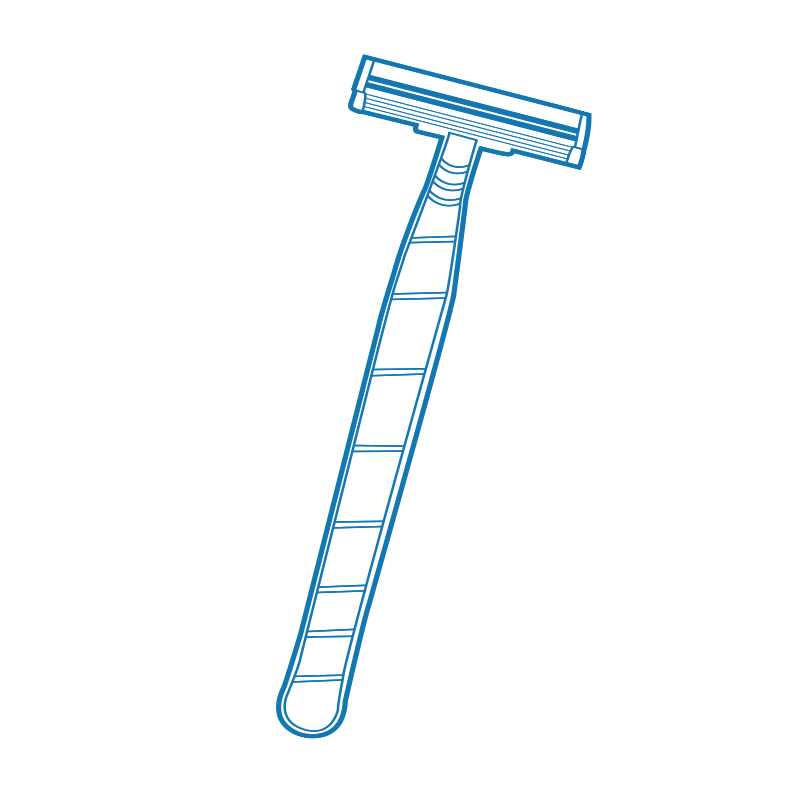
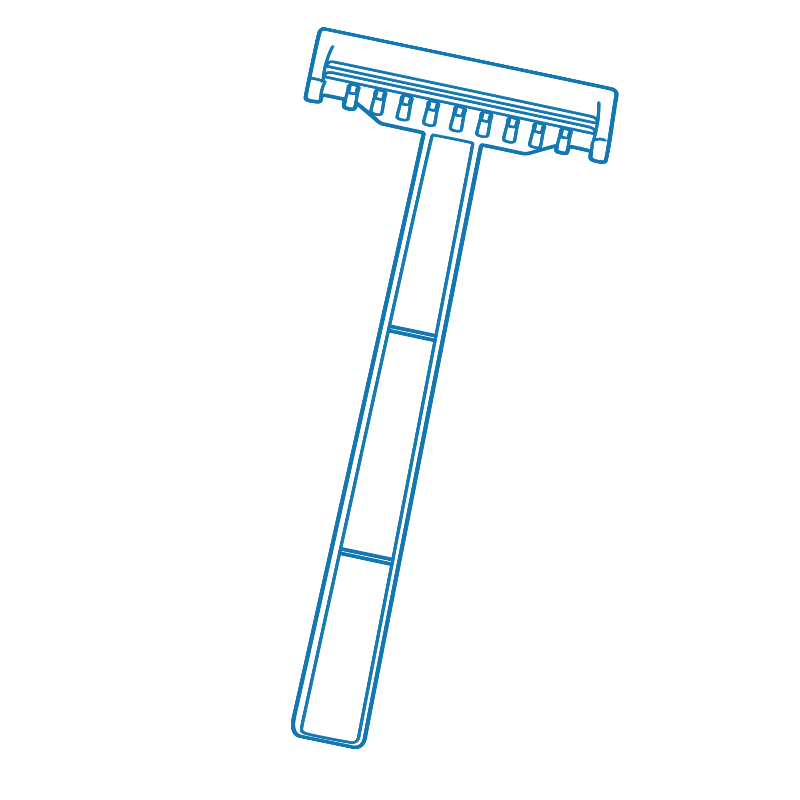
Haward’s 2026 catalog lists D207 and D211 as two-blade disposable razors with plastic handles. These are candidates for sample evaluation; their capped dimensions, protective packaging, and operator suitability need confirmation for the project. A women’s mini razor should be assessed for its intended grooming application before inclusion in a facial-shaving program.
- Measure overall capped length, maximum head width, thickness, and weight.
- Check grip stability under dry, water-wet, and soap-contaminated conditions.
- Evaluate cap removal with the intended opening direction and finger clearance.
- Approve a production-representative sample with the selected handle texture.
A Customizable handle color can support airline branding while the Manufacturer preserves the approved geometry and material specification.
Build Different Service Kits Around a Common Razor
Use Pack Envelopes as Development Targets
One approved razor platform can support several service formats. The following dimensions are illustrative finished-pack targets, not confirmed Haward product dimensions or aviation limits. The OEM team must check actual components, seals, and protective clearances before accepting them.
| Application | Proposed Contents | Pack Target, L × W × H | Geometric Volume | Primary Validation |
|---|---|---|---|---|
| Airline on-request service | 1 capped razor; cream supplied separately if required | 120 × 55 × 20 mm | 132 cm³ | Operator acceptance and drawer fit |
| Airport lounge refresh | 1 capped razor; separate 3–5 mL cream sachet | 130 × 65 × 25 mm | 211.25 cm³ | Wet handling and sachet protection |
| Baggage-delay assistance | 1 capped razor; separate 5 mL sachet; instruction card | 140 × 75 × 25 mm | 262.5 cm³ | Clear identification and sealed storage |
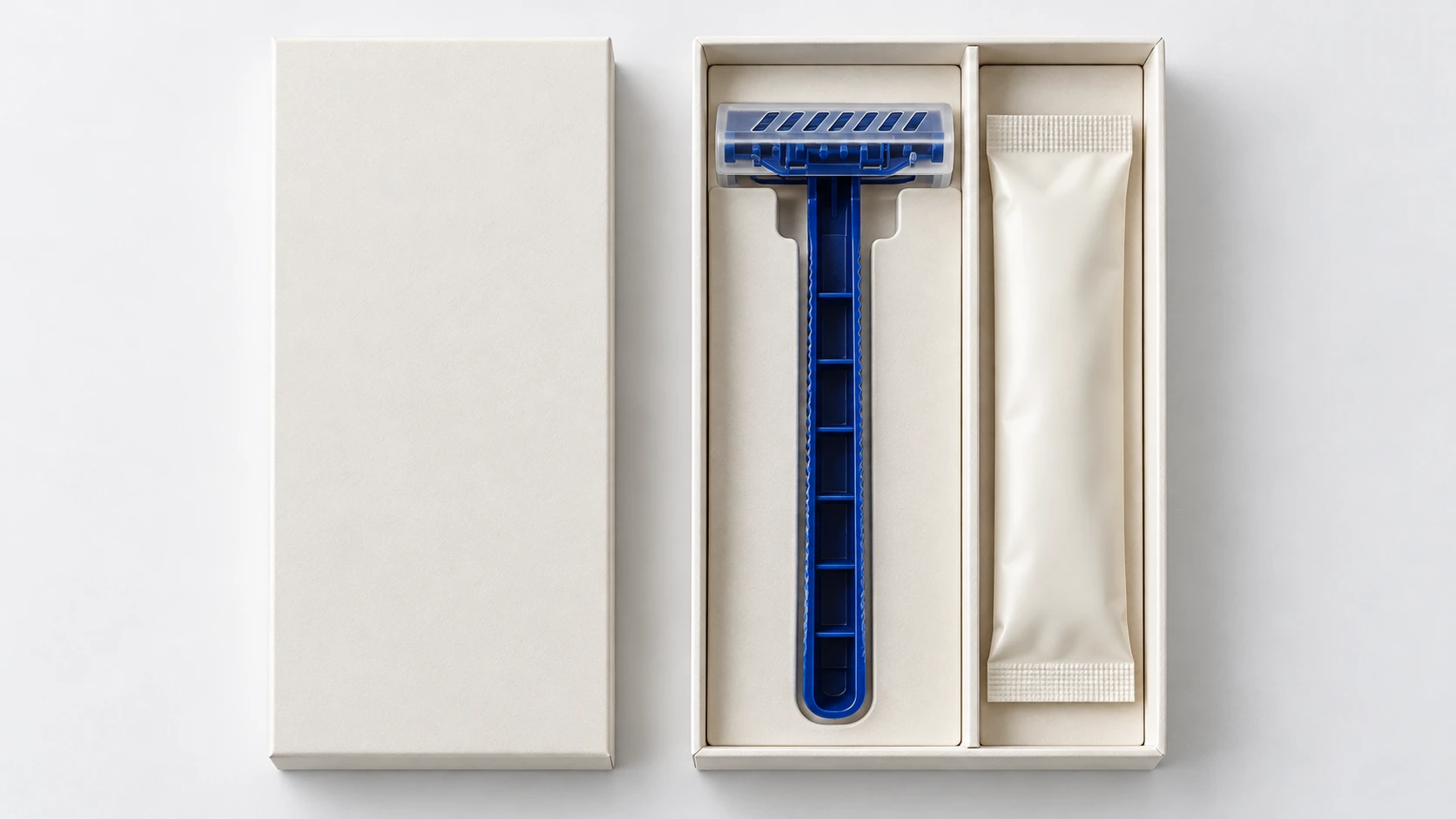
For the airline shaving kit supplier, this approach concentrates purchasing on one core component while allowing service-specific packaging. It also makes replenishment easier: staff order the correct kit code rather than assembling loose parts during a busy shift. Confirm cream quantity through formulation and use trials.
Make Cap Retention a Measurable Purchase Requirement

Balance Protection with Controlled Opening
The cap should remain seated during packing, transport, and handling, then open predictably when required. Excessively tight retention can also create problems if users must jerk the cap free. Specify both retention and opening behavior for the compact disposable razor kit.
Ask the Manufacturer to use a repeatable fixture that holds the handle without deforming the head. Record the pulling direction, test speed, conditioning, and removal force in newtons. The acceptance range belongs on the approved drawing; there is no single force suitable for every cap geometry.
- Measure first-opening force on production-representative samples.
- Repeat the assessment after the agreed transport and storage exposure.
- Inspect for cap cracking, head deformation, and unintended blade exposure.
- If recapping is intended, define the number of opening cycles separately.
An initial development screen could use 30 kits across three production lots. This is an illustrative engineering sample, not a statistical lot-release plan. The Supplier and buyer should approve routine inspection frequency after reviewing variation and failure consequences.
Protect the Razor and Cream as Separate Components
Prevent Sachet Contact from Becoming a Packaging Weak Point
A flat cream sachet helps control volume, but placing it against the razor head can expose its film to concentrated loads. A simple divider or separate pocket can keep the sachet away from the capped head and help prevent rubbing during transport. The cap must provide its own protection; the sachet must never serve as cushioning.
For a travel shaving kit OEM development brief, consider a 3–5 mL non-aerosol sachet as a starting option. This is a proposed fill range, not a universal shaving dose. Confirm adequacy with the cream formulator and intended-use evaluation.
- Specify sachet dimensions, seal areas, tear notch, and fill tolerance.
- Check leakage after compression and relevant temperature or pressure exposure.
- Verify cosmetic documentation, labeling, batch identification, and shelf life for the destination.
- Trace the cream batch and razor batch to the assembled kit lot.
The amenity assembler should identify the responsible cosmetic Supplier. Razor manufacturing capability alone does not establish responsibility for cream formulation or regulatory documentation.
Design Liquid Access Around the Actual Airport Rules
Keep Small Sachets Easy to Identify and Remove
A small cream sachet remains a liquid item for security purposes. The UK government’s liquids guidance includes creams and shaving foam and explains that container and bag requirements depend on the airport. Most airports apply a 100 mL container limit, while some permit containers up to 2 litres. Buyers must check the applicable departure, transfer, and return arrangements.
For an airport amenity razor program, the practical response is accessible packaging. If a traveler must remove the sachet for screening, opening its compartment should not require exposing the shaving head or destroying all protective packaging.
- Keep the declared fill volume visible on the sachet.
- Allow the cream to be separated from the protected razor.
- Review route-specific wording before printing travel claims.
- Do not treat an ordinary amenity pouch as a security-approved liquids bag.
The operator should review these details whenever the route scope or airport screening requirements change.
Use Published Service Examples to Choose the Distribution Model
Match the Kit to On-Request and Lounge Service
Lufthansa’s First Class information describes additional products, including a shaving set, selected from an amenity card and presented in a small bag. Separately, Plaza Premium Lounge at Queen Alia International Airport lists shaving kits among its shower-room amenities. These public examples demonstrate two distinct service settings.
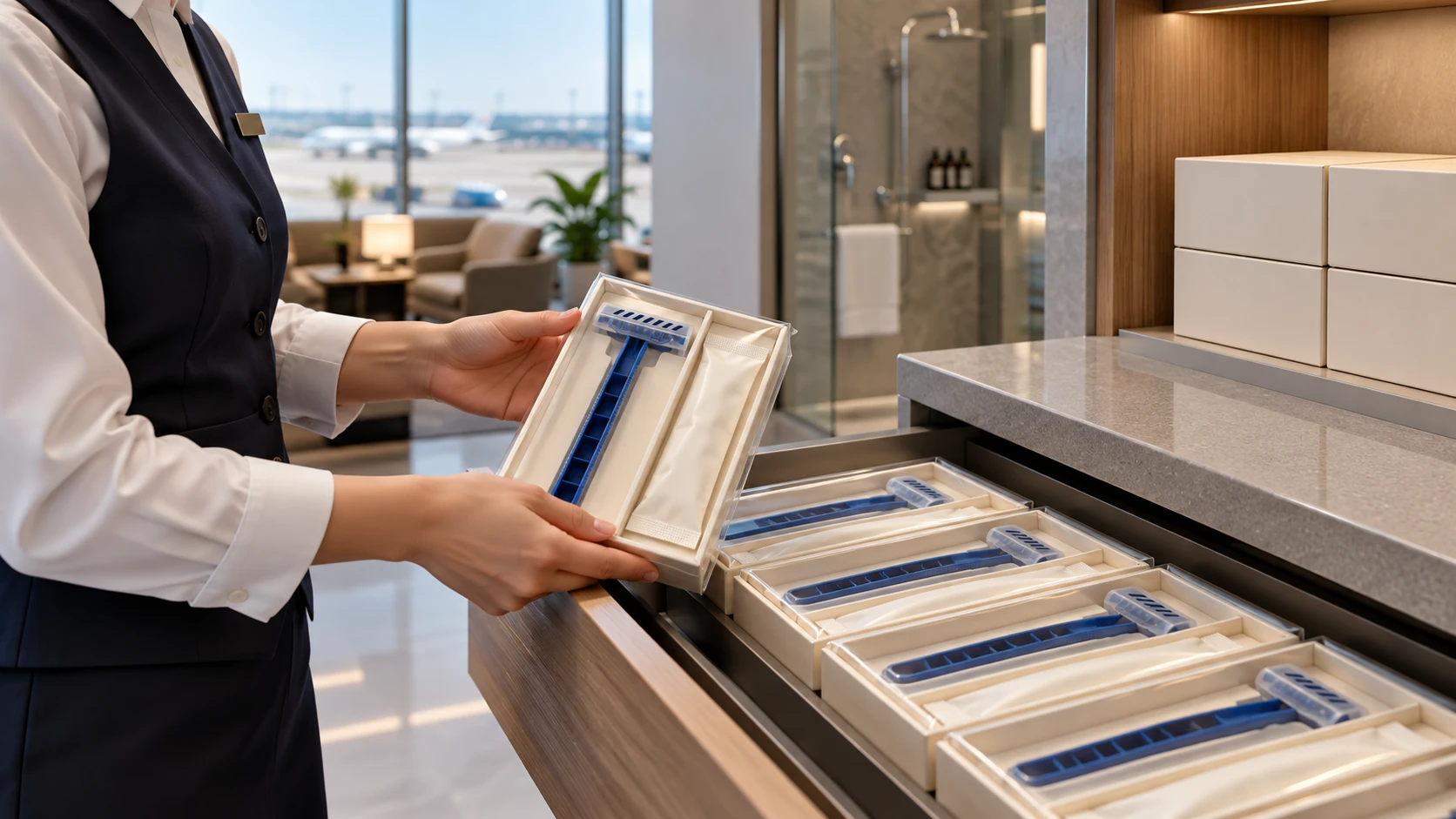
For buyers, the design implication is to define how the kit reaches the guest before deciding its contents. An on-request model can use an individually protected razor module held in a service drawer. A lounge program can pair the same core component with a cream sachet and shower-room instructions.
- Airline service: prioritize compact stock, clear kit identification, and operator-approved distribution.
- Lounge service: prioritize wet handling, protected storage, and straightforward replenishment.
- Travel distribution: prioritize visible contents, multilingual information, and destination requirements.
An airline shaving kit supplier can use these scenarios to structure a Customizable OEM or ODM proposal without assuming that every operator needs the same amenity assortment.
Reduce Pack Cube Without Removing Necessary Protection
Validate the Complete Distribution Pack
Calculate volume from the finished outer dimensions. A 120 × 55 × 20 mm pack occupies 132 cm³; 1,000 such envelopes total 0.132 m³ before carton walls, voids, and loading allowances. This calculation supports comparison but does not establish the actual freight volume or carton quantity.
The Manufacturer and kit assembler should test the final arrangement, including the cap, divider, sachet, and outer carton. Select testing for the real distribution route. For example, ISTA identifies Procedure 3A with individual packaged products moving through parcel delivery systems. It is not an aviation-security approval.
- Measure filled packs at their thickest point, including seals and bulges.
- Check whether neighboring kits press against caps or sachet seals.
- Inspect protection and leakage after the agreed transport sequence.
- Verify that staff can retrieve one kit without damaging adjacent packs.
For an ODM packaging project, a slightly larger pouch may offer better total value if it improves packing consistency and reduces damaged stock.
Prepare a Clear Baggage-Delay and Overnight-Service Kit
Make Emergency Replenishment Simple for Staff
In this application, emergency use means an unexpected overnight stay, missed connection, or delayed baggage. The kit supports routine personal grooming when the traveler’s own toiletries are unavailable. It should be supplied for use in an operator-permitted setting with suitable washing facilities, lighting, and a mirror.
A practical service format combines one protected disposable razor, an approved cream sachet where required, and a brief instruction card. Staff should be able to identify the correct pack without opening it. Distinguish a razor-only pack from a complete shaving kit through the external SKU and artwork.
- Record issued quantities by service point and replenishment period.
- Keep reserve stock sealed and separate from opened demonstration samples.
- Rotate dated stock using the earliest applicable component expiry.
- Agree a reorder trigger based on actual demand and replenishment lead time.
A compact disposable razor kit becomes easier to manage when purchasing, lounge operations, and the distributor use the same pack description and lot identification.
Freeze the Approved Kit Before Scaling the Program
Connect Product Samples to the Purchasing Specification
The final approval should cover the assembled kit, not only the loose razor. For an OEM or ODM program, link the physical sample to drawings, packaging revisions, test records, and operator acceptance. This gives the Supplier a clear production target and gives the buyer a reproducible inspection reference.
- Confirm the use setting, distribution route, and responsible approving parties.
- Select the razor, protective cap, optional cream, and compartment arrangement.
- Approve measured pack dimensions, contents, artwork, and carton quantities.
- Complete agreed grip, cap-retention, leakage, and transport evaluations.
- Run a pilot assembly and service trial before volume release.
The purchase specification should also identify changes requiring review, including cap geometry, handle resin, cream formulation, sachet film, and pack dimensions. Keep the proposal commercially clear: separate Razor supply, cosmetic sourcing, kit assembly, and operator approval responsibilities. With those decisions documented, a Customizable program can add language or branding variants while keeping the approved product configuration consistent.
Develop a Kit Around Your Service Requirements
Send Haward your service setting, route scope, target pack dimensions, cream requirement, and forecast volume. We can discuss candidate disposable razor platforms and Customizable OEM or ODM options, then define the samples, packaging checks, and operator approvals needed for your airline or airport amenity program.