



A subscription Razor brand can acquire customers successfully and still lose them through the wrong refill cadence. If cartridges arrive too early, unused packs accumulate in bathrooms, the next charge feels unnecessary, and cancellation risk rises. If they arrive too late, subscribers stretch a cartridge beyond their preferred experience, buy an emergency replacement elsewhere, or question the value of membership. The problem becomes more expensive when every subscription tier uses a different handle connection, carton, forecast, and MOQ. Inventory grows while service levels fall. A platform-based refill razor program solves this mismatch by separating starter-handle demand from recurring cartridge demand, offering adjustable delivery intervals, and using validated shared cartridge families to concentrate purchasing without removing meaningful customer choice.
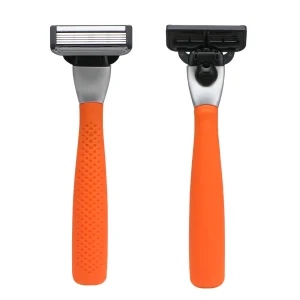
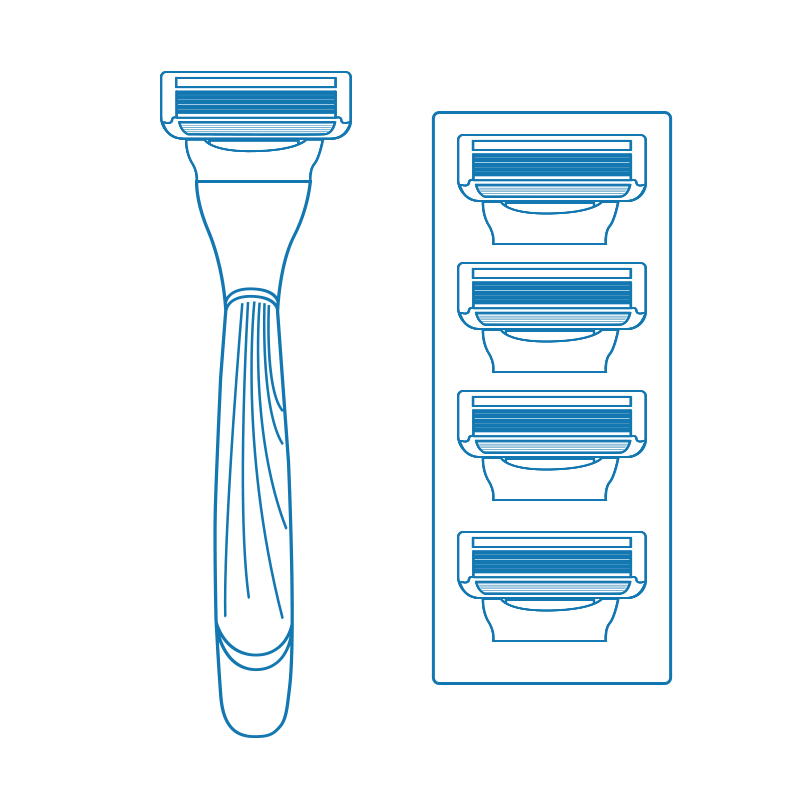
Start with one handle and two heads, four-head refills, selectable 8-, 12-, or 16-week delivery, and platform-specific compatibility. Haward is a specialist razor subscription cartridge supplier for Customizable OEM and ODM 3-, 5-, and 6-blade programs, with replacement-head sourcing, packaging, quality control, and demand-planning support.
Retailers, importers, wholesalers, distributors, DTC founders, and category managers should continue. The following worked scenarios use realistic ordering logic to show how starter kits, refill counts, customer cadence, shared platforms, churn controls, and inventory rules can be matched without turning subscription flexibility into uncontrolled supply-chain complexity.
Separate Customer Acquisition from Cartridge Replenishment
Build Different Supply Plans for Handles and Replacement Heads
A starter kit and a refill shipment perform different jobs. The starter kit converts a customer and introduces the handle architecture. The refill shipment must arrive repeatedly, fit the original handle, remain easy to identify, and generate predictable contribution after fulfilment cost.
A practical launch configuration may include:
- Starter kit: one reusable handle, one mounted cartridge, one spare cartridge, and use instructions;
- Core refill: four replacement heads in compact, mailbox-compatible packaging;
- Trial option: two replacement heads for low-commitment acquisition or reactivation;
- Household option: eight heads only after repeat demand and consumption data justify it;
- Emergency add-on: a one-time refill purchase that does not change the recurring schedule.
Forecast handles from new subscribers, replacements, warranty events, and upgrades. Forecast cartridges from active subscribers, chosen cadence, skips, cancellations, failed payments, and one-time orders. Combining both in one growth percentage overstates handle demand and understates recurring head demand. An experienced razor subscription cartridge supplier should quote and plan these two streams separately.
Use Shared Platforms Without Promising Universal Compatibility
Assign the 3-, 5-, and 6-Blade Families Clear Subscription Roles
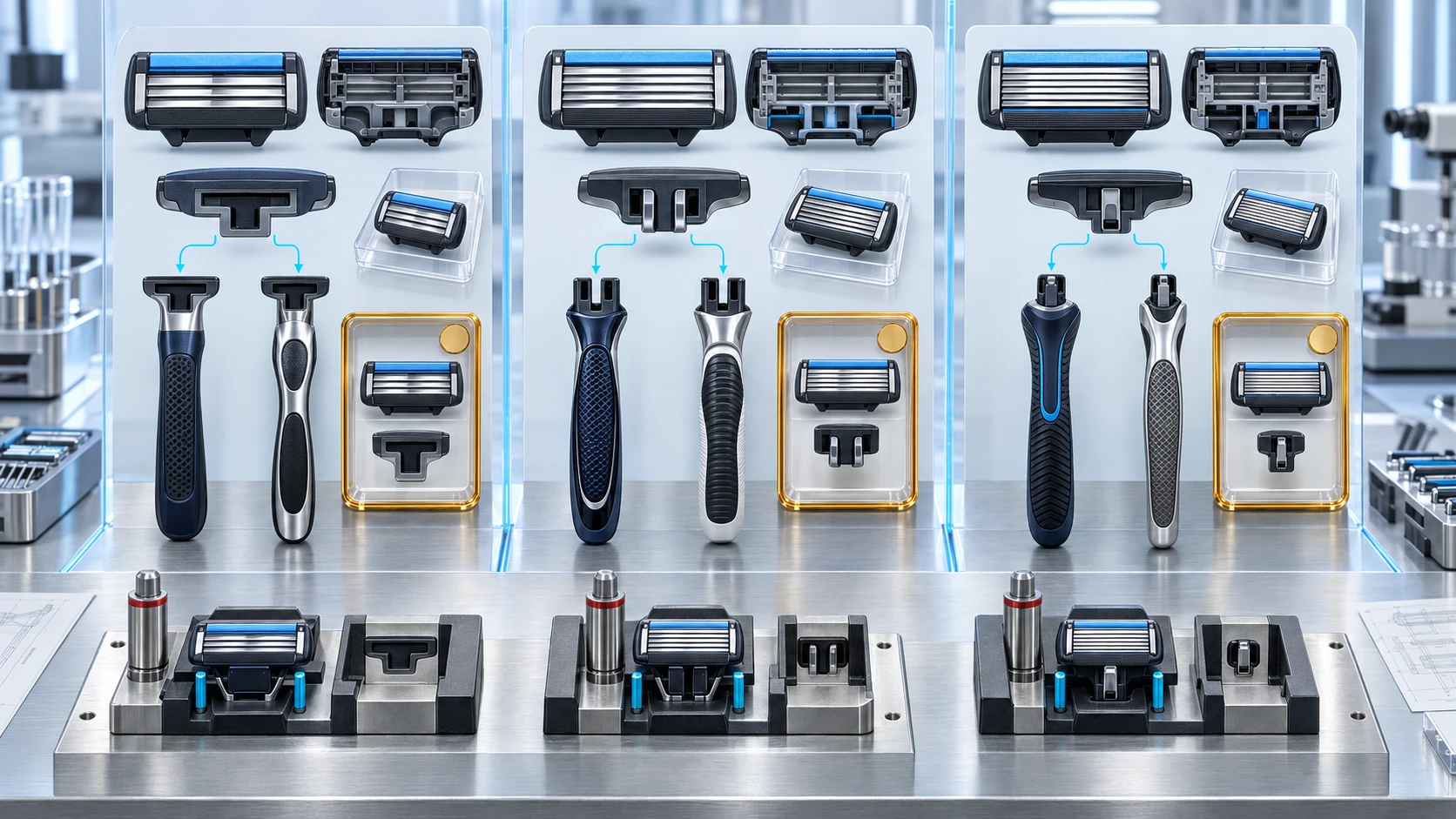
A shared cartridge platform should mean a validated family of cartridge, connector, release feature, handle interface, drawings, gauges, and test methods. It must not mean that every 3-, 5-, and 6-blade head automatically fits every handle. The Manufacturer and buyer should approve a model-specific compatibility matrix before the storefront uses words such as “compatible” or “fits.”
Haward platform families can support a structured price ladder:
- 3-blade system razor: accessible subscription tier, travel offer, or price-sensitive acquisition route;
- 5-blade system razor: mainstream subscription anchor with the broadest justified handle and color options;
- 6-blade system razor: flagship tier, premium gift acquisition, or controlled upgrade path;
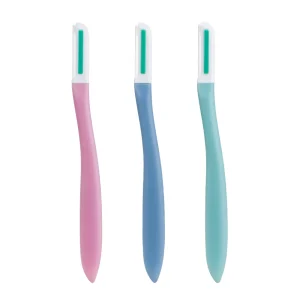
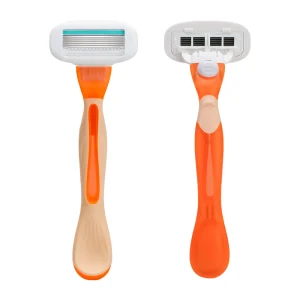
- Women’s razor: body-shaving proposition with its own handle ergonomics, cartridge geometry, usage assumptions, and content;
- Manual razor accessories: travel cover, shower storage, handle stand, or replacement handle offered outside the automatic cartridge count.
A disciplined OEM cartridge subscription uses common parts inside each approved platform while differentiating color, grip, decoration, starter packaging, and refill quantity. This concentrates MOQ and testing without creating misfit risk.
Convert Shaving Frequency into an Adjustable Delivery Cadence
Test Consumption Hypotheses Instead of Publishing One Replacement Rule
No universal replacement interval fits every subscriber. Frequency, body area, hair characteristics, preparation, rinsing, storage, and individual preference all affect cartridge consumption. The brand should ask how often the customer shaves and then offer an initial schedule that can be skipped or changed.
The following table is a launch-testing framework, not a product-life claim or instruction to use a cartridge for a fixed period.
| Subscription Scenario | Refill Quantity | Initial Delivery Interval | Planning Allowance per Head | Primary Signal to Monitor |
|---|---|---|---|---|
| Frequent shaving | 4 heads | Every 8 weeks | Approximately 14 days | Early skips versus emergency add-ons |
| Standard routine | 4 heads | Every 12 weeks | Approximately 21 days | On-time consumption and second-order retention |
| Occasional shaving | 4 heads | Every 16 weeks | Approximately 28 days | Stock accumulation and pause requests |
| Women’s multi-zone routine | 4 heads | Every 12 or 16 weeks | Buyer-defined after trial | Seasonality, body area, and cadence changes |
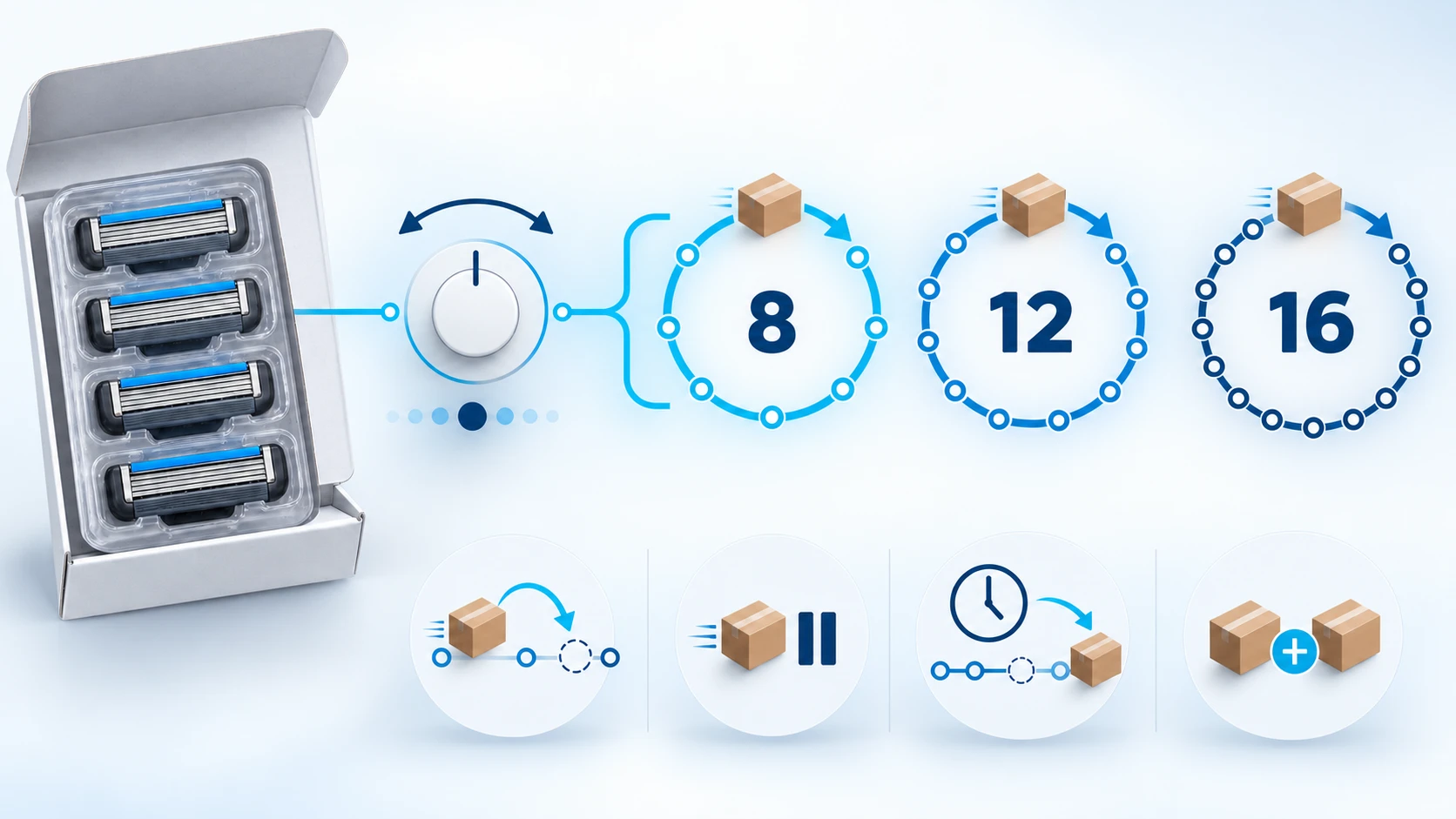
Use at least two completed refill cycles before treating the selected cadence as stable. Compare cohorts by platform, acquisition offer, season, market, and declared shaving frequency. Keep the interface and cartridge specification fixed during the experiment so product changes do not corrupt the cadence result.
Reduce Churn Caused by Excess Product and Rigid Billing
Make Skip, Pause, Delay, and Quantity Changes Operationally Safe
Product accumulation is both a customer-experience problem and an inventory signal. If a large share of subscribers repeatedly skips the same four-head shipment, the default interval may be too short. If customers add emergency packs before renewal, it may be too long or the refill quantity may be too small.
Customer controls should include:
- Skip next shipment without cancelling the membership;
- Pause for a defined period while preserving handle and platform data;
- move between approved 8-, 12-, and 16-week windows;
- change between two-, four-, and eight-head packs where offered;
- receive a reminder before payment and fulfilment cut-off;
- update payment information before a failed transaction becomes involuntary churn.
Stripe’s subscription analytics guidance defines subscriber churn using churned subscribers, opening active subscribers, and new subscribers within the measurement window. The brand should additionally track skip rate, pause rate, failed-payment recovery, refill-cycle number, and cancellation reason. Never compare churn between cohorts without using the same definition.
Forecast Cartridge Demand from Active Cohorts, Not Total Sign-Ups
Translate Subscriber Status into Monthly Head Requirements
Historic registrations do not buy cartridges. The operational forecast should begin with subscribers expected to remain active on each fulfilment date. Separate new, active, paused, skipped, past-due, cancelled, and reactivated accounts.
A practical calculation is:
Monthly heads = eligible active subscribers × annual shipments per subscriber × heads per shipment / 12
Add one-time orders, warranty replacements, sampling, destructive quality tests, assembly loss, and an approved safety buffer separately. The example below assumes 10,000 eligible active subscribers and an illustrative 8% operational buffer.
| Cadence | Approximate Shipments per Year | Heads per Subscriber per Year | Base Monthly Heads | Monthly Plan with 8% Buffer |
|---|---|---|---|---|
| 4 heads every 8 weeks | 6.50 | 26.0 | 21,667 | Approximately 23,400 |
| 4 heads every 12 weeks | 4.33 | 17.3 | 14,444 | Approximately 15,600 |
| 4 heads every 16 weeks | 3.25 | 13.0 | 10,833 | Approximately 11,700 |

These calculations are planning examples. Actual purchase quantities must use daily renewal dates, skip probabilities, cohort survival, MOQ, production yield, lead time, and available stock. A growing private label razor subscription should run a rolling 26-week forecast with a shorter frozen release zone agreed with the Supplier.
Hold Inventory at the Most Reusable Level
Separate Common Components from Dedicated Subscription Packs
The safest inventory is usually the component that can serve the greatest number of approved SKUs. Qualified cartridges may be shared across several handle colors or starter bundles within one validated platform. Printed sleeves, market-language cartons, promotional inserts, and pre-built kits become dedicated stock much earlier.
An inventory agreement should define:
- Common cartridge stock: maximum weeks, ownership, aging limit, inspection status, and eligible SKUs;
- Starter-handle stock: linked to acquisition forecast rather than recurring subscriber count;
- Dedicated packaging: MOQ, artwork revision, remaining-value liability, and disposal approval;
- Finished-goods ceiling: maximum weeks by starter kit and refill pack;
- Reorder trigger: forecast consumption during total replenishment lead time plus approved safety stock;
- Allocation rule: priority when actual demand exceeds available replacement heads.
This structure prevents an OEM or ODM Supplier from overbuilding finished four-packs merely because the total annual cartridge forecast is high. Postponing final kitting lets the brand respond to changes between two-, four-, and eight-head demand while protecting the common platform investment.
Design Starter and Refill Packaging for Different Fulfilment Jobs
Protect Compatibility, Identification, and Mailbox Economics
The starter kit must explain the system and protect the handle’s first impression. Refill packaging should minimize fulfilment cube, prevent cartridge movement, keep blade edges protected, and make the compatible platform unmistakable. A beautiful starter box copied into every recurring shipment can destroy subscription margin through postage and material cost.
- Starter pack: handle location, mounted and spare head count, instructions, platform name, and onboarding message;
- Refill pack: two-, four-, or eight-head count, compact protective tray, platform code, lot code, and scannable identifier;
- Outer mailer: route-specific size, closure, tamper evidence, address-label zone, and transit protection;
- Pack-out control: verified gross weight, automatic or manual count check, line clearance, and barcode verification.
Different pack counts or trade items may require distinct GTIN and packaging-hierarchy records under the current GS1 GTIN Management Standard. The brand owner should confirm the rule for each market. The razor subscription cartridge supplier must prevent two visually similar but incompatible refill families from sharing confusing artwork or warehouse locations.
Validate the Platform for Repeated Use and Long-Term Supply
Approve More Than the First Shave and First Shipment
A subscription promise depends on the handle remaining compatible with future refills. Qualification should therefore cover the connection, not only blade sharpness. Acceptance values remain product- and drawing-specific.
Recommended validation categories include:
- Interface dimensions: connector datums, latch engagement, cartridge seating, and release clearance;
- Retention and release: insertion force, removal force, accidental detachment, and misuse conditions;
- Pivot performance: travel, breakaway response, return position, asymmetry, and cycle aging where applicable;
- Cartridge construction: blade geometry, weld or staking integrity, lubrication element, guard, cap, and rinse path;
- Handle life: wet cycling, drop exposure, coating adhesion, corrosion resistance, and grip condition;
- Packaging: vibration, impact, compression, moisture, barcode readability, and head-count verification.
An ISO 9001 quality-management certificate supports process control but does not prove compatibility for a specific refill razor program. Require approved drawings, golden samples, raw test data, lot traceability, complaint codes, and written engineering change control.
Use Add-Ons Without Forcing Every Product into One Cadence
Separate Replenishment Logic for Different Grooming Tools
A broader grooming range can increase order value, but products should not be bundled into the same automatic interval merely because they share a category. A disposable razor travel pack may be a one-time add-on. A guarded eyebrow razor or facial tool may follow a different consumption pattern from a body-shaving women’s razor. A replacement handle is an exception item, not a quarterly refill.
Use three merchandising groups:
- Recurring core: replacement cartridges matched to the subscriber’s approved handle platform.
- Optional recurring add-on: only products with independently validated repeat demand and an editable cadence.
- One-time add-on: travel Razor, storage accessory, replacement handle, gift sleeve, or complementary grooming tool.
This protects the clarity of the OEM cartridge subscription and avoids forced bundles that increase price or product accumulation. Track attachment rate, repeat rate, margin after fulfilment, complaint reason, and whether the add-on changes shipment weight or packaging dimensions.
Write the Subscription Supply Agreement Around Demand Uncertainty
Define Forecast, Frozen Zone, Capacity, and Excess-Stock Liability
Recurring revenue does not eliminate forecast error. Marketing campaigns, seasonality, price changes, influencer activity, payment failures, and cancellation waves can shift requirements quickly. The commercial agreement should separate the demand forecast from the firm purchase commitment.
A buyer-defined operating model may include:
- 26-week rolling forecast updated weekly or monthly;
- 4-week frozen zone for confirmed cartridge, kitting, and packaging releases;
- 5- to 12-week flexible zone with agreed increase and decrease limits;
- Capacity reservation for seasonal acquisition campaigns;
- Material authorization defining what the Manufacturer may buy against forecast;
- Finished-goods cap preventing uncontrolled production of dedicated refill packs;
- Recovery plan covering overtime, alternate packaging, priority allocation, and communication timing.
These windows are examples and must match actual material and production lead times. The agreement should also cover MOQ, price breaks, tooling ownership, payment terms, forecast accuracy, obsolete materials, quality holds, change notification, service level, and termination support for remaining subscribers.
Pilot the Subscription Before Scaling Cartridge Commitments
Use Cohort Evidence to Approve the Final Operating Model
Launch with a controlled cohort, one primary platform, a limited handle-color range, and three editable delivery intervals. Avoid introducing all blade counts, pack sizes, markets, and accessories simultaneously. A narrower pilot makes the cause of skips, complaints, or cancellations easier to identify.
- Approve the handle-cartridge compatibility matrix and locked technical specification.
- Choose starter and refill configurations with traceable SKUs and pack counts.
- Model demand for new handles and replacement heads separately.
- Run fulfilment, transit, barcode, and customer-portal tests before launch.
- Review first activation, second shipment, and third shipment as separate cohorts.
- Compare churn, skips, add-ons, complaints, stock cover, forecast error, and gross margin.
- Expand blade platforms or pack counts only after the evidence supports the added complexity.
A capable Supplier should support this pilot with low-risk sample quantities, transparent lead times, recorded quality results, and an agreed scale-up gate. This keeps private label razor subscription growth connected to operational evidence rather than optimistic subscriber targets.
Build Recurring Revenue on a Refill System Customers Can Control
Match cartridge platform, refill count, cadence, packaging, and inventory rules before scaling acquisition. Send Haward your target market, subscriber forecast, blade tier, starter configuration, refill schedule, and branding requirements to develop a Customizable OEM or ODM subscription Razor program and replacement-head sourcing proposal.