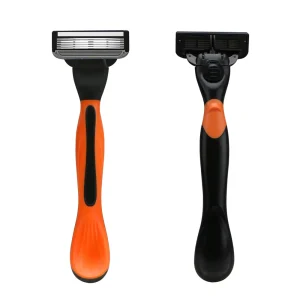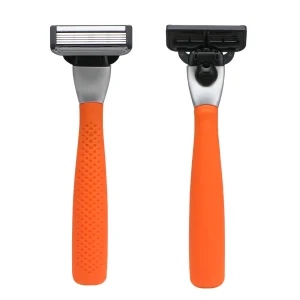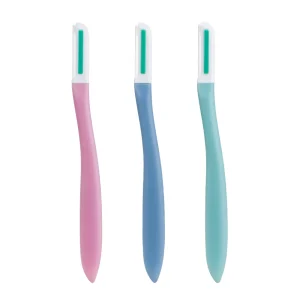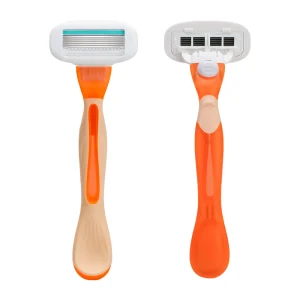


Correctional facilities must support hygiene while controlling an item that can become contraband, a self-harm tool, or a blood-contaminated sharp. A normal retail razor adds unnecessary uncertainty: several components, dark cavities, detachable cartridges, decorative inserts, and packaging that is slow to count. When issue and return records do not match, staff must stop routine operations, inspect the razor, locate the user, and activate the facility response plan. The lowest unit price can therefore create the highest operational cost. A controlled-access program needs more than a “safe-looking” product. It requires a low-component razor, visible blade retention, defined user eligibility, timed custody, one-for-one return, gloved inspection, secure storage, and a documented exception path for damaged, missing, or contaminated units.
For controlled-access shaving, specify one fixed single blade, a low-component high-visibility body, 100% issue-and-return logging, 100% post-use integrity inspection, single-user use, and immediate secure disposal. Where local policy permits, use a defined custody window such as 90 minutes. Haward Razor is a highly specialized professional OEM and ODM Manufacturer in this vertical field.
Retailers, importers, wholesalers, and institutional distributors should continue below. The following application cases connect Haward D161 and D162 concepts with real correctional workflows, measurable procurement parameters, and pilot evidence so the selected product fits the housing level, staffing model, hygiene policy, and disposal route.
Start with the Custody Topology, Not the Razor Price
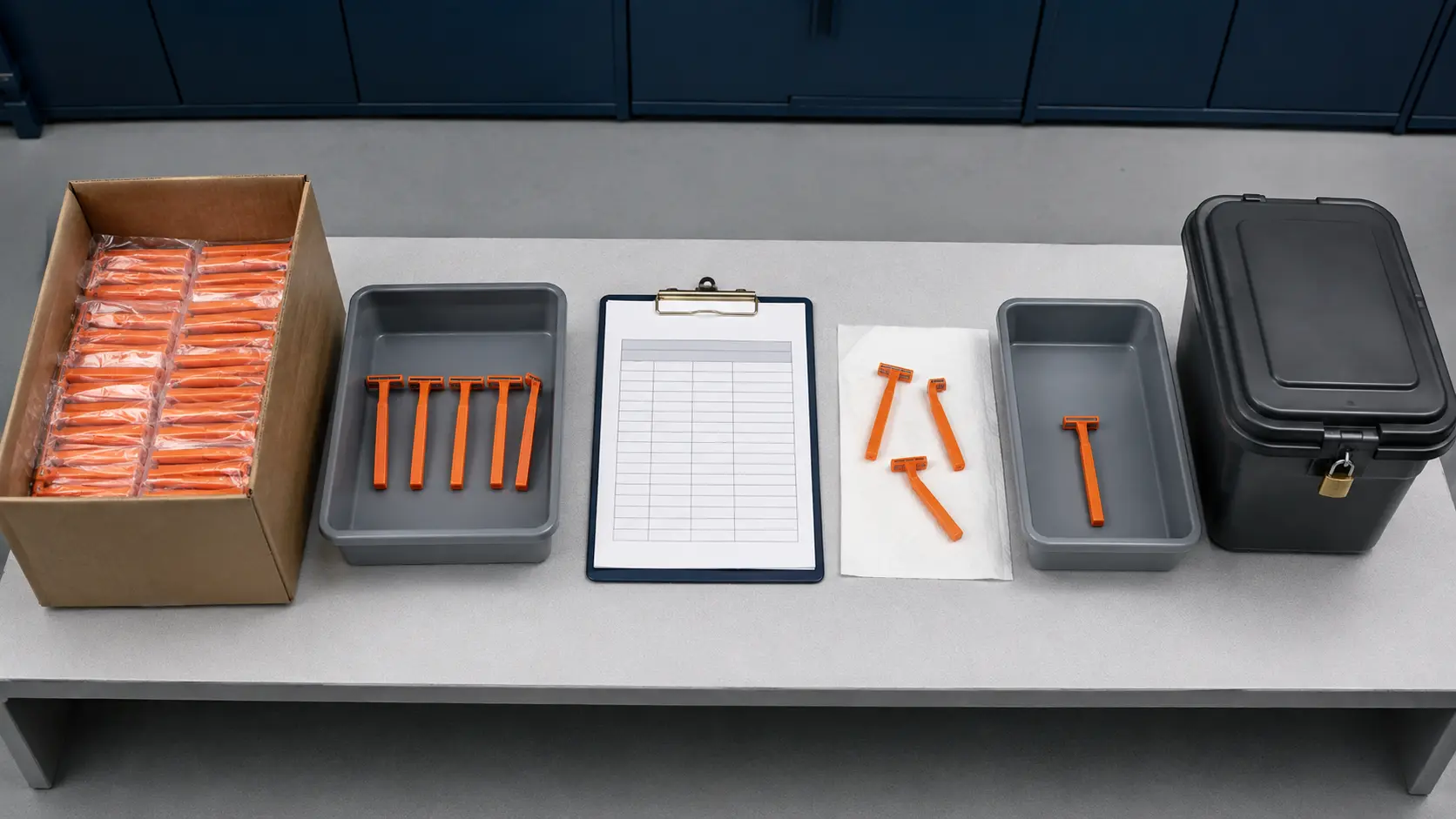
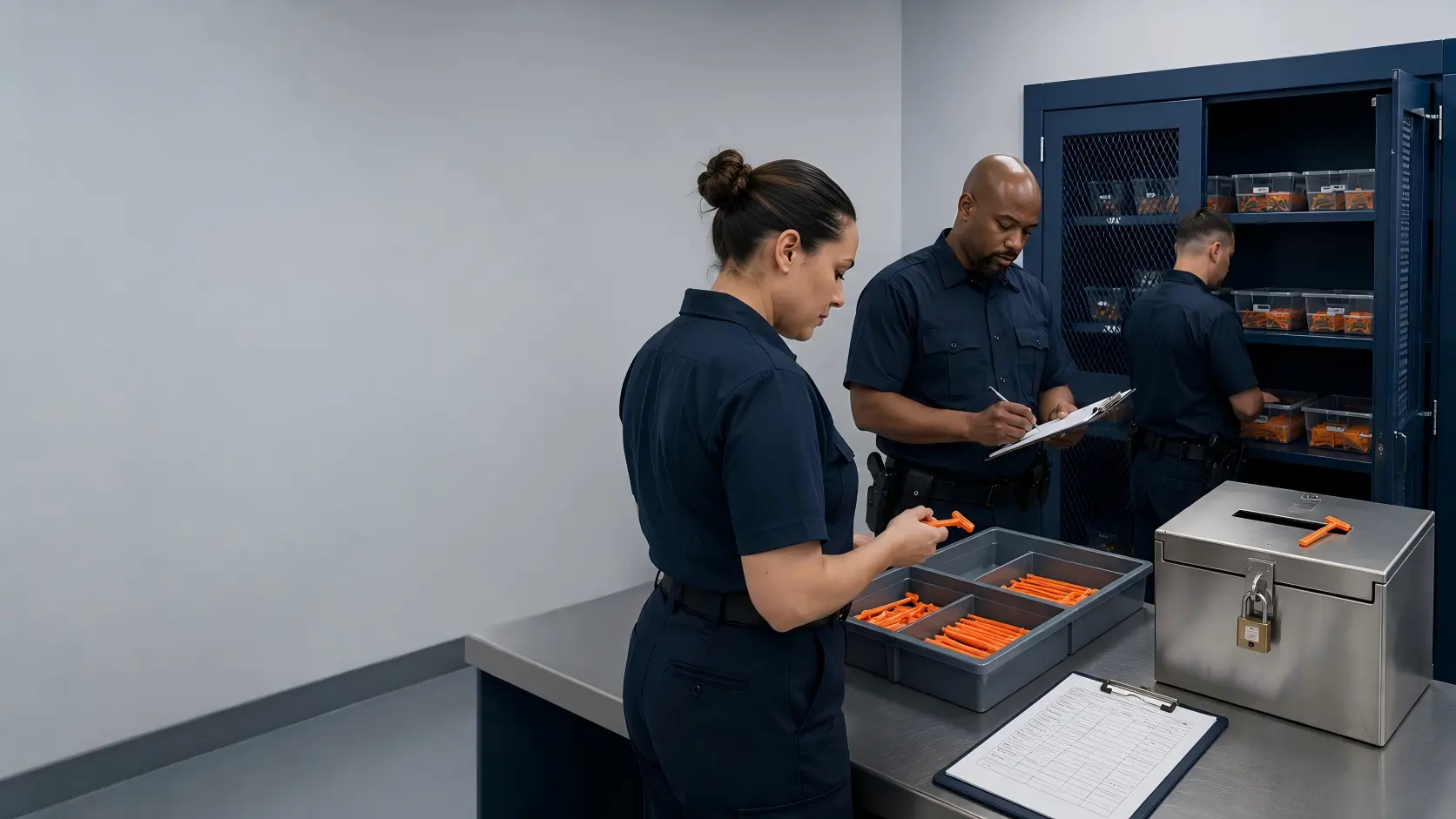
The product is only one node in a controlled-access topology. Map the complete route before requesting an OEM quotation: locked clean stock → authorized issue → identified user → permitted shaving zone → timed return → integrity inspection → secure disposal. Every transfer needs an owner, time stamp, count, and exception rule. This makes the razor accountable while it is in circulation rather than merely countable in the storeroom.
New Zealand Corrections provides a useful high-security example, not a universal rule. Its procedure records each issue and return, requires collection within 90 minutes, checks for missing blades, places returned units in a dedicated container, and prohibits reissue. By contrast, a Texas juvenile halfway-house procedure assigns a razor to one youth, prohibits sharing, uses perpetual inventory and daily visual inspection, and replaces disposable units as needed but at least weekly. The Supplier must therefore quote against the buyer’s operating model, not assume “prison razor” defines one global specification.
| Application Scenario | Recommended Control Model | Procurement Parameters | Preferred Product Emphasis |
|---|---|---|---|
| Maximum-security, remand, or intake unit | Staff issue and timed same-session return | 1 razor per authorized user; 100% log; 100% return inspection; locally approved custody time | Few components, high visibility, quick blade-presence check |
| General population with supervised shaving | Batch issue by housing unit and one-for-one reconciliation | Count at issue and return; no sharing; damaged-unit quarantine | Stable wet grip, adequate shaving efficiency, rapid rinse |
| Razor-restricted or elevated self-harm risk | Clinical/security authorization with direct observation or approved alternative | Individual restriction status checked before issue; documented observation; immediate return | Facility-approved manual option or controlled electric alternative |
| Juvenile or halfway-house assignment | Named single-user assignment under secured staff storage | Daily visual inspection; no sharing; replacement interval defined by policy | Protective storage provision and clear user identification |
Choose a Low-Component Architecture That Staff Can Inspect Quickly

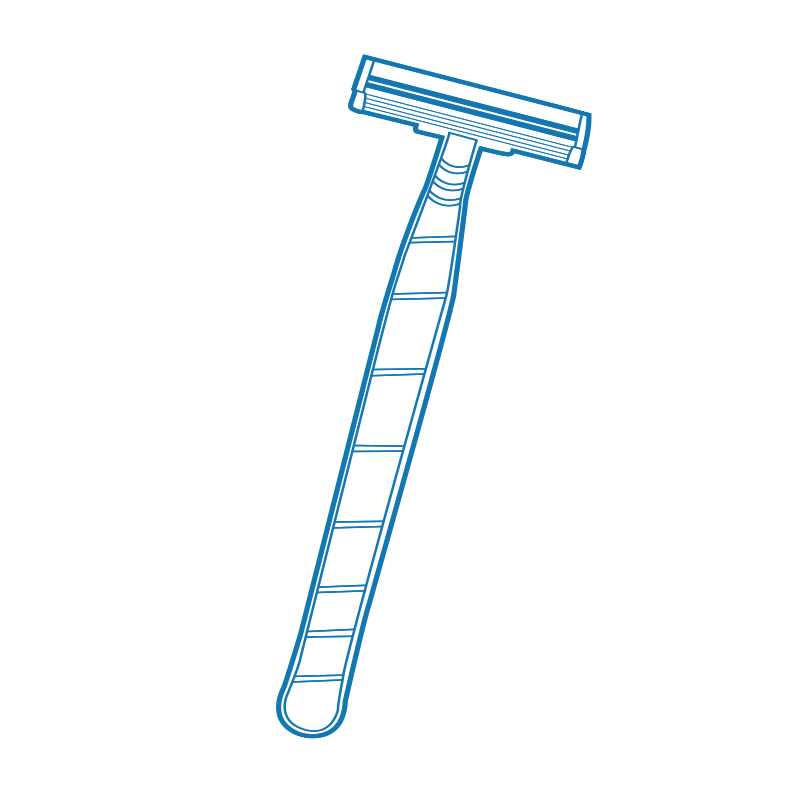
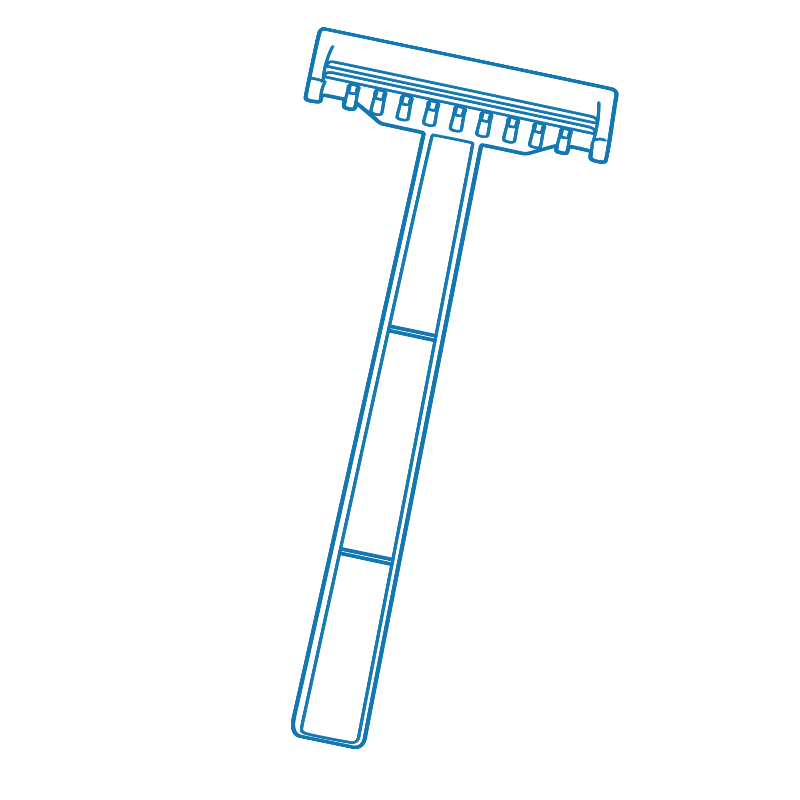
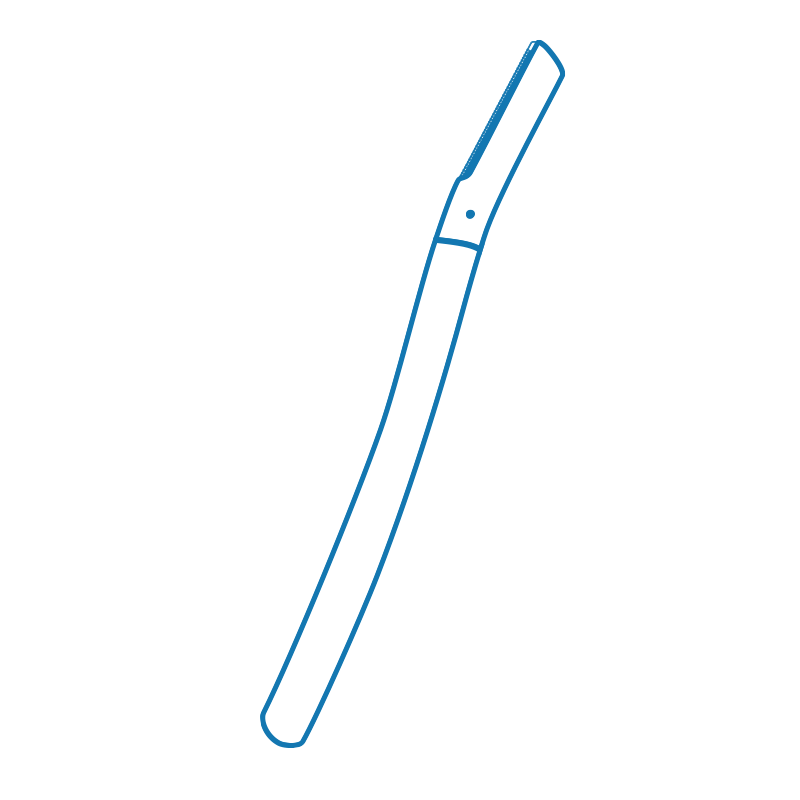
Haward’s 2026 catalog identifies D162 and D161 as single-blade prison razors. They represent two useful design directions. D162 uses a compact body that can support short, controlled grooming sessions. D161 uses a more open, skeletal form that visually exposes more of the body and head area. The correct choice depends on the facility’s inspection method, user ergonomics, and disposal route; appearance alone is not proof of security performance.
An RFQ should define component count, blade count, blade material, fixed-head construction, molded-body material, color, mass, overall dimensions, accessible cavities, joint count, and the inspection surfaces that must remain visible. Avoid detachable cartridges, replaceable blades, decorative metal parts, removable grip inserts, or hollow accessories unless the agency has specifically approved them. A bright, consistent body color can support rapid identification, while a translucent option may improve inspection only if resin performance, molding quality, and visibility are validated.
No Manufacturer should market the product as “tamper-proof.” The defensible claim is narrower: the approved design passed the buyer’s defined blade-retention, manipulation, drop, conditioning, and visual-inspection protocol.
Balance Security with Human Factors and Shaving Function

A low-component design must still work as a grooming tool. Poor control can increase repeated strokes, skin irritation, shaving time, and staff supervision burden. Evaluate wet-grip stability, thumb-indexing area, handle stiffness, head access under the nose, safe rinsing, right- and left-handed use, and performance on light, medium, and coarse facial hair. The intended user should not need abnormal grip force or a steep wrist angle to maintain head contact.
Use a single fixed blade when the program prioritizes countability and simple inspection. Define acceptable outcomes through a supervised use study rather than unsupported marketing terms. A practical OEM pilot can record shave completion time, number of repeated passes, reported pull, visible irritation, rinse blockage, and staff inspection time. Segment results by beard type and user experience.
This manual product has no battery circuit, charging station, power cord, or electrical distribution topology. That simplifies inventory and removes charging control from the manual-razor workflow. If an electric razor is selected for a restricted population, the facility must separately manage electrical safety, charging access, sanitation, device integrity, and shared-equipment controls. Manual and electric options should never be treated as operationally identical.
Write the Issue-and-Return Procedure as a Measurable Control Loop

The most important safety features are procedural. A Customizable OEM or ODM package should be designed around the facility’s forms, count points, and shift changes. The following values are a procurement starting point, not a substitute for local policy:
- Issue quantity: one unit per authorized person per shaving session;
- Traceability: record housing area, user identifier, staff issuer, date, issue time, return time, and lot code;
- Custody window: use the facility’s approved limit; 90 minutes is one published high-security example;
- Return inspection: inspect 100% of units for blade presence, head damage, body separation, heat damage, and unexpected residue;
- Reconciliation: close the batch only when issued quantity equals intact returns plus documented exceptions;
- Reuse: prohibit reissue when the program specifies single-use disposal;
- Exception response: isolate the area and follow the agency’s approved missing-item, self-harm, search, medical, and incident-reporting procedures.
Use a simple status sequence: available, issued, returned-intact, quarantined, disposed. The physical count and electronic or paper log must agree at each handover. A Supplier can support this loop with visible lot coding, predictable pack quantities, and packaging that opens without adding uncontrolled loose parts.
Validate Blade Retention and Inspection Visibility Before Approval
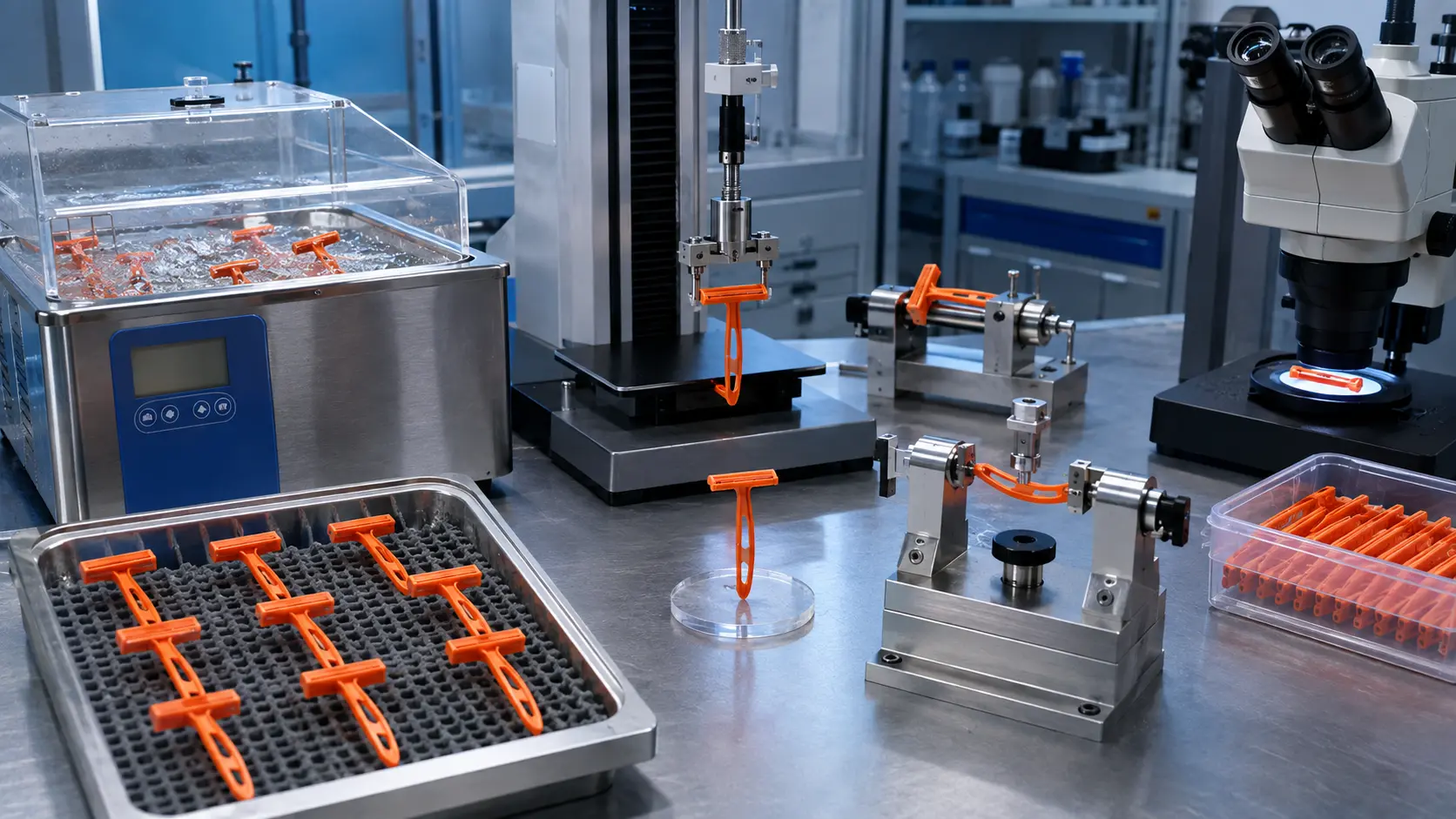
Do not rely on a sample that merely survives normal shaving. Qualification should challenge the product under repeatable laboratory conditions without publishing sensitive defeat methods. Ask the Manufacturer for a confidential test plan covering the whole assembled razor, not just blade sharpness. Test production-representative samples from every mold cavity and assembly stream.
A buyer may use this engineering starting protocol: condition samples for 24 hours at 23 ± 5°C; expose a second set to 40 ± 2°C water for 10 minutes; perform three 1.0 m drops in different orientations onto the facility-approved hard surface; and then conduct controlled bending, torsion, and manipulation tests using mutually agreed fixtures. These values are proposed screening conditions, not a correctional standard. The agency must approve the final loads, acceptance limits, and operator protections.
After every step, require zero blade release, no newly accessible sharp fragment, and a clear pass/fail visual inspection. Record fracture mode, permanent deformation, blade movement, and time needed for a trained officer to identify abnormality. Golden samples should include intact and safely manufactured defect references so inspectors know what a missing, shifted, cracked, or separated condition looks like without handling real tampered evidence.
Separate Hygiene Control from Security Control
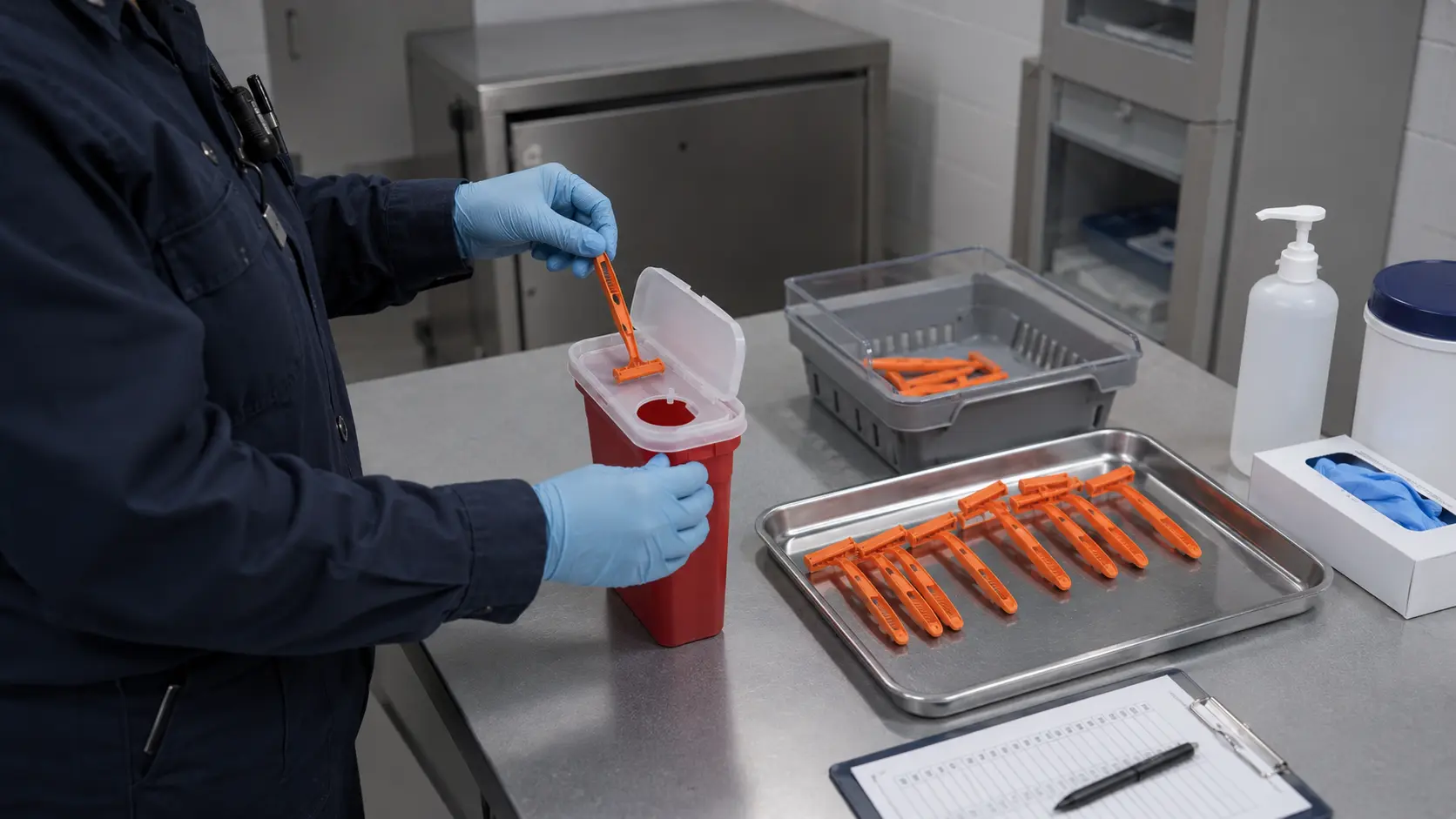
Security inspection does not replace infection control. Razors should never be shared. Staff collecting used units need the personal protective equipment specified by the facility, and any blood exposure requires the local exposure-control procedure. New Zealand Corrections requires protective gloves for collection and immediate placement in a dedicated container. A Texas juvenile policy requires water rinsing, intact-part inspection, covered storage, and secured access when assigned razors are not in use.
Disposal classification can differ by jurisdiction and condition. OSHA explains that containers for contaminated sharps generally must be closable, puncture resistant, leakproof on the sides and bottom, properly labeled or color-coded, routinely replaced, and not overfilled. The Texas youth policy, however, states that its disposable shaving razors are not treated as biohazard waste under that program. The correct route therefore depends on contamination, applicable law, and facility policy.
The OEM specification should state whether each razor is single-use or assigned single-user, whether a protective cover is required for secured storage, and whether packaging or labeling must carry disposal instructions. The Supplier should not make a universal “non-biohazardous” claim.
Design Packaging for Counts, Lots, and Restricted Storerooms
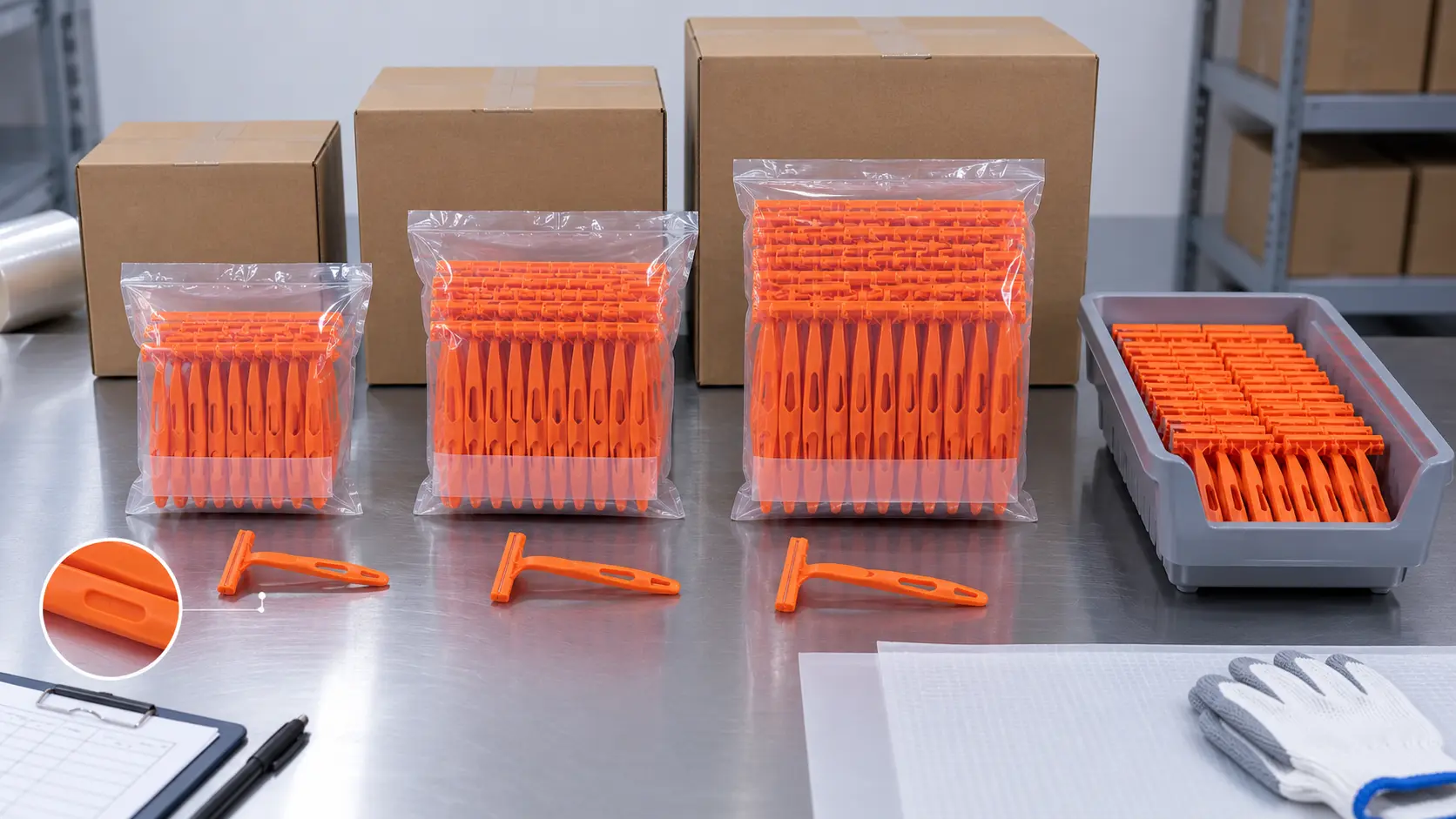
Retail blister cards are usually inefficient in a secure institution. They consume space, slow counts, and may introduce inserts, laminates, or fasteners that the facility does not want. Institutional packaging should support count integrity, lot traceability, and controlled opening. Specify exact units per inner pack and master carton, consistent orientation, lot and production date, carton tamper evidence, and a clean area for agency labels.
For an OEM program, evaluate inner quantities of 25, 50, or 100 units against the normal housing-unit issue batch. These are Customizable pack-out options, not mandatory standards. The best quantity minimizes open residual stock at shift change. If individual wrapping is required for hygiene, request a tear-open pouch with no metal staple and no loose protective insert unless that item is separately counted. If bulk supply is allowed, require a sealed inner bag and controlled dispenser or tray.
Use contrasting carton and razor colors only when they help staff distinguish approved stock from commissary or medical products. Artwork should avoid claims such as “suicide proof,” “weapon proof,” or “100% safe.” Better labels describe verified facts: single fixed blade, model number, lot, count, intended institutional use, and the approved disposal statement.
Create Different Programs for Different Risk Groups
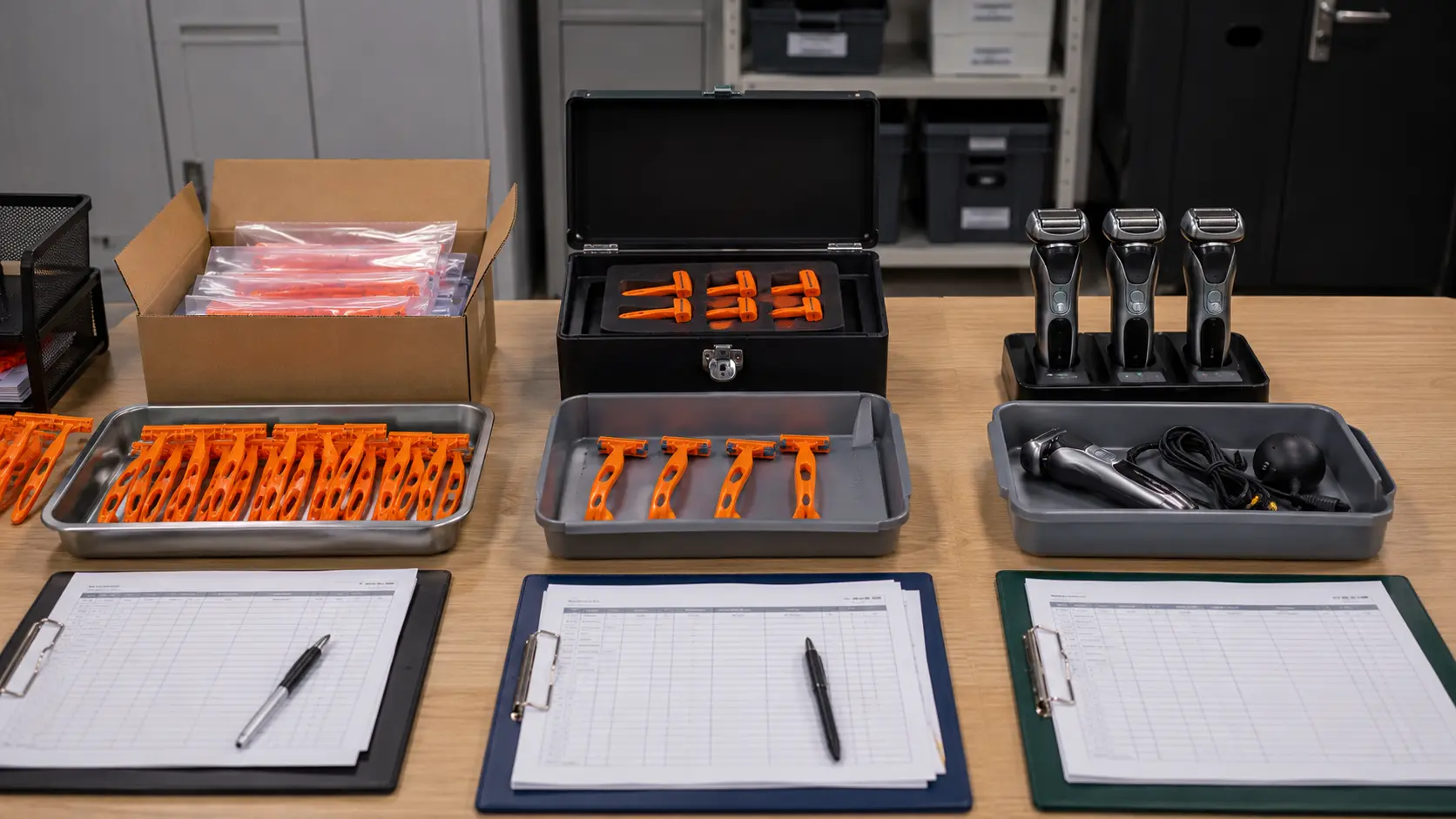
A single housing site may need several shaving pathways. Minnesota’s current suicide and self-injury policy shows why. It permits facilities to use electric razors, staff observation, timed pass-out and collection, or other measures for people on razor restriction, while requiring documented restriction management and continued grooming opportunities. Product selection must therefore follow the individual’s authorized status and unit controls.
Standard Controlled Access
Use D161- or D162-type single-blade products only after local validation. Staff issue one razor, supervise according to classification, collect it within the approved window, inspect it, and route it to secure disposal. This is the simplest closed-loop topology.
Razor-Restricted or Clinical Observation
Do not assume a specialized manual razor overrides a clinical restriction. The approved solution may be direct observation, a controlled electric device, or no manual blade access until authorization changes. Clinical and security teams, not the Supplier, define eligibility.
Assigned Single-User Programs
Where policy permits repeated use, label the unit to one person, store it in a covered secured container, inspect it daily, prohibit sharing, and define a replacement interval. This pathway needs more storage and sanitation control than true single-use issue-and-dispose operation.
Run a Facility Pilot Before Placing the Annual Order

Approve the program through a controlled pilot, not a sales sample. Select representative housing areas and compare no more than two or three candidate designs under the same procedure. A 30-day pilot is often long enough to observe shift handovers and routine variability, but the agency should set duration and sample size according to its population and risk process.
Track at least these measures: issue-to-return reconciliation rate, average staff issue time, average inspection time, number of damaged or quarantined units, shaving completion time, user-reported pull or irritation, packaging waste, disposal-container consumption, and incident or near-miss reports. The acceptance plan should require 100% blade accountability; operational time and comfort targets can be compared against the current approved product.
Require the Supplier to submit a control plan, material declaration, blade specification, component drawing, process flow, cavity map, inspection method, lot-traceability example, packaging drawing, and change-notification procedure. Pilot samples must come from production tooling and intended assembly equipment. Any change to blade, resin, mold cavity, assembly method, colorant, packaging, or subcontractor should trigger written engineering change control and risk-based revalidation before shipment.
Compare Total Program Cost, Not Only Cost per Razor
A low quotation can be expensive if packaging takes longer to open, counts are inconsistent, the body is difficult to inspect, or the razor performs poorly enough to extend observation time. Calculate total controlled-access cost as product cost plus receiving inspection, secure storage, issue labor, supervision, return inspection, exception handling, disposal, and expected loss from nonconformity.
Ask every Manufacturer to quote the same configuration, annual volume, inner-pack quantity, master-carton size, Incoterm, inspection level, and delivery schedule. Separate standard ODM tooling from fully Customizable OEM work. A color change or institutional carton may require limited development; a new low-component body, blade-retention geometry, or inspection window may require molds, fixtures, testing, and a longer validation schedule.
Procurement should also examine supply continuity. Define approved blade and resin sources, safety-stock expectations, lot segregation, contingency capacity, and notification time for material substitution. A qualified Supplier must be able to repeat the approved structure across bulk orders. The contract should reference the golden sample, drawing revision, test protocol, packaging specification, and facility-approved claims so price negotiation does not silently remove a control.
Build the Razor Around the Facility’s Real Control Plan
Controlled-access shaving succeeds when product architecture, human factors, accountability, hygiene, and disposal operate as one system. Send Haward Razor your housing scenarios, issue window, inspection checklist, annual quantity, and packaging needs. We will recommend a D161/D162-based ODM option or develop a Customizable OEM solution for qualified facility review.